Ch.1 - Chemical Tools: Experimentation & Measurement
McMurry - Chemistry 8th Edition
McMurry8th EditionChemistryISBN: 9781292336145당신이 사용하는 게 아니라요?교과서 변경
1장, 문제 40

Complete the following equivalent expressions by filling in the blanks. (a) 1 km = ____ m (b) 1m = _____ km (c) 1 mmol = _____ mol (d) 1 mol = _____ mmol

검증된 단계별 안내
1
(a) To convert kilometers to meters, use the conversion factor: 1 km = 1000 m.
(b) To convert meters to kilometers, use the conversion factor: 1 m = 0.001 km.
(c) To convert millimoles to moles, use the conversion factor: 1 mmol = 0.001 mol.
(d) To convert moles to millimoles, use the conversion factor: 1 mol = 1000 mmol.

비슷한 문제에 대한 검증된 영상 답변:

이 영상 해법은 위 문제에 도움이 된다고 튜터들이 추천한 것입니다.
영상 길이:
1m

주요 개념

질문에 올바르게 답하기 위해 반드시 이해해야 하는 핵심 개념들은 다음과 같습니다.

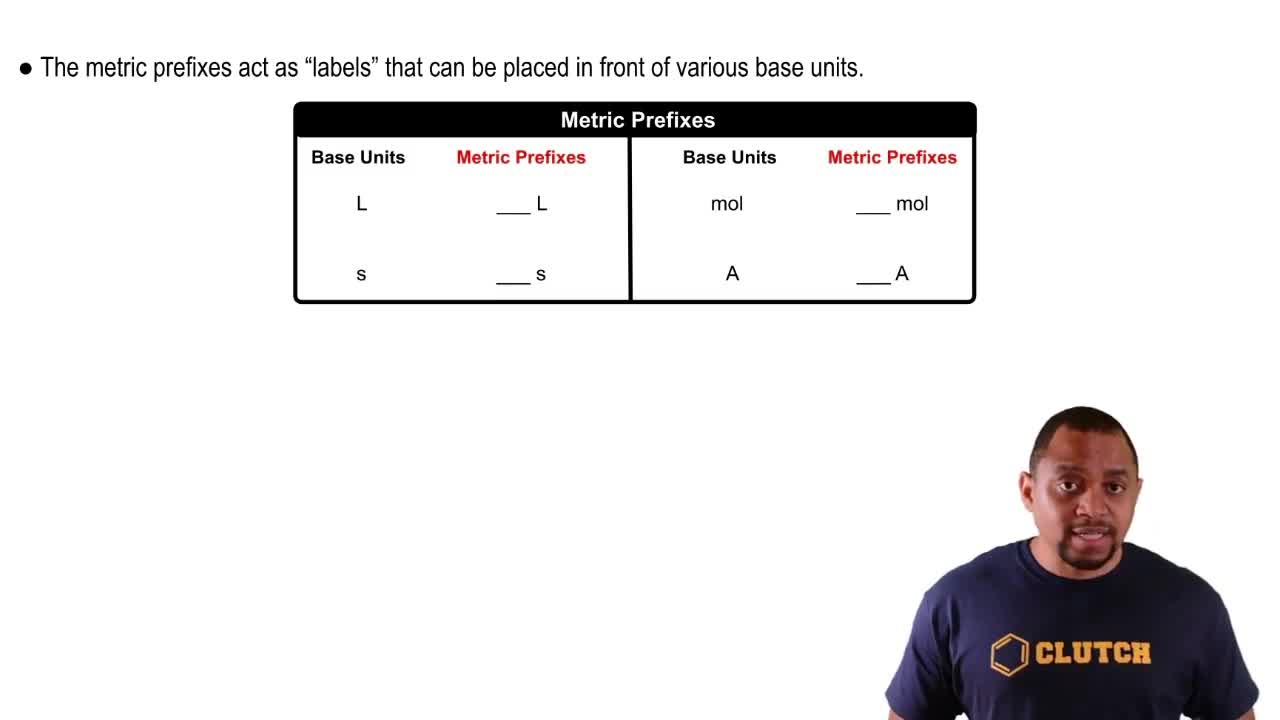
Metric System

The metric system is a decimal-based system of measurement used globally, which includes units such as meters, kilometers, and grams. It is structured around powers of ten, making conversions between units straightforward. Understanding the relationships between these units is essential for performing calculations in chemistry and other sciences.
추천 영상:
가이드 코스
01:16
Metric Prefixes Usage

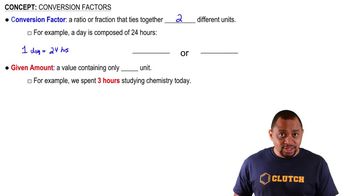
Unit Conversion

Unit conversion involves changing a quantity expressed in one unit to another unit without changing its value. This process is crucial in chemistry for ensuring that measurements are consistent and comparable. Familiarity with conversion factors, such as 1 km = 1000 m, allows for accurate calculations and comparisons in scientific contexts.
추천 영상:
가이드 코스
01:56
Conversion Factors

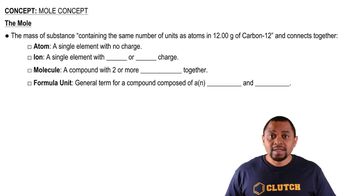
Mole Concept

The mole is a fundamental unit in chemistry that quantifies the amount of substance. One mole contains approximately 6.022 x 10^23 entities (Avogadro's number), whether they are atoms, molecules, or ions. Understanding the mole and its subdivisions, such as millimoles (mmol), is vital for stoichiometric calculations and understanding chemical reactions.
추천 영상: