
Ch.10 - Gases: Their Properties & Behavior
McMurry - Chemistry 8th Edition
McMurry8th EditionChemistryISBN: 9781292336145당신이 사용하는 게 아니라요?교과서 변경
10장, 문제 46

Calculate the average molecular weight of air from the data given in Table 10.1.

검증된 단계별 안내
1
Identify the major components of air and their respective molar fractions from Table 10.1. Common components include nitrogen (N2), oxygen (O2), argon (Ar), and carbon dioxide (CO2).
Find the molar mass of each component. For example, the molar mass of N2 is approximately 28 g/mol, O2 is about 32 g/mol, Ar is around 40 g/mol, and CO2 is about 44 g/mol.
Multiply the molar mass of each component by its respective molar fraction to find the contribution of each gas to the average molecular weight of air.
Sum up all the contributions from each component to get the total average molecular weight of air.
Ensure the units are consistent (typically grams per mole, g/mol) and consider significant figures based on the precision of the data provided in Table 10.1.

비슷한 문제에 대한 검증된 영상 답변:

이 영상 해법은 위 문제에 도움이 된다고 튜터들이 추천한 것입니다.
영상 길이:
5m

주요 개념

질문에 올바르게 답하기 위해 반드시 이해해야 하는 핵심 개념들은 다음과 같습니다.

Molecular Weight

Molecular weight, or molar mass, is the mass of one mole of a substance, typically expressed in grams per mole (g/mol). It is calculated by summing the atomic weights of all atoms in a molecule. Understanding molecular weight is essential for stoichiometric calculations and determining the composition of mixtures, such as air.
추천 영상:
가이드 코스
03:45
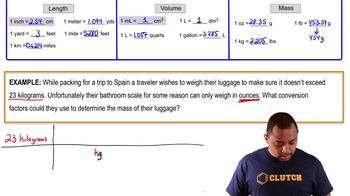
Weight Conversion Example

Composition of Air

Air is primarily composed of nitrogen (approximately 78%), oxygen (about 21%), and trace amounts of other gases like argon and carbon dioxide. Each component has its own molecular weight, which contributes to the overall average molecular weight of air. Knowing the composition allows for accurate calculations of the average molecular weight based on the proportions of each gas.
추천 영상:
가이드 코스
04:19
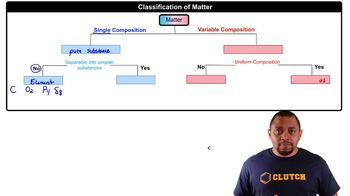
Matter Composition

Weighted Average

A weighted average is a mean that takes into account the relative importance or frequency of each value in a dataset. In the context of calculating the average molecular weight of air, the molecular weights of individual gases are multiplied by their respective mole fractions, and the results are summed to obtain the overall average. This method ensures that more abundant gases have a greater influence on the final average.
추천 영상:
가이드 코스
02:03
Average Rate of Reaction