Ch.12 - Solids and Solid-State Materials
McMurry - Chemistry 8th Edition
McMurry8th EditionChemistryISBN: 9781292336145당신이 사용하는 게 아니라요?교과서 변경
12장, 문제 116

What is a ceramic, and what properties distinguish a ceramic from a metal?

검증된 단계별 안내
1
Ceramics are non-metallic, inorganic solids. They are typically produced by heating and subsequent cooling. Some examples of ceramics include pottery, bricks, and porcelain.
Ceramics have several properties that distinguish them from metals. Here are some of the key differences:
Ceramics are typically hard and brittle. They have a high melting point and are resistant to wear, corrosion, and heat. This is in contrast to metals, which are typically malleable and ductile, and have lower melting points.
Ceramics are poor conductors of heat and electricity, while metals are good conductors. This is because metals have free electrons that can move easily, facilitating the transfer of heat or electrical charge.
Ceramics are often used in applications where their resistance to heat and wear is beneficial, such as in the manufacture of kitchenware, tiles, and aerospace components. Metals, on the other hand, are often used in applications where their malleability, ductility, and conductivity are beneficial, such as in the manufacture of wires, pipes, and structural components.

비슷한 문제에 대한 검증된 영상 답변:

이 영상 해법은 위 문제에 도움이 된다고 튜터들이 추천한 것입니다.
영상 길이:
2m
도움이 되었나요?

주요 개념

질문에 올바르게 답하기 위해 반드시 이해해야 하는 핵심 개념들은 다음과 같습니다.

Definition of Ceramics

Ceramics are inorganic, non-metallic materials that are typically crystalline in structure. They are formed through the process of heating and subsequent cooling, which gives them unique properties such as hardness, brittleness, and resistance to heat and chemicals. Common examples include porcelain, glass, and brick.
추천 영상:
가이드 코스
02:48
Law of Definite Proportions

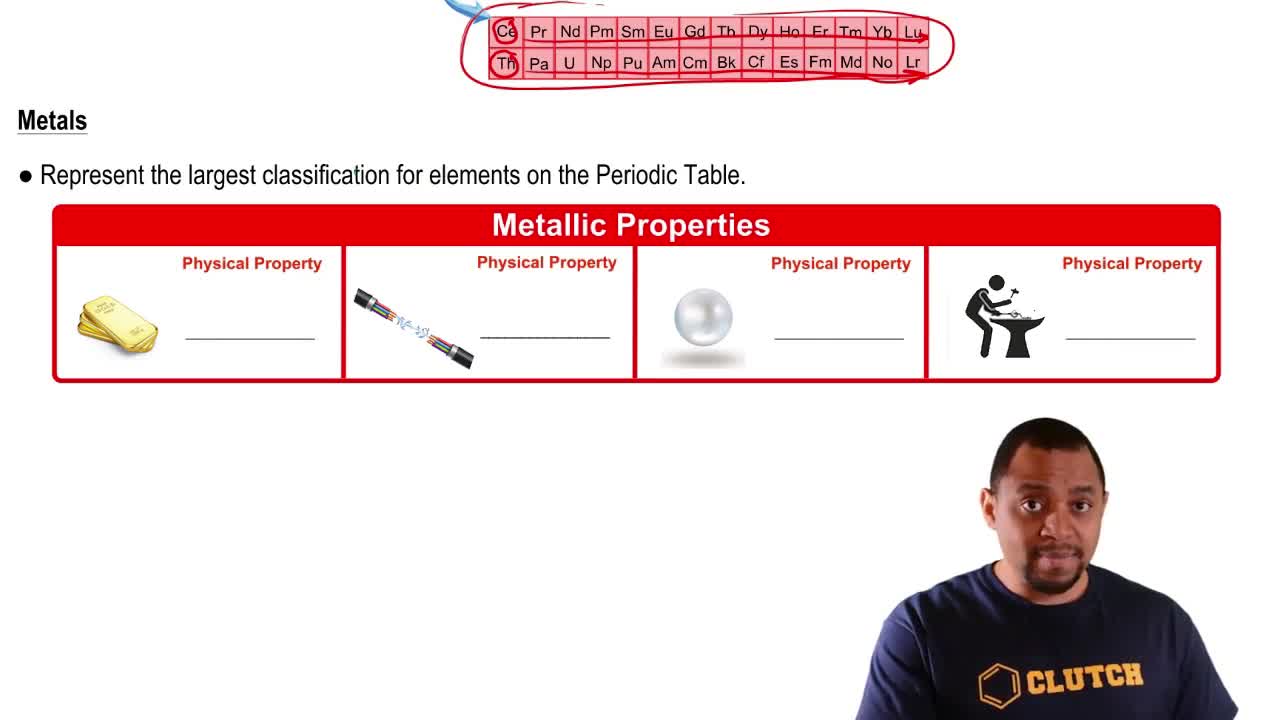
Properties of Metals

Metals are characterized by their ability to conduct electricity and heat, malleability, ductility, and typically high tensile strength. They have a crystalline structure but differ from ceramics in that they possess metallic bonding, which allows for the free movement of electrons, contributing to their conductive properties and toughness.
추천 영상:
가이드 코스
02:05
Metal Properties

Distinguishing Properties

The primary properties that distinguish ceramics from metals include brittleness versus ductility, thermal and electrical conductivity, and resistance to corrosion. Ceramics are generally more brittle and less conductive than metals, making them suitable for applications requiring high temperature resistance and chemical stability, while metals are favored for structural applications due to their strength and flexibility.
추천 영상:
가이드 코스
02:54
Physical Properties