13.122 When salt is spread on snow-covered roads at - 2 °C, the snow melts. When salt is spread on snow-covered roads at
- 30 °C, nothing happens. Explain.
검증된 단계별 안내
1
Understand the concept of freezing point depression, which is the process by which the addition of a solute to a solvent decreases the freezing point of the solvent. This is relevant because salt (solute) is added to ice (solvent).
Recognize that at -2 °C, the freezing point of the water is depressed below -2 °C when salt is added, making the salt effective in melting the snow.
Note that the effectiveness of freezing point depression depends on the concentration of the solute and the inherent properties of the solute and solvent. Salt can only lower the freezing point of water to about -21 °C under typical conditions.
Realize that at -30 °C, the ambient temperature is lower than the lowest freezing point that can be achieved by the addition of salt. Therefore, the salt does not have any effect because the temperature is too low for the salt to depress the freezing point of ice further to cause melting.
Conclude that the difference in outcomes when salt is spread on snow-covered roads at different temperatures is due to the limitations of freezing point depression by salt at extremely low temperatures.
비슷한 문제에 대한 검증된 영상 답변:
이 영상 해법은 위 문제에 도움이 된다고 튜터들이 추천한 것입니다.
영상 길이:
2m
영상 재생:
0 댓글
도움이 되었나요?
주요 개념
질문에 올바르게 답하기 위해 반드시 이해해야 하는 핵심 개념들은 다음과 같습니다.
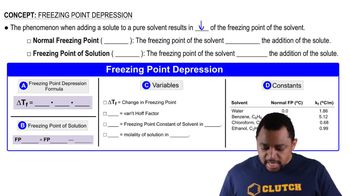
Freezing Point Depression
Freezing point depression is a colligative property that describes how the addition of a solute, such as salt, lowers the freezing point of a solvent, like water. This phenomenon occurs because the solute disrupts the formation of the solid structure of ice, allowing the liquid phase to exist at lower temperatures. The effectiveness of salt in melting ice is dependent on the temperature and the concentration of the salt.
The solubility of salt in water is temperature-dependent. At higher temperatures, more salt can dissolve in water, which enhances its ability to lower the freezing point. Conversely, at very low temperatures, the solubility of salt decreases significantly, meaning that there is less salt available to disrupt the ice structure, resulting in minimal or no melting of snow.
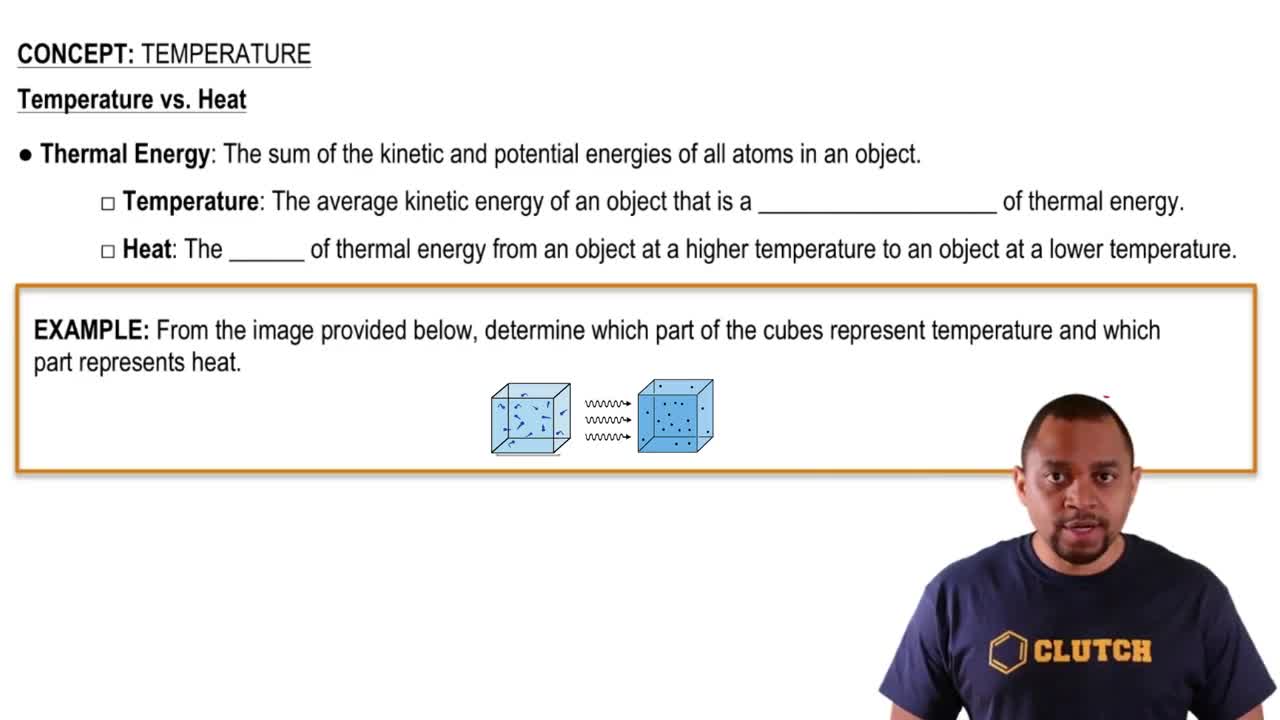
Phase changes, such as melting, are influenced by the kinetic energy of molecules. At -2 °C, the kinetic energy of water molecules is sufficient to overcome the forces holding them in a solid state, allowing melting to occur when salt is added. However, at -30 °C, the kinetic energy is too low for the water molecules to transition from solid to liquid, even with the presence of salt, preventing any melting from happening.