Ch.14 - Chemical Kinetics
McMurry - Chemistry 8th Edition
McMurry8th EditionChemistryISBN: 9781292336145당신이 사용하는 게 아니라요?교과서 변경
14장, 문제 40a

The following reaction is first order in A (red spheres) and first order in B (blue spheres): A + B → Products Rate = k[A][B]
(a) What are the relative rates of this reaction in vessels (1)–(4)? Each vessel has the same volume.

검증된 단계별 안내
1
Identify the rate law for the reaction: Rate = k[A][B].
Understand that the reaction is first order in A and first order in B, meaning the rate depends linearly on the concentration of both A and B.
For each vessel, determine the concentration of A and B. Since the volume is the same for all vessels, you can count the number of red and blue spheres to find the concentrations.
Calculate the rate for each vessel using the rate law: Rate = k[A][B]. Since k is constant, the relative rates depend on the product of the concentrations of A and B.
Compare the calculated rates for each vessel to determine their relative rates.

비슷한 문제에 대한 검증된 영상 답변:

이 영상 해법은 위 문제에 도움이 된다고 튜터들이 추천한 것입니다.
영상 길이:
3m

주요 개념

질문에 올바르게 답하기 위해 반드시 이해해야 하는 핵심 개념들은 다음과 같습니다.

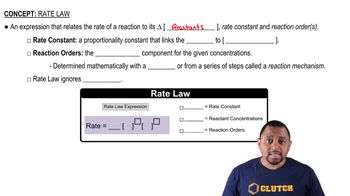
Rate Law

The rate law of a reaction expresses the relationship between the rate of the reaction and the concentration of its reactants. For the given reaction, the rate law is Rate = k[A][B], indicating that the rate is directly proportional to the concentrations of both A and B. This means that if the concentration of either reactant changes, the rate of the reaction will change accordingly.
추천 영상:
가이드 코스
01:52
Rate Law Fundamentals

Order of Reaction

The order of a reaction refers to the power to which the concentration of a reactant is raised in the rate law. In this case, the reaction is first order in both A and B, meaning that doubling the concentration of either reactant will double the rate of the reaction. Understanding the order helps predict how changes in concentration affect the reaction rate.
추천 영상:
가이드 코스
00:36
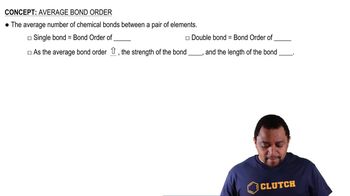
Average Bond Order

Relative Rates

Relative rates compare the rates of reaction under different conditions, such as varying concentrations of reactants. By analyzing the concentrations of A and B in vessels (1)–(4), one can determine how the rate of reaction changes in each vessel. This concept is crucial for understanding how different setups influence the overall reaction speed.
추천 영상:
가이드 코스
01:30
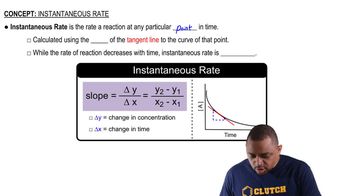
Instantaneous Rate