Ch.22 - The Main Group Elements
McMurry - Chemistry 8th Edition
McMurry8th EditionChemistryISBN: 9781292336145당신이 사용하는 게 아니라요?교과서 변경
22장, 문제 80b

Identify the group 3A element that best fits each of the following descriptions.
(b) Is stable in the +1 oxidation state

검증된 단계별 안내
1
Identify the elements in group 3A (13) of the periodic table: Boron (B), Aluminum (Al), Gallium (Ga), Indium (In), and Thallium (Tl).
Understand that the oxidation state refers to the charge of an atom if all bonds were ionic.
Recognize that elements in group 3A typically exhibit +3 oxidation states, but some can also exhibit +1 oxidation states.
Consider the stability of the +1 oxidation state for each element.
Note that Thallium (Tl) is known to be stable in the +1 oxidation state due to the inert pair effect, which makes the +1 state more stable than the +3 state for heavier elements in this group.

비슷한 문제에 대한 검증된 영상 답변:

이 영상 해법은 위 문제에 도움이 된다고 튜터들이 추천한 것입니다.
도움이 되었나요?

주요 개념

질문에 올바르게 답하기 위해 반드시 이해해야 하는 핵심 개념들은 다음과 같습니다.

Group 3A Elements

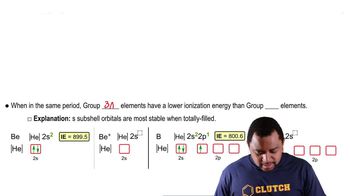
Group 3A (or Group 13) of the periodic table includes elements such as boron, aluminum, gallium, indium, and thallium. These elements typically have three valence electrons and exhibit a range of oxidation states, with +1 and +3 being the most common. Understanding the properties and behaviors of these elements is crucial for identifying which one is stable in the +1 oxidation state.
추천 영상:
가이드 코스
01:25
Group 3A vs. Group 2A Elements

Oxidation States

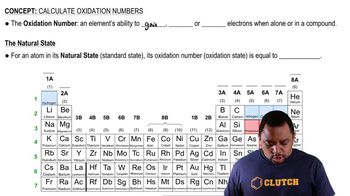
Oxidation states indicate the degree of oxidation of an atom in a compound, reflecting the number of electrons lost or gained. In the context of Group 3A elements, the +1 oxidation state is particularly relevant for elements like aluminum and thallium, which can lose one electron to achieve a stable electronic configuration. Recognizing how these oxidation states influence chemical behavior is essential for answering the question.
추천 영상:
가이드 코스
02:42
Oxidation Numbers

Stability of Oxidation States

The stability of an oxidation state refers to how likely an element is to remain in that state under standard conditions. For example, aluminum is stable in the +1 oxidation state due to its ability to form stable compounds, while other Group 3A elements may not exhibit the same stability. Understanding the factors that contribute to this stability, such as electronegativity and ionization energy, is key to identifying the correct element.
추천 영상:
가이드 코스
02:42
Oxidation Numbers