Ch.22 - The Main Group Elements
McMurry - Chemistry 8th Edition
McMurry8th EditionChemistryISBN: 9781292336145당신이 사용하는 게 아니라요?교과서 변경
22장, 문제 105

Identify the group 5A element that best fits each of the following descriptions: (a) Forms oxides with the group 5A element in the +1, +2 and +4 oxidation states, (b) Is a metal, (c) Is the most abundant group 5A element in the Earth’s crust.

검증된 단계별 안내
1
Identify the elements in group 5A of the periodic table. These elements are nitrogen (N), phosphorus (P), arsenic (As), antimony (Sb), and bismuth (Bi).
For part (a), consider the oxidation states of each group 5A element. Determine which element forms oxides in the +1, +2, and +4 oxidation states. Typically, nitrogen and phosphorus form a variety of oxides, but focus on the element that matches all three oxidation states.
For part (b), identify which of the group 5A elements is classified as a metal. Recall that in the periodic table, elements transition from nonmetals to metalloids to metals as you move down a group.
For part (c), research which group 5A element is the most abundant in the Earth's crust. Consider the common compounds and minerals that contain these elements and their prevalence in the Earth's crust.
Compile your findings to match each description with the appropriate group 5A element based on the characteristics identified in the previous steps.

주요 개념

질문에 올바르게 답하기 위해 반드시 이해해야 하는 핵심 개념들은 다음과 같습니다.

Group 5A Elements

Group 5A elements, also known as Group 15 in the periodic table, include nitrogen, phosphorus, arsenic, antimony, and bismuth. These elements have five valence electrons, which influence their chemical behavior and oxidation states. Understanding their properties and common oxidation states is crucial for identifying which element fits specific descriptions.
추천 영상:
가이드 코스
01:32
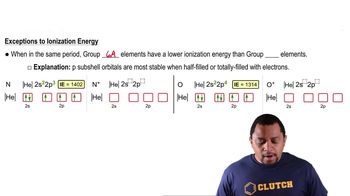
Group 6A vs. Group 5A Elements

Oxidation States

Oxidation states refer to the degree of oxidation of an atom in a compound, indicating how many electrons an atom has gained, lost, or shared. For Group 5A elements, common oxidation states include -3, +1, +3, and +5. Recognizing the oxidation states helps in predicting the types of compounds formed and their reactivity.
추천 영상:
가이드 코스
02:42
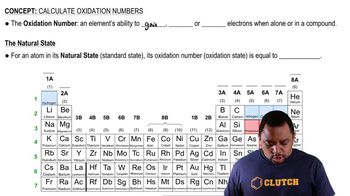
Oxidation Numbers

Metal vs. Non-Metal Characteristics

The distinction between metals and non-metals is essential in chemistry, as it affects physical and chemical properties. Metals, typically found on the left side of the periodic table, are good conductors of heat and electricity, malleable, and ductile. In contrast, non-metals are usually brittle and poor conductors. Identifying whether a Group 5A element is a metal or non-metal is key to answering the question.
추천 영상:
가이드 코스
03:12
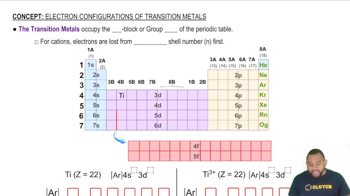
Transition Metals