
Ch.4 - Reactions in Aqueous Solution
McMurry - Chemistry 8th Edition
McMurry8th EditionChemistryISBN: 9781292336145당신이 사용하는 게 아니라요?교과서 변경
4장, 문제 123a

(a) Use the following reactions to arrange the elements A, B, C, and D in order of their decreasing ability as reducing agents:

검증된 단계별 안내
1
insert step 1
insert step 2
insert step 3
insert step 4
insert step 5

비슷한 문제에 대한 검증된 영상 답변:

이 영상 해법은 위 문제에 도움이 된다고 튜터들이 추천한 것입니다.
영상 길이:
4m
도움이 되었나요?

주요 개념

질문에 올바르게 답하기 위해 반드시 이해해야 하는 핵심 개념들은 다음과 같습니다.

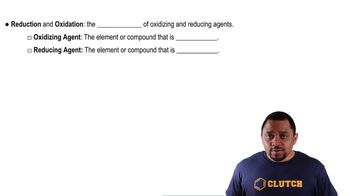
Reducing Agents

A reducing agent is a substance that donates electrons in a chemical reaction, thereby reducing another substance. The strength of a reducing agent is determined by its ability to lose electrons easily. Elements that are more electropositive, such as alkali metals, typically serve as stronger reducing agents due to their low ionization energies.
추천 영상:
가이드 코스
01:01
Oxidizing and Reducing Agents

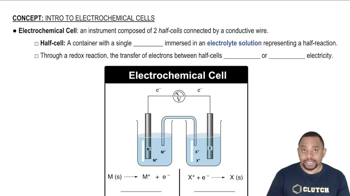
Electrochemical Series

The electrochemical series is a list of elements arranged by their standard electrode potentials. This series helps predict the tendency of a substance to act as a reducing or oxidizing agent. Elements higher in the series are more likely to be reduced, while those lower are more likely to be oxidized, thus serving as stronger reducing agents.
추천 영상:
가이드 코스
02:46
Electrochemical Cells

Reaction Context

The context of the reactions provided is crucial for determining the reducing abilities of elements A, B, C, and D. Different reactions can highlight different properties of the elements, such as their reactivity with specific oxidizing agents. Analyzing the products and conditions of these reactions will provide insight into the relative strengths of the reducing agents.
추천 영상:
가이드 코스
01:30
Alcohol Reactions: Dehydration Reactions