Ch.4 - Reactions in Aqueous Solution
McMurry - Chemistry 8th Edition
McMurry8th EditionChemistryISBN: 9781292336145당신이 사용하는 게 아니라요?교과서 변경
4장, 문제 44

Based on the positions in the periodic table, which of the following reactions would you expect to occur? (a) Red+ + Green → Red + Green+ (b) Blue + Green+ → Blue+ + Green (c) Red + Blue+ → Red+ + Blue

검증된 단계별 안내
1
Identify the elements involved in each reaction and their positions in the periodic table.
Determine the relative reactivity of the elements based on their positions. Elements on the left side of the periodic table are generally more reactive than those on the right.
Consider the concept of oxidation and reduction. In a redox reaction, the more reactive element will tend to lose electrons (oxidize), while the less reactive element will gain electrons (reduce).
Analyze each reaction: (a) Check if Red is more reactive than Green. If so, Red will not oxidize, and the reaction is unlikely. (b) Check if Blue is more reactive than Green. If so, Blue will oxidize, and the reaction is likely. (c) Check if Red is more reactive than Blue. If so, Red will oxidize, and the reaction is likely.
Conclude which reactions are expected to occur based on the reactivity series and the positions of the elements in the periodic table.

비슷한 문제에 대한 검증된 영상 답변:

이 영상 해법은 위 문제에 도움이 된다고 튜터들이 추천한 것입니다.
영상 길이:
2m

주요 개념

질문에 올바르게 답하기 위해 반드시 이해해야 하는 핵심 개념들은 다음과 같습니다.

Periodic Table Trends

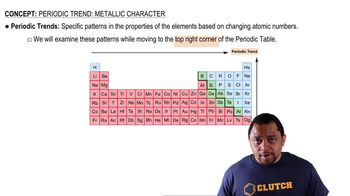
The periodic table organizes elements based on their atomic number and properties. Elements in the same group often exhibit similar chemical behaviors, while trends such as electronegativity, ionization energy, and atomic radius influence how elements interact in reactions. Understanding these trends helps predict the likelihood of reactions occurring between different elements.
추천 영상:
가이드 코스
00:38
Periodic Trends

Oxidation and Reduction

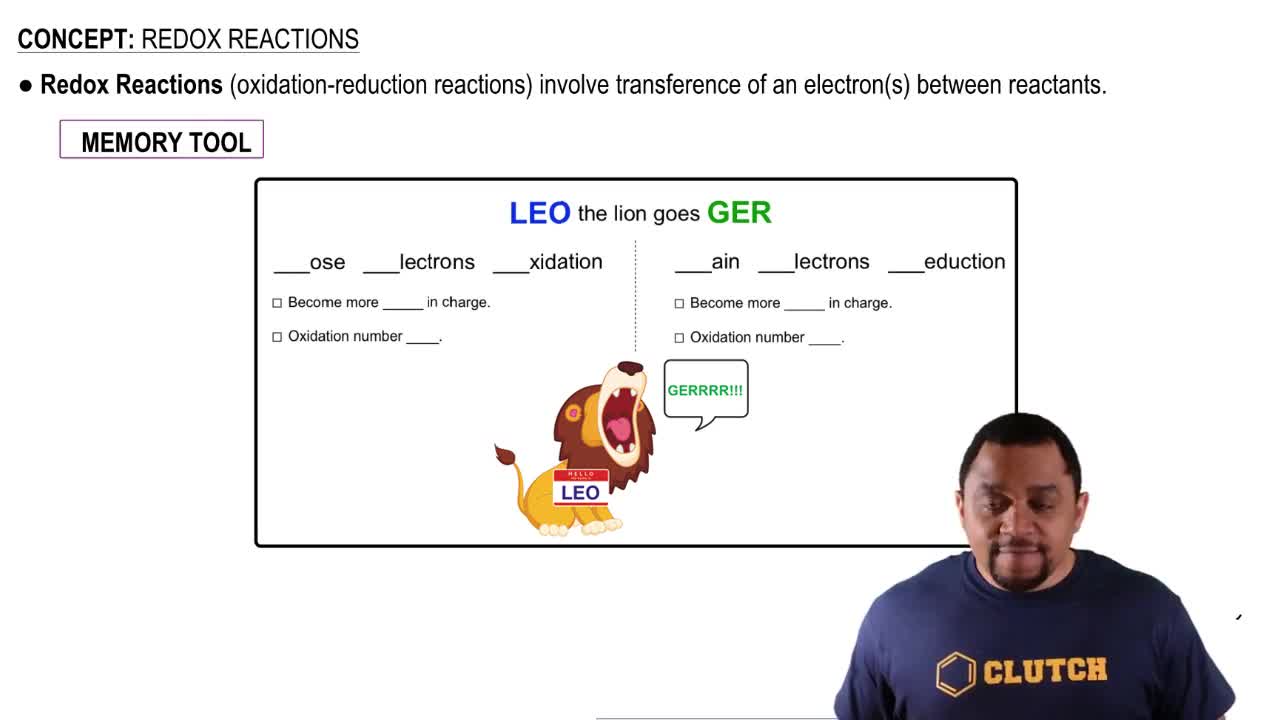
Oxidation and reduction (redox) reactions involve the transfer of electrons between species. In these reactions, oxidation refers to the loss of electrons, while reduction refers to the gain of electrons. Identifying which species is oxidized and which is reduced is crucial for predicting the outcome of a reaction, especially when dealing with ions and their charges.
추천 영상:
가이드 코스
01:53
Oxidation and Reduction Reactions

Ionic and Covalent Compounds

Ionic compounds are formed through the transfer of electrons from one atom to another, resulting in charged ions that attract each other. In contrast, covalent compounds involve the sharing of electrons between atoms. Recognizing whether the reactants are ionic or covalent helps in understanding their reactivity and the types of products that can form during a chemical reaction.
추천 영상:
가이드 코스
02:11
Ionic Compounds Naming