Ch.5 - Periodicity & Electronic Structure of Atoms
McMurry - Chemistry 8th Edition
McMurry8th EditionChemistryISBN: 9781292336145당신이 사용하는 게 아니라요?교과서 변경
5장, 문제 41

(b) Fiber optic cable is available in 12 km lengths. How long will it take for a signal to travel that distance assuming that the speed of light in the cable is the same as in a vacuum?

검증된 단계별 안내
1
Step 1: Understand the problem. We are asked to find the time it takes for a signal to travel a certain distance. We know the distance (12 km) and the speed of light in a vacuum, which is approximately 3.00 x 10^8 m/s.
Step 2: Convert the distance from kilometers to meters. 1 km is equal to 1000 m, so 12 km is equal to 12,000 m.
Step 3: Use the formula for time, which is distance divided by speed. In this case, the distance is 12,000 m and the speed is 3.00 x 10^8 m/s.
Step 4: Plug the values into the formula and solve for time. Remember to keep the units consistent - both the distance and speed should be in the same units (meters and meters per second, respectively).
Step 5: The result will be the time it takes for a signal to travel 12 km in a fiber optic cable, assuming the speed of light in the cable is the same as in a vacuum.

비슷한 문제에 대한 검증된 영상 답변:

이 영상 해법은 위 문제에 도움이 된다고 튜터들이 추천한 것입니다.
영상 길이:
1m

주요 개념

질문에 올바르게 답하기 위해 반드시 이해해야 하는 핵심 개념들은 다음과 같습니다.

Speed of Light

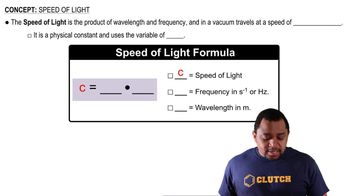
The speed of light in a vacuum is approximately 299,792 kilometers per second (km/s). This constant is fundamental in physics and is denoted by the symbol 'c'. In fiber optic cables, while the speed of light is reduced due to the medium, the question assumes it remains the same as in a vacuum, which simplifies calculations.
추천 영상:
가이드 코스
00:57
Speed of Light Formula

Distance and Time Relationship

The relationship between distance, speed, and time is described by the formula: distance = speed × time. This equation allows us to calculate the time it takes for a signal to travel a certain distance when the speed is known. Rearranging the formula gives time = distance/speed, which is essential for solving the problem presented.
추천 영상:
가이드 코스
02:16
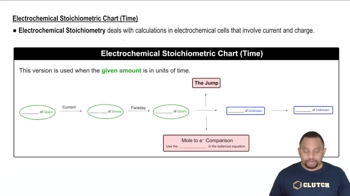
Electrochemical Stoichiometric Chart (Time)

Signal Propagation in Fiber Optics

In fiber optics, signals are transmitted as light pulses through thin strands of glass or plastic. The speed of light in these materials is typically slower than in a vacuum due to refraction, but the question specifies the speed as that in a vacuum. Understanding how light travels through different media is crucial for accurately determining signal travel times in practical applications.
추천 영상: