Ch.5 - Periodicity & Electronic Structure of Atoms
McMurry - Chemistry 8th Edition
McMurry8th EditionChemistryISBN: 9781292336145당신이 사용하는 게 아니라요?교과서 변경
5장, 문제 30

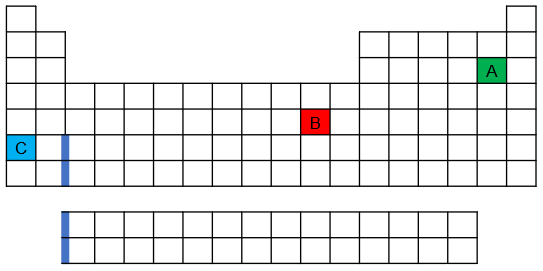
One of the elements shown on the following periodic table has an anomalous ground-state electron configuration. Which is it—red, blue, or green—and why? Periodic table highlighting elements A (green), B (red), and C (blue) for electron configuration discussion.

검증된 단계별 안내
1
Identify the elements corresponding to the highlighted positions on the periodic table: A (green), B (red), and C (blue).
Determine the expected ground-state electron configurations for each of these elements based on their positions in the periodic table.
Compare the expected electron configurations with known anomalous configurations for certain elements.
Recognize that some elements, particularly in the d-block, have electron configurations that deviate from the expected pattern due to stability considerations.
Conclude which element (A, B, or C) has an anomalous ground-state electron configuration and explain why this deviation occurs.

비슷한 문제에 대한 검증된 영상 답변:

이 영상 해법은 위 문제에 도움이 된다고 튜터들이 추천한 것입니다.
영상 길이:
3m

주요 개념

질문에 올바르게 답하기 위해 반드시 이해해야 하는 핵심 개념들은 다음과 같습니다.

Electron Configuration

Electron configuration describes the distribution of electrons in an atom's orbitals. It follows the Aufbau principle, which states that electrons fill orbitals starting from the lowest energy level to the highest. Understanding electron configuration is crucial for predicting an element's chemical properties and behavior, including its reactivity and bonding characteristics.
추천 영상:
가이드 코스
01:33
Electron Configuration Example

Anomalous Electron Configurations

Anomalous electron configurations occur when an atom's electron arrangement deviates from the expected order based on the Aufbau principle. This typically happens in transition metals and some heavier elements, where stability is achieved by having half-filled or fully filled subshells. Recognizing these anomalies is essential for understanding the unique properties of certain elements.
추천 영상:
가이드 코스
01:33
Electron Configuration Example

Periodic Table Trends

The periodic table organizes elements based on their atomic number and electron configurations, revealing trends in properties such as electronegativity, ionization energy, and atomic radius. Elements in the same group often exhibit similar chemical behaviors due to their similar valence electron configurations. Analyzing these trends helps identify which element may have an anomalous configuration based on its position in the table.
추천 영상:
가이드 코스
00:38
Periodic Trends