Ch.8 - Covalent Compounds: Bonding Theories and Molecular Structure
McMurry - Chemistry 8th Edition
McMurry8th EditionChemistryISBN: 9781292336145당신이 사용하는 게 아니라요?교과서 변경
8장, 문제 58

What is the difference in spatial distribution between electrons in a p bond and electrons in a s bond?

검증된 단계별 안내
1
Understand the basic orbital shapes: The s orbital is spherical, while p orbitals are dumbbell-shaped.
Recognize the electron density distribution: In a sigma (σ) bond, formed by the head-on overlap of orbitals, the electron density is symmetrically distributed along the axis connecting the two nuclei.
Identify the formation of pi (π) bonds: Pi bonds are formed by the side-to-side overlap of p orbitals, with the electron density concentrated above and below the plane of the nuclei.
Compare the directional characteristics: Sigma bonds allow free rotation around the bond axis because of their symmetrical nature, whereas pi bonds restrict this rotation due to the electron density being off the axis.
Visualize the molecular geometry: Molecules with pi bonds often have planar configurations to maximize the overlap of p orbitals, while sigma bonds are present in both linear and bent geometries.

비슷한 문제에 대한 검증된 영상 답변:

이 영상 해법은 위 문제에 도움이 된다고 튜터들이 추천한 것입니다.
영상 길이:
1m
도움이 되었나요?

주요 개념

질문에 올바르게 답하기 위해 반드시 이해해야 하는 핵심 개념들은 다음과 같습니다.

Electron Distribution in s Bonds

In s bonds, electrons are distributed spherically around the nucleus, creating a symmetrical electron cloud. This spherical shape allows for a uniform distribution of electron density, which is characteristic of the bonding in s orbitals. As a result, s bonds tend to be stronger and more stable due to the effective overlap of the s orbitals from the bonding atoms.
추천 영상:
가이드 코스
02:47
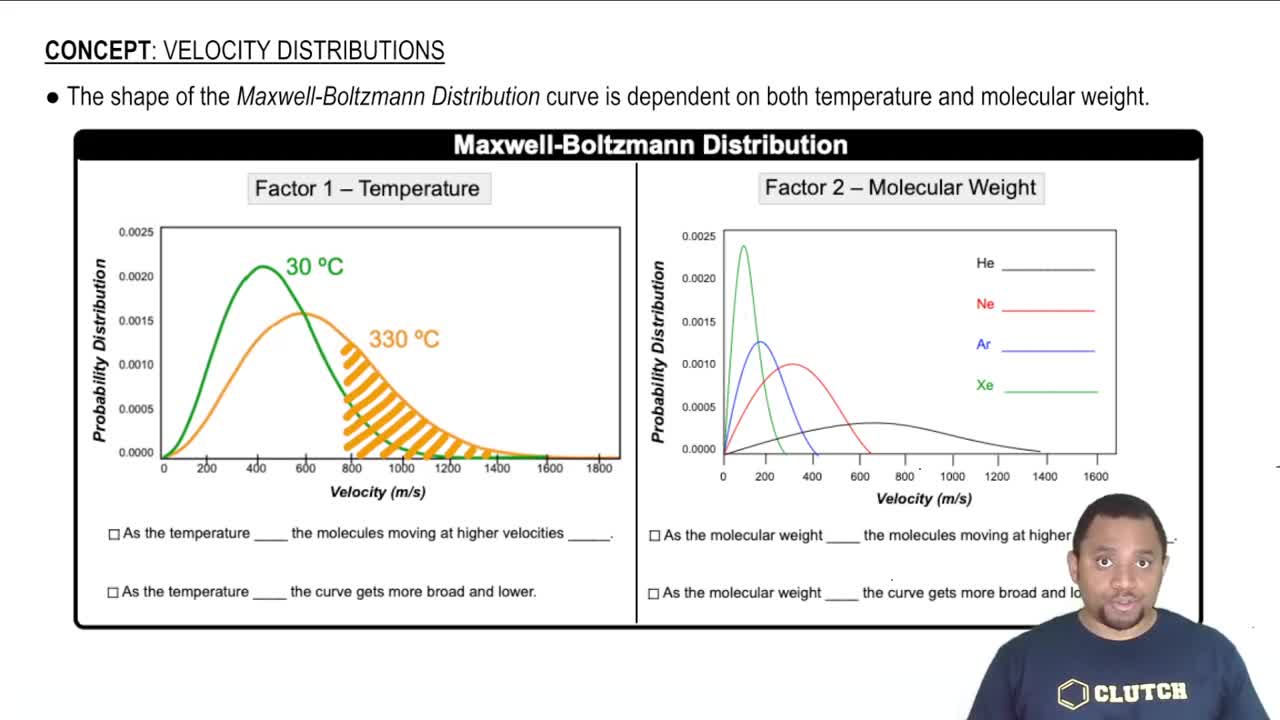
Velocity Distributions

Electron Distribution in p Bonds

In p bonds, electrons are distributed in a more directional manner, forming lobes that extend along specific axes. The p orbitals have a dumbbell shape, which leads to a higher electron density in certain regions, allowing for the formation of pi bonds. This directional nature of p bonds contributes to the unique geometries and reactivity of molecules containing them.
추천 영상:
가이드 코스
02:47
Velocity Distributions

Bonding and Hybridization

Bonding and hybridization refer to the mixing of atomic orbitals to form new hybrid orbitals that can accommodate bonding. In the case of s and p bonds, hybridization can lead to the formation of sp, sp2, or sp3 hybrid orbitals, which influence the geometry and strength of the bonds. Understanding hybridization is crucial for predicting molecular shapes and the spatial arrangement of electrons in different types of bonds.
추천 영상: