

Ch.9 - Thermochemistry: Chemical Energy
McMurry - Chemistry 8th Edition
McMurry8th EditionChemistryISBN: 9781292336145당신이 사용하는 게 아니라요?교과서 변경
9장, 문제 99

How is the standard state of an element defined? Why do elements always have ∆H°f = 0?

검증된 단계별 안내
1
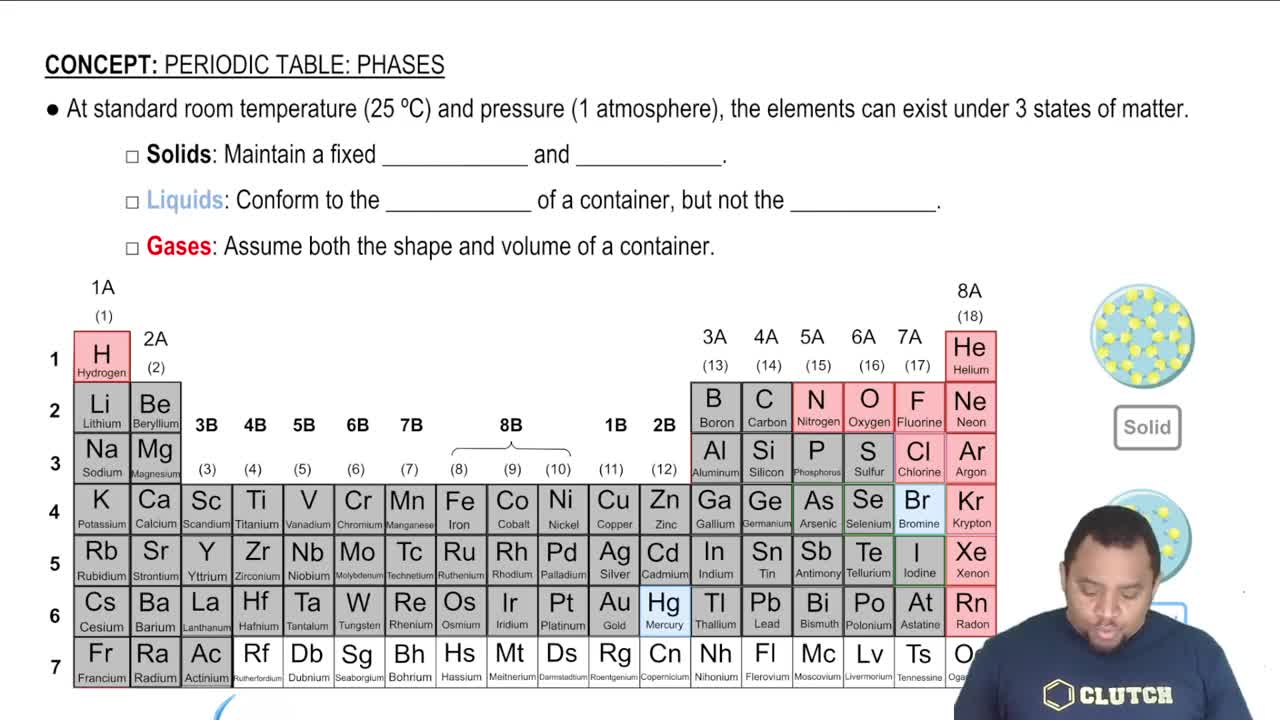
The standard state of an element is defined as the most stable physical form of the element at 1 bar of pressure and a specified temperature, usually 25°C (298 K). This includes the physical state (solid, liquid, or gas) and the allotrope, if more than one exists.
In thermodynamics, the standard enthalpy of formation (∆H°f) is the change in enthalpy during the formation of 1 mole of a substance from its constituent elements in their standard states.
For an element in its standard state, the standard enthalpy of formation is defined as zero because there is no change in enthalpy when the element is already in its most stable form under standard conditions.
This convention simplifies calculations in thermochemistry, allowing us to focus on the changes that occur during chemical reactions rather than the absolute values of enthalpy.
Understanding that ∆H°f = 0 for elements in their standard states helps in calculating the enthalpies of formation for compounds, as these values are based on the assumption that all elements are initially in their standard states.

비슷한 문제에 대한 검증된 영상 답변:

이 영상 해법은 위 문제에 도움이 된다고 튜터들이 추천한 것입니다.
영상 길이:
2m
도움이 되었나요?

주요 개념

질문에 올바르게 답하기 위해 반드시 이해해야 하는 핵심 개념들은 다음과 같습니다.

Standard State of an Element

The standard state of an element refers to its most stable physical form at a specified temperature and pressure, typically 1 bar (or 1 atm) and 25°C. For example, the standard state of oxygen is O2 gas, while that of carbon is graphite. This definition is crucial for thermodynamic calculations and comparisons.
추천 영상:
가이드 코스
03:25
Element States of Matter

Enthalpy of Formation (∆H°f)

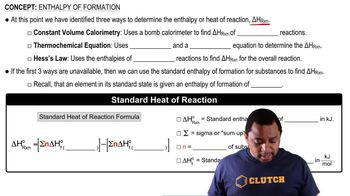
The enthalpy of formation (∆H°f) is the change in enthalpy when one mole of a compound is formed from its elements in their standard states. By convention, the ∆H°f of any element in its standard state is defined as zero. This allows for a consistent reference point when calculating the enthalpy changes of reactions involving compounds.
추천 영상:
가이드 코스
02:34
Enthalpy of Formation

Thermodynamic Convention

Thermodynamic conventions, such as defining the standard enthalpy of formation as zero for elements, provide a systematic approach to thermodynamic calculations. This convention simplifies the understanding of energy changes in chemical reactions and allows chemists to easily compare the stability and reactivity of different substances based on their enthalpy values.
추천 영상:
가이드 코스
01:18
First Law of Thermodynamics