
An ibuprofen suspension for infants contains 100 mg/5.0 mL suspension. The recommended dose is 10 mg/kg body weight. How many mL of this suspension should be given to an infant weighing 18 lb? (Assume two significant figures.)
Ch.1 - Matter, Measurement & Problem Solving
1장, 문제 107
Classify each property as intensive or extensive. a. volume b. boiling point c. temperature d. electrical conductivity e. energy
검증된 단계별 안내1
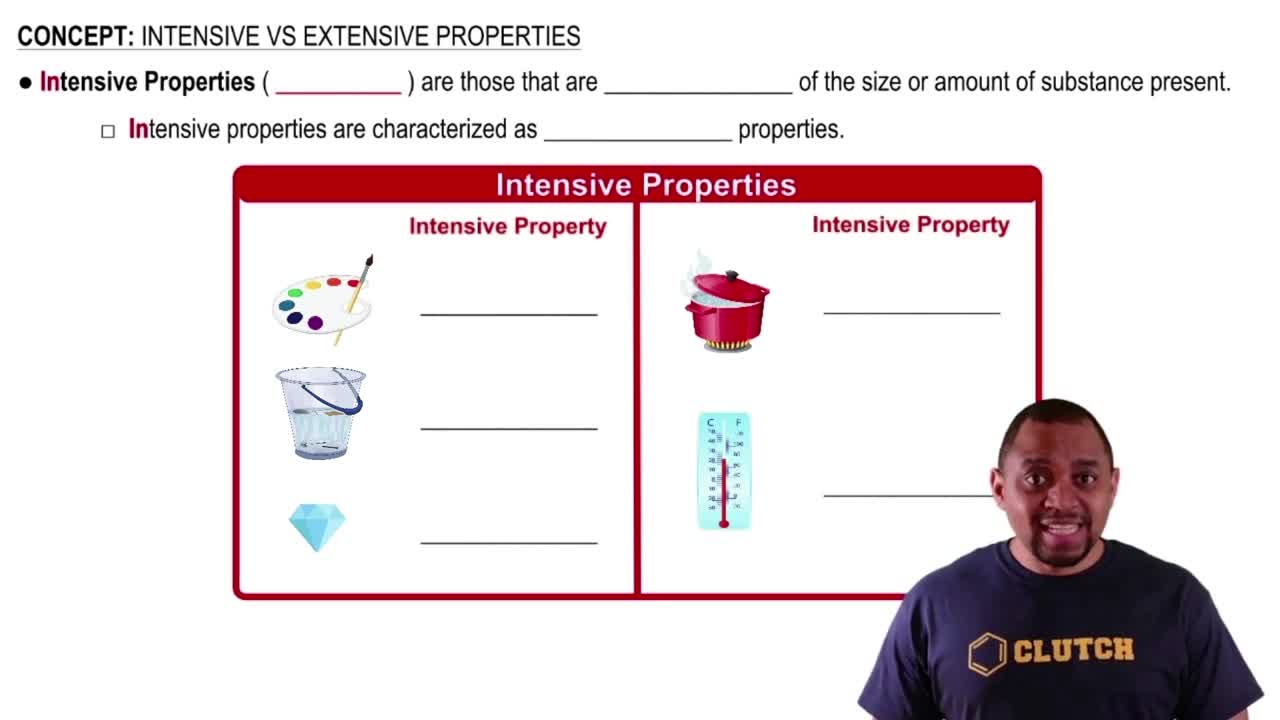
Understand the difference between intensive and extensive properties: Intensive properties do not depend on the amount of substance present, while extensive properties do depend on the amount of substance.
Classify volume: Volume is an extensive property because it changes with the amount of substance present.
Classify boiling point: Boiling point is an intensive property because it remains the same regardless of the amount of substance.
Classify temperature: Temperature is an intensive property because it does not depend on the quantity of the substance.
Classify electrical conductivity and energy: Electrical conductivity is an intensive property, while energy is an extensive property because it depends on the amount of substance.

비슷한 문제에 대한 검증된 영상 답변:
이 영상 해법은 위 문제에 도움이 된다고 튜터들이 추천한 것입니다.
영상 길이:
1m도움이 되었나요?
주요 개념
질문에 올바르게 답하기 위해 반드시 이해해야 하는 핵심 개념들은 다음과 같습니다.
Intensive Properties
Intensive properties are characteristics of a substance that do not depend on the amount of material present. Examples include boiling point, temperature, and electrical conductivity. These properties are intrinsic to the material itself, allowing for identification and classification regardless of sample size.
추천 영상:
가이드 코스
Intensive Properties
Extensive Properties
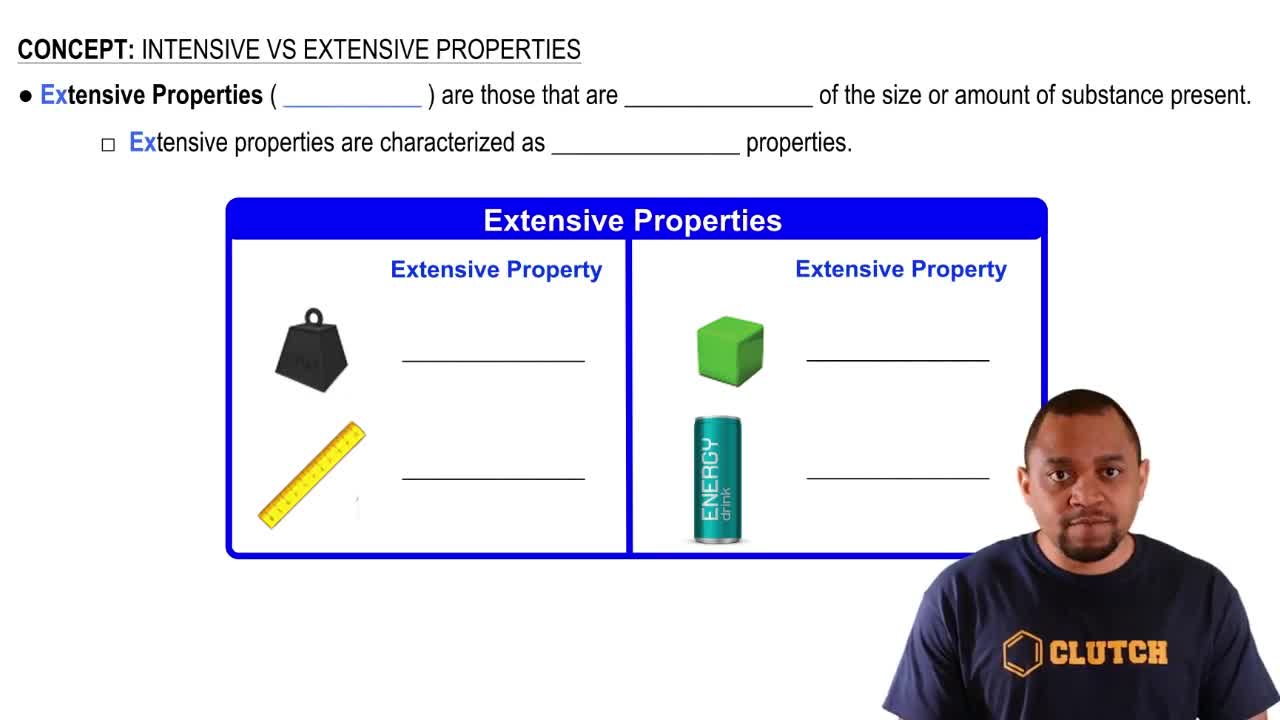
Extensive properties are characteristics that do depend on the amount of substance present. Volume and energy are prime examples of extensive properties, as they increase with the quantity of material. Understanding the distinction between extensive and intensive properties is crucial for classifying physical properties accurately.
추천 영상:
가이드 코스
Extensive Properties
Classification of Properties
Classifying properties as intensive or extensive helps in understanding the behavior of substances under various conditions. This classification is fundamental in chemistry, as it aids in predicting how substances will react or change when manipulated, such as during chemical reactions or physical changes.
추천 영상:
가이드 코스
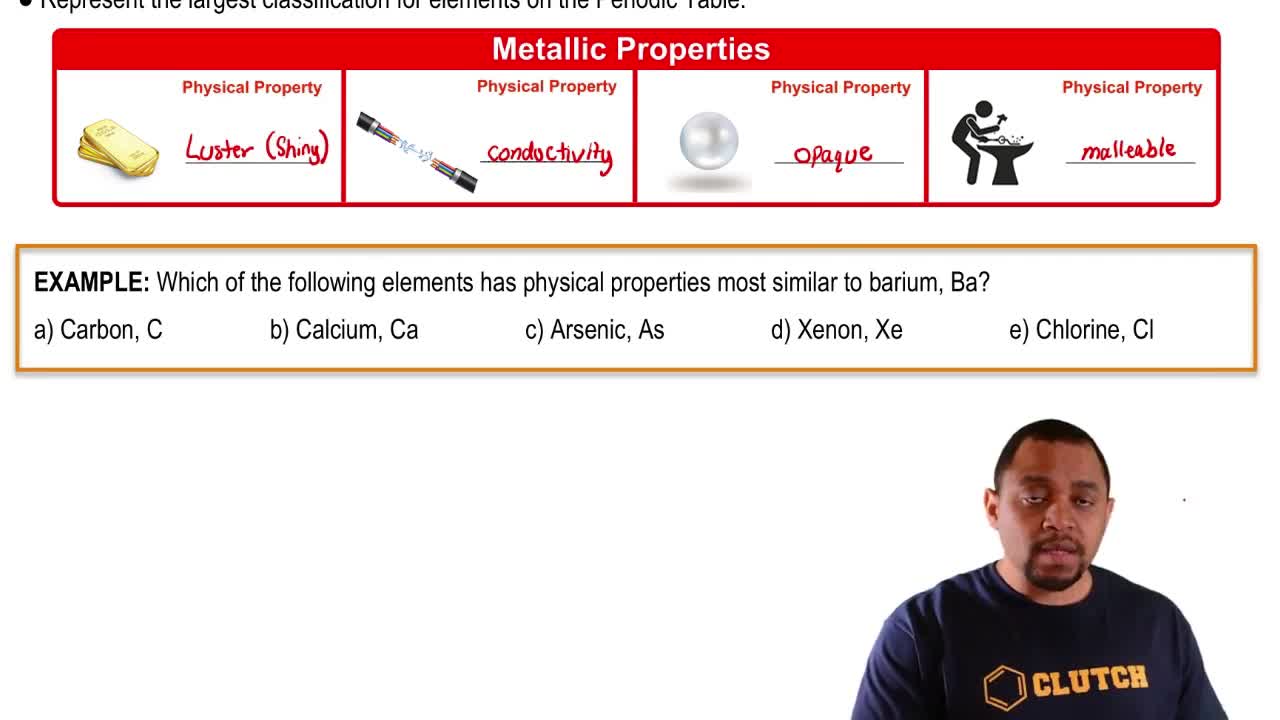
Element Classification Example
관련 실천
교과서 질문
4074
views
4
rank
교과서 질문
Determine the number of picoseconds in 2.0 hours.
778
views
교과서 질문
There are exactly 60 seconds in a minute, exactly 60 minutes in an hour, exactly 24 hours in a mean solar day, and 365.24 solar days in a solar year. How many seconds are in a solar year? Give your answer with the correct number of significant figures.
2890
views
교과서 질문
On a new Jekyll temperature scale, water freezes at 17 °J and boils at 97 °J. On another new temperature scale, the Hyde scale, water freezes at 0 °H and boils at 120 °H. If methyl alcohol boils at 84 °H, what is its boiling point on the Jekyll scale?
847
views
1
rank
교과서 질문
At what temperatures are the readings on the Fahrenheit and Celsius thermometers the same?
989
views
