
Ch.1 - Matter, Measurement & Problem Solving
Tro - Chemistry: A Molecular Approach 4th Edition
Tro4th EditionChemistry: A Molecular ApproachISBN: 9780134112831당신이 사용하는 게 아니라요?교과서 변경
1장, 문제 45

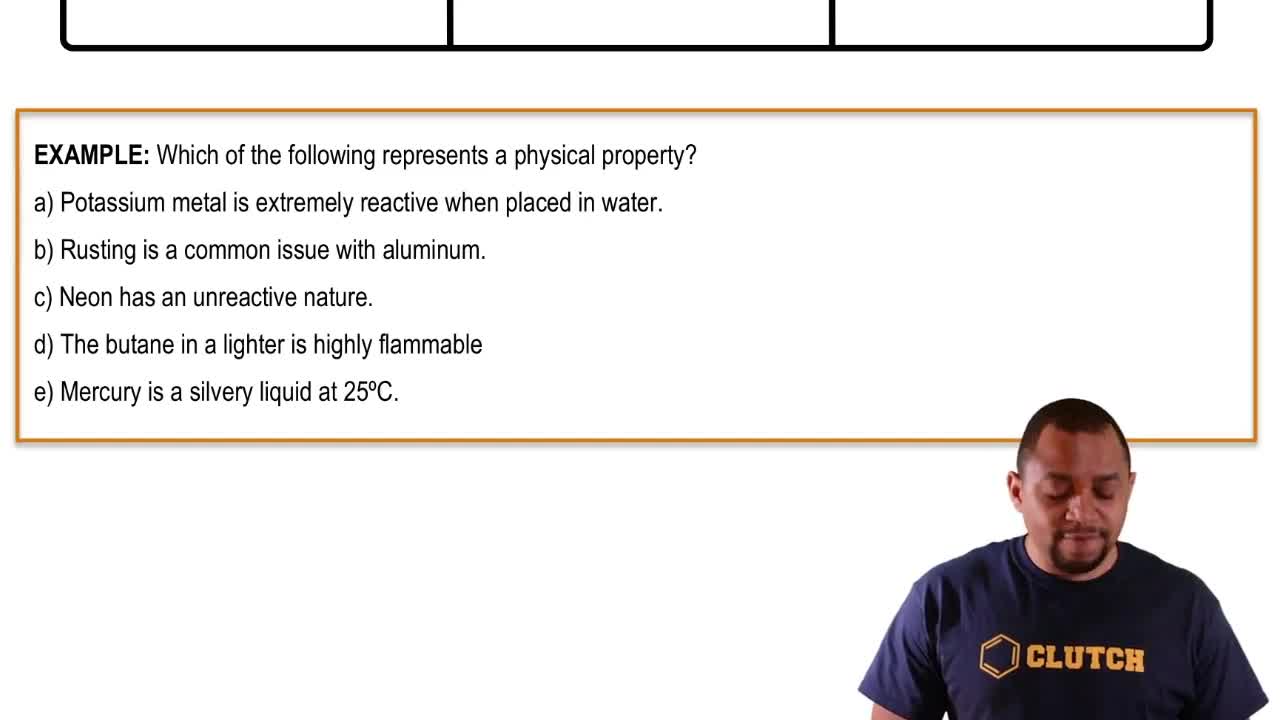
Classify each property as physical or chemical. a. the tendency of ethyl alcohol to burn b. the shine on silver c. the odor of paint thinner d. the flammability of propane gas

검증된 단계별 안내
1
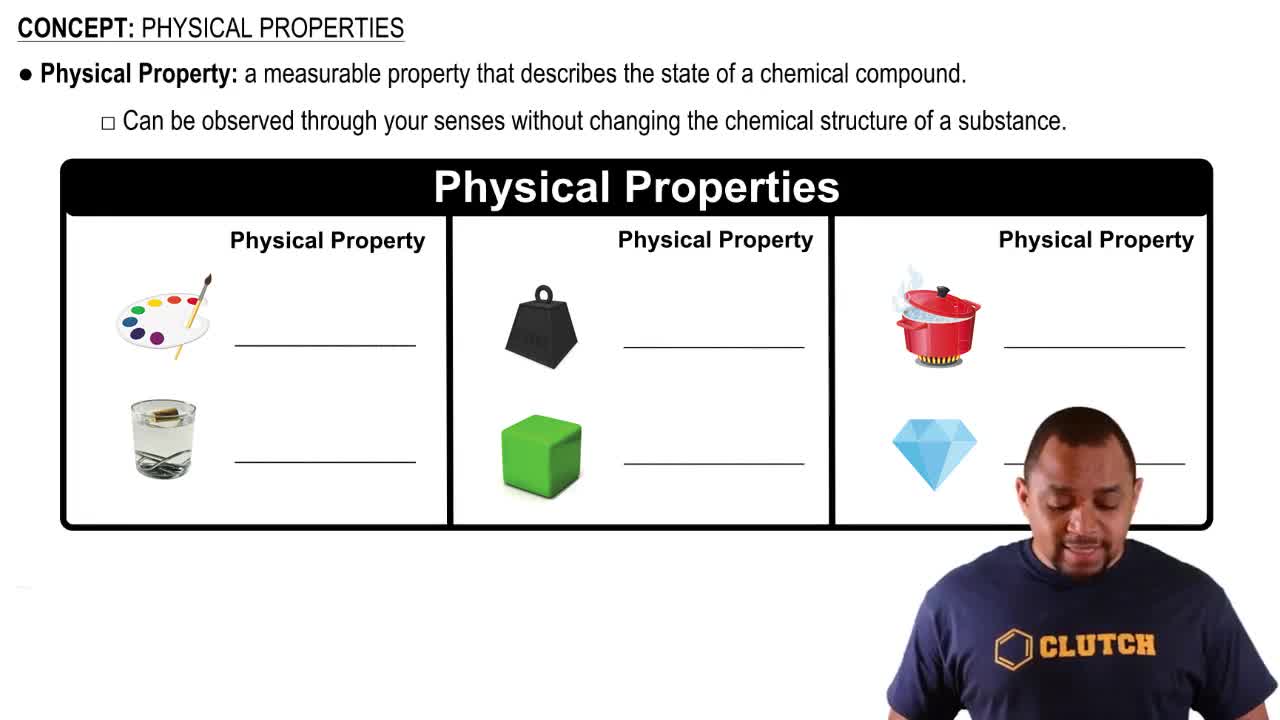
Understand the difference between physical and chemical properties: Physical properties can be observed or measured without changing the substance's identity, while chemical properties describe a substance's ability to undergo a chemical change.
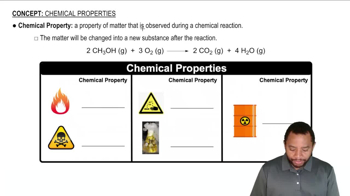
Analyze property (a): 'the tendency of ethyl alcohol to burn'. This involves a chemical change where ethyl alcohol reacts with oxygen to produce carbon dioxide and water, indicating a chemical property.
Analyze property (b): 'the shine on silver'. This is an observable characteristic that does not involve changing the substance's identity, indicating a physical property.
Analyze property (c): 'the odor of paint thinner'. This is a sensory characteristic that can be observed without altering the chemical structure of the paint thinner, indicating a physical property.
Analyze property (d): 'the flammability of propane gas'. This describes the ability of propane to react with oxygen and burn, which is a chemical change, indicating a chemical property.

비슷한 문제에 대한 검증된 영상 답변:

이 영상 해법은 위 문제에 도움이 된다고 튜터들이 추천한 것입니다.
영상 길이:
1m
도움이 되었나요?

주요 개념

질문에 올바르게 답하기 위해 반드시 이해해야 하는 핵심 개념들은 다음과 같습니다.

Physical Properties

Physical properties are characteristics of a substance that can be observed or measured without changing its chemical identity. Examples include color, odor, boiling point, and state of matter. These properties are used to describe the physical state and appearance of a substance.
추천 영상:
가이드 코스
02:54
Physical Properties

Chemical Properties

Chemical properties describe a substance's ability to undergo chemical changes or reactions, resulting in the formation of new substances. Examples include reactivity with acids, flammability, and oxidation states. These properties are crucial for understanding how substances interact and transform during chemical reactions.
추천 영상:
가이드 코스
03:31
Chemical Properties

Flammability

Flammability is a specific chemical property that indicates how easily a substance can ignite and burn in the presence of an oxidizer, typically oxygen. It is an essential consideration in safety and handling of materials, as substances with high flammability pose greater risks in various environments.
추천 영상:
가이드 코스
01:41
Physical Properties Example
관련 실천
교과서 질문

Determine whether each molecular diagram represents a pure substance or a mixture. If it represents a pure substance, classify the substance as an element or a compound. If it represents a mixture, classify the mixture as homogeneous or heterogeneous.

3450
views
1
rank
교과서 질문

Classify each of the listed properties of ozone (a pollutant in the lower atmosphere but part of a protective shield against UV light in the upper atmosphere) as physical or chemical. a. bluish color b. pungent odor c. very reactive d. decomposes on exposure to ultraviolet light e. gas at room temperature

1085
views
교과서 질문

Classify each property as physical or chemical. a. the boiling point of ethyl alcohol b. the temperature at which dry ice evaporates c. the tendency of iron to rust d. the color of gold

622
views
교과서 질문

Classify each change as physical or chemical. a. Sugar burns when heated in a skillet. b. Sugar dissolves in water. c. A platinum ring becomes dull because of continued abrasion. d. A silver surface becomes tarnished after exposure to air for a long period of time.

교과서 질문

Classify each change as physical or chemical. a. Natural gas burns in a stove. b. The liquid propane in a gas grill evaporates because the valve was left open. c. The liquid propane in a gas grill burns in a flame. d. A bicycle frame rusts on repeated exposure to air and water.

863
views
교과서 질문

Classify each of the listed properties of isopropyl alcohol (also known as rubbing alcohol) as physical or chemical. a. colorless b. flammable c. liquid at room temperature d. density = 0.79 g/mL e. mixes with water

904
views