Ch.1 - Matter, Measurement & Problem Solving
Tro - Chemistry: A Molecular Approach 4th Edition
Tro4th EditionChemistry: A Molecular ApproachISBN: 9780134112831당신이 사용하는 게 아니라요?교과서 변경
1장, 문제 59b

Complete the table. b. 515 km _____dm _____cm

검증된 단계별 안내
1
Understand the metric conversion factors: 1 kilometer (km) is equal to 10,000 decimeters (dm) and 100,000 centimeters (cm).
Start with the given value in kilometers: 515 km.
Convert kilometers to decimeters by multiplying the number of kilometers by 10,000 (since 1 km = 10,000 dm).
Convert kilometers to centimeters by multiplying the number of kilometers by 100,000 (since 1 km = 100,000 cm).
Fill in the table with the calculated values for decimeters and centimeters.

비슷한 문제에 대한 검증된 영상 답변:

이 영상 해법은 위 문제에 도움이 된다고 튜터들이 추천한 것입니다.
영상 길이:
1m
도움이 되었나요?

주요 개념

질문에 올바르게 답하기 위해 반드시 이해해야 하는 핵심 개념들은 다음과 같습니다.

Unit Conversion

Unit conversion is the process of converting a quantity expressed in one unit to another unit. In this case, it involves converting kilometers (km) to decimeters (dm) and centimeters (cm). Understanding the relationships between different metric units is essential for accurate conversions.
추천 영상:
가이드 코스
01:56
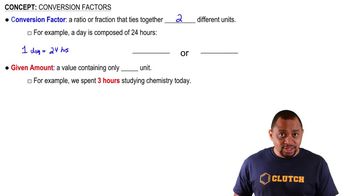
Conversion Factors

Metric System

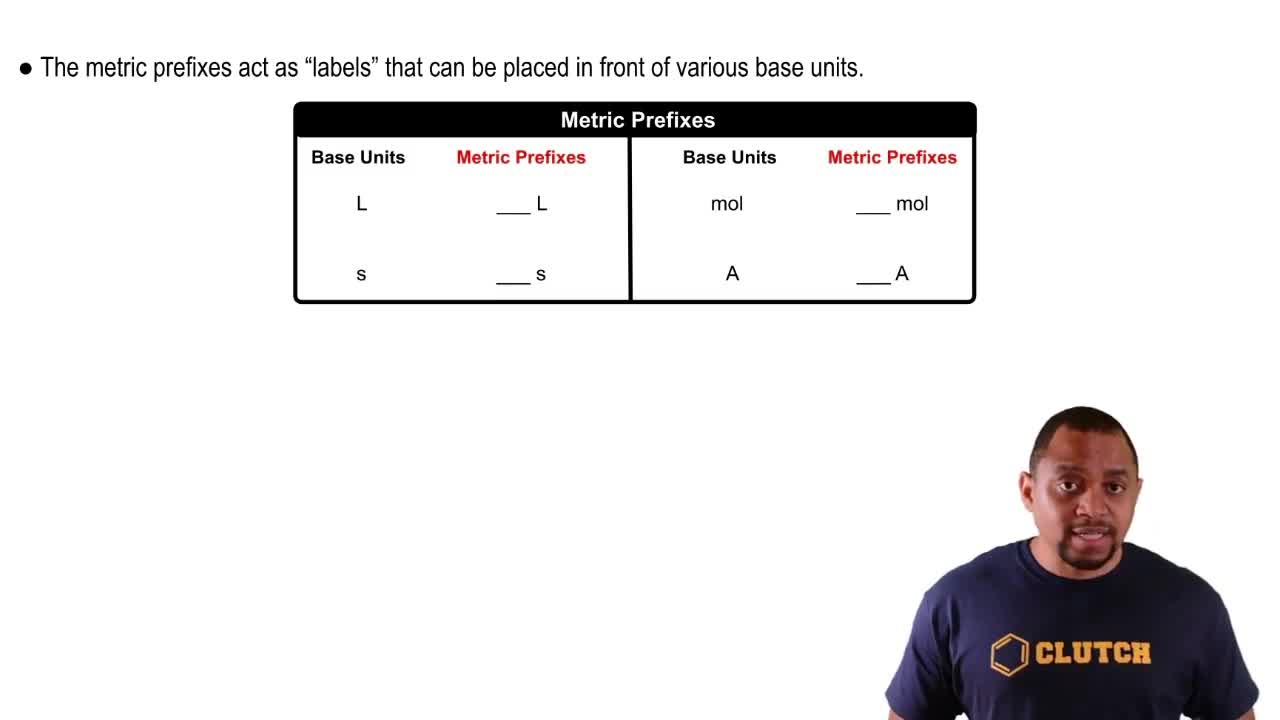
The metric system is a decimal-based system of measurement used worldwide, which includes units such as meters, liters, and grams. Each unit can be divided or multiplied by powers of ten, making conversions straightforward. Familiarity with the metric prefixes (kilo-, deci-, centi-) is crucial for effective unit conversion.
추천 영상:
가이드 코스
01:16
Metric Prefixes Usage

Dimensional Analysis

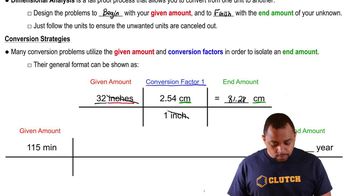
Dimensional analysis is a mathematical technique used to convert one unit of measurement to another by using conversion factors. It involves multiplying the original measurement by a fraction that represents the relationship between the units. This method ensures that units cancel appropriately, leading to the correct final unit.
추천 영상:
가이드 코스
06:11
Dimensional Analysis