
Ch.11 - Liquids, Solids & Intermolecular Forces
Tro - Chemistry: A Molecular Approach 4th Edition
Tro4th EditionChemistry: A Molecular ApproachISBN: 9780134112831당신이 사용하는 게 아니라요?교과서 변경
11장, 문제 56

Why is the heat of vaporization of water greater at room temperature than at its boiling point?

검증된 단계별 안내
1
Understand that the heat of vaporization is the energy required to convert a liquid into a gas at constant temperature and pressure.
Recognize that at the boiling point, the liquid and gas phases are in equilibrium, meaning the molecules have enough energy to overcome intermolecular forces.
At room temperature, water molecules have less kinetic energy compared to the boiling point, so more energy is needed to overcome the intermolecular forces to vaporize.
Consider that the heat of vaporization is higher at room temperature because the energy difference between the liquid and gas phases is greater than at the boiling point.
Conclude that the additional energy required at room temperature is due to the need to increase the kinetic energy of the molecules to reach the energy level at which they can vaporize.

주요 개념

질문에 올바르게 답하기 위해 반드시 이해해야 하는 핵심 개념들은 다음과 같습니다.

Heat of Vaporization

The heat of vaporization is the amount of energy required to convert a unit mass of a liquid into vapor without a change in temperature. For water, this process involves breaking intermolecular hydrogen bonds, which requires significant energy. The heat of vaporization is typically higher at lower temperatures because the molecules are more tightly bound, necessitating more energy to overcome these interactions.
추천 영상:

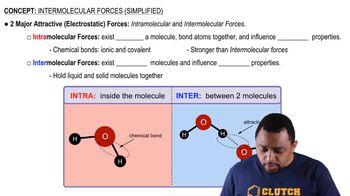
Intermolecular Forces

Intermolecular forces are the forces of attraction or repulsion between neighboring particles (atoms, molecules, or ions). In water, hydrogen bonds are the primary intermolecular forces, and they are stronger at lower temperatures. As water approaches its boiling point, these forces weaken due to increased molecular motion, making it easier for molecules to escape into the vapor phase, thus reducing the heat of vaporization.
추천 영상:
가이드 코스
01:59
Intermolecular vs Intramolecular Forces

Temperature and Molecular Motion

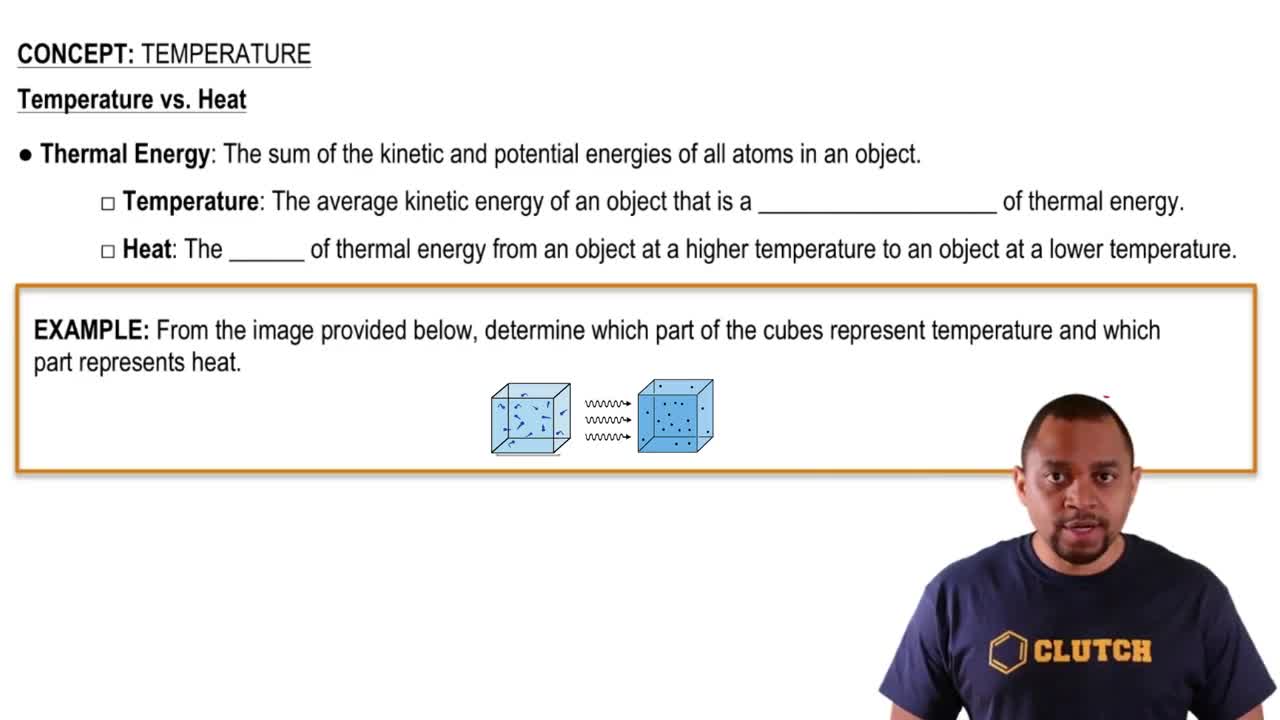
Temperature is a measure of the average kinetic energy of particles in a substance. At room temperature, water molecules have lower kinetic energy compared to those at boiling point, where they move more vigorously. This increased motion at boiling point allows more molecules to escape into the vapor phase with less energy input, resulting in a lower heat of vaporization at that temperature compared to room temperature.
추천 영상:
가이드 코스
03:48
Temperature vs Heat