Ch.13 - Solutions
Tro - Chemistry: A Molecular Approach 4th Edition
Tro4th EditionChemistry: A Molecular ApproachISBN: 9780134112831당신이 사용하는 게 아니라요?교과서 변경
13장, 문제 43

A KNO3 solution containing 45 g of KNO3 per 100.0 g of water is cooled from 40 °C to 0 °C. What happens during cooling? (Use Figure 13.11.)

검증된 단계별 안내
1
Identify the solubility of KNO3 at the initial and final temperatures using the solubility curve provided in Figure 13.11. Solubility is typically given in grams of solute per 100 grams of solvent.
Calculate the initial concentration of the solution in terms of grams of KNO3 per 100 grams of water at 40 °C.
Compare the initial concentration to the solubility of KNO3 at 40 °C. If the initial concentration exceeds the solubility, the solution is supersaturated. If it is less, it is unsaturated.
Determine the solubility of KNO3 at the final temperature of 0 °C using the same solubility curve.
Compare the initial concentration of KNO3 to the solubility at 0 °C. If the initial concentration exceeds the solubility at 0 °C, precipitation will occur until the concentration matches the solubility at this temperature.

비슷한 문제에 대한 검증된 영상 답변:

이 영상 해법은 위 문제에 도움이 된다고 튜터들이 추천한 것입니다.
영상 길이:
2m
도움이 되었나요?

주요 개념

질문에 올바르게 답하기 위해 반드시 이해해야 하는 핵심 개념들은 다음과 같습니다.

Solubility

Solubility refers to the maximum amount of a solute that can dissolve in a solvent at a given temperature and pressure. In the case of KNO3, its solubility decreases as the temperature drops, meaning that less KNO3 can remain dissolved in water at lower temperatures. Understanding solubility is crucial for predicting whether a solution will remain saturated or if precipitation will occur when cooled.
추천 영상:
가이드 코스
00:28
Solubility Rules

Saturation and Precipitation

A saturated solution is one where the maximum amount of solute has been dissolved in the solvent at a specific temperature. When a saturated solution is cooled, it may exceed its solubility limit, leading to precipitation, where the excess solute forms solid crystals. This concept is essential for understanding the changes that occur in the KNO3 solution as it cools from 40 °C to 0 °C.
추천 영상:
가이드 코스
01:53
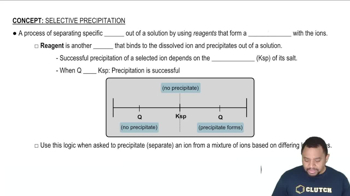
Selective Precipitation

Cooling Effects on Solutions

Cooling a solution affects the kinetic energy of the molecules, which can lead to changes in solubility and the state of the solute. As temperature decreases, the solute's ability to remain dissolved diminishes, potentially resulting in crystallization. This principle is important for analyzing the behavior of the KNO3 solution as it transitions from a warmer to a cooler state.
추천 영상:
가이드 코스
01:17
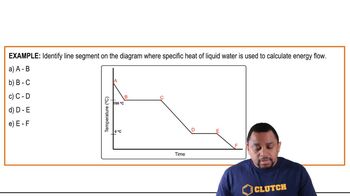
Cooling Curve Example