Ch.14 - Chemical Kinetics
Tro - Chemistry: A Molecular Approach 4th Edition
Tro4th EditionChemistry: A Molecular ApproachISBN: 9780134112831당신이 사용하는 게 아니라요?교과서 변경
14장, 문제 73

Consider these two gas-phase reactions: a. AA(g) + BB(g) → 2 AB(g) b. AB(g) + CD(g) → AC(g) + BD(g) If the reactions have identical activation barriers and are carried out under the same conditions, which one would you expect to have the faster rate?

검증된 단계별 안내
1
Identify the type of reactions: Reaction a is a synthesis reaction where two reactants combine to form a single product, while reaction b is a double displacement reaction where two reactants exchange components to form two new products.
Consider the molecularity of each reaction: Reaction a involves two molecules combining to form one, while reaction b involves two molecules exchanging parts.
Evaluate the complexity of the transition state: Reaction a may have a simpler transition state as it involves the formation of a single bond, whereas reaction b involves breaking and forming multiple bonds.
Consider the entropy change: Reaction a results in a decrease in the number of gas molecules, which may lead to a decrease in entropy, while reaction b maintains the number of gas molecules, potentially having a smaller entropy change.
Conclude based on molecularity and transition state complexity: Reaction a, being a simpler synthesis reaction, might have a faster rate due to a less complex transition state and fewer molecular interactions compared to reaction b.

비슷한 문제에 대한 검증된 영상 답변:

이 영상 해법은 위 문제에 도움이 된다고 튜터들이 추천한 것입니다.
영상 길이:
1m
도움이 되었나요?

주요 개념

질문에 올바르게 답하기 위해 반드시 이해해야 하는 핵심 개념들은 다음과 같습니다.

Activation Energy

Activation energy is the minimum energy required for a chemical reaction to occur. It represents the energy barrier that reactants must overcome to form products. In this context, since both reactions have identical activation barriers, the rate of reaction will depend on other factors, such as the concentration of reactants and the reaction mechanism.
추천 영상:
가이드 코스
02:02
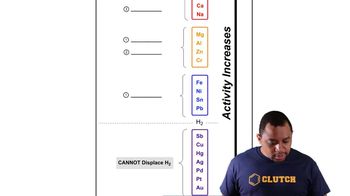
Activity Series Chart

Reaction Mechanism

The reaction mechanism describes the step-by-step sequence of elementary reactions that lead to the overall reaction. Different mechanisms can influence the rate of a reaction, even if the activation energy is the same. Understanding the mechanism helps in predicting which reaction may proceed faster based on the number of steps and the nature of intermediates involved.
추천 영상:
가이드 코스
03:06
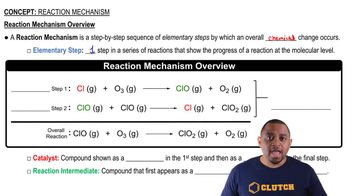
Reaction Mechanism Overview

Rate of Reaction

The rate of reaction refers to the speed at which reactants are converted into products. It is influenced by factors such as concentration, temperature, and the presence of catalysts. In this case, comparing the rates of the two reactions requires considering how the stoichiometry and the number of molecules involved in each reaction affect the overall rate under identical conditions.
추천 영상:
가이드 코스
02:03
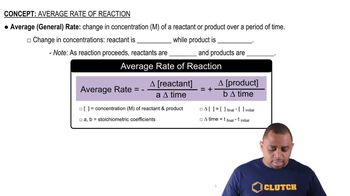
Average Rate of Reaction