Ch.14 - Chemical Kinetics
Tro - Chemistry: A Molecular Approach 4th Edition
Tro4th EditionChemistry: A Molecular ApproachISBN: 9780134112831당신이 사용하는 게 아니라요?교과서 변경
14장, 문제 95c

Consider this energy diagram:
<IMAGE>
c. Which step is rate limiting?

검증된 단계별 안내
1
Identify the steps in the reaction mechanism from the energy diagram. Each step corresponds to a peak and valley in the diagram, representing the transition state and intermediate, respectively.
Determine the activation energy for each step. The activation energy is the energy difference between the reactants and the transition state (peak) for that step.
Compare the activation energies of all the steps. The step with the highest activation energy is typically the rate-limiting step, as it requires the most energy to proceed and thus occurs the slowest.
Consider the overall reaction rate. The rate-limiting step controls the speed of the entire reaction because it is the slowest step in the sequence.
Conclude which step is rate-limiting based on the highest activation energy identified in the previous steps.

비슷한 문제에 대한 검증된 영상 답변:

이 영상 해법은 위 문제에 도움이 된다고 튜터들이 추천한 것입니다.
영상 길이:
1m
도움이 되었나요?

주요 개념

질문에 올바르게 답하기 위해 반드시 이해해야 하는 핵심 개념들은 다음과 같습니다.

Energy Diagrams

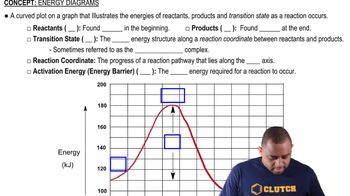
Energy diagrams visually represent the energy changes during a chemical reaction. They typically show the energy of reactants, products, and the transition states, allowing us to identify the activation energy required for the reaction to proceed. The peaks in the diagram correspond to transition states, while the valleys represent stable states.
추천 영상:
가이드 코스
01:57
Energy Diagrams

Rate Limiting Step

The rate limiting step in a reaction mechanism is the slowest step that determines the overall rate of the reaction. It is often associated with the highest energy transition state in the energy diagram. Identifying this step is crucial for understanding how the reaction proceeds and can help in optimizing reaction conditions.
추천 영상:
가이드 코스
4:53
Limiting Reagent Example

Activation Energy

Activation energy is the minimum energy required for reactants to undergo a chemical reaction. It is represented by the difference in energy between the reactants and the transition state in an energy diagram. A higher activation energy indicates a slower reaction rate, as fewer molecules will have sufficient energy to overcome this barrier.
추천 영상:
가이드 코스
02:02
Activity Series Chart