
교과서 질문
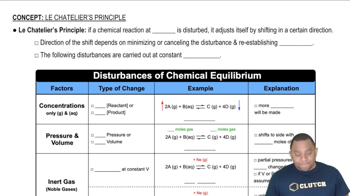
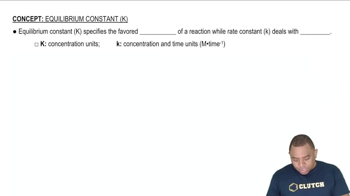
Consider this reaction at equilibrium: 2 BrNO(g) ⇌ 2 NO(g) + Br2(g) Predict whether the reaction will shift left, shift right, or remain unchanged after each disturbance. b. BrNO is added to the reaction mixture.
773
views

 검증된 단계별 안내
 07:32
07:32
 01:14
01:14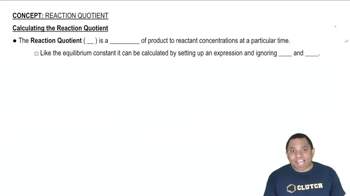 00:49
00:49Consider this reaction at equilibrium: 2 BrNO(g) ⇌ 2 NO(g) + Br2(g) Predict whether the reaction will shift left, shift right, or remain unchanged after each disturbance. b. BrNO is added to the reaction mixture.
Each reaction is allowed to come to equilibrium, and then the volume is changed as indicated. Predict the effect (shift right, shift left, or no effect) of the indicated volume change. a. I2( g) ⇌ 2 I( g) (volume is increased) b. 2 H2S( g) ⇌ 2 H2( g) + S2(g) (volume is decreased) c. I2(g) + Cl2(g) ⇌ 2 ICl(g) (volume is decreased)
Consider this reaction at equilibrium: C(s) + H2O(g) ⇌ CO(g) + H2(g) Predict whether the reaction will shift left, shift right, or remain unchanged after each disturbance. a. C is added to the reaction mixture. b. H2O is condensed and removed from the reaction mixture. Predict whether the reaction will shift left, shift right, or remain unchanged after each disturbance. c. CO is added to the reaction mixture. d. H2 is removed from the reaction mixture.
Consider this reaction at equilibrium: 2 BrNO(g) ⇌ 2 NO(g) + Br2(g) Predict whether the reaction will shift left, shift right, or remain unchanged after each disturbance. a. NO is added to the reaction mixture.