
교과서 질문
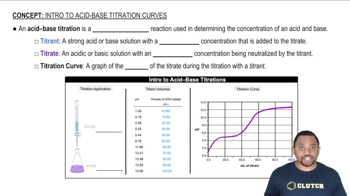
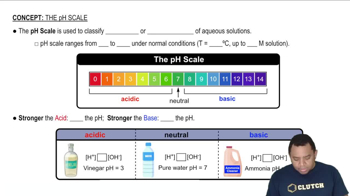
Consider the titration of a 35.0-mL sample of 0.175 M HBr with 0.200 M KOH. Determine each quantity. e. the pH after adding 5.0 mL of base beyond the equivalence point
2413
views
2
rank

 검증된 단계별 안내
 03:04
03:04
 02:33
02:33 05:56
05:56Consider the titration of a 35.0-mL sample of 0.175 M HBr with 0.200 M KOH. Determine each quantity. e. the pH after adding 5.0 mL of base beyond the equivalence point
Consider the titration of a 35.0-mL sample of 0.175 M HBr with 0.200 M KOH. Determine each quantity. a. the initial pH
Consider the curve shown here for the titration of a weak base with a strong acid and answer each question.
d. At what volume of added acid is the pH calculated by working an equilibrium problem based on the concentration and Ka of the conjugate acid?
Consider the titration of a 35.0-mL sample of 0.175 M HBr with 0.200 M KOH. Determine each quantity. b. the volume of added base required to reach the equivalence point
Consider the titration of a 35.0-mL sample of 0.175 M HBr with 0.200 M KOH. Determine each quantity. d. the pH at the equivalence point
A 20.0-mL sample of 0.125 M HNO3 is titrated with 0.150 M NaOH. Calculate the pH for at least five different points throughout the titration curve and sketch the curve. Indicate the volume at the equivalence point on your graph.