
Ch.2 - Atoms & Elements
Tro - Chemistry: A Molecular Approach 4th Edition
Tro4th EditionChemistry: A Molecular ApproachISBN: 9780134112831당신이 사용하는 게 아니라요?교과서 변경
2장, 문제 148

Let a triangle represent atoms of element A and a circle represent atoms of element B. b. Draw an atomic view of the compound AB in a liquid state (molecules close together).

검증된 단계별 안내
1
Step 1: Understand the problem. We need to represent a compound AB in a liquid state using symbols for atoms. A triangle represents atoms of element A, and a circle represents atoms of element B.
Step 2: Recall that in a liquid state, molecules are close together but not in a fixed position, allowing them to move past each other.
Step 3: Visualize the compound AB. Each molecule of AB consists of one atom of A (triangle) and one atom of B (circle) bonded together.
Step 4: Arrange several AB molecules close together, ensuring that each triangle is connected to a circle, representing the liquid state where molecules are in proximity but not rigidly fixed.
Step 5: Ensure the arrangement reflects the fluid nature of a liquid, with no specific order or pattern, just proximity of the AB molecules.

비슷한 문제에 대한 검증된 영상 답변:

이 영상 해법은 위 문제에 도움이 된다고 튜터들이 추천한 것입니다.
영상 길이:
1m
도움이 되었나요?

주요 개념

질문에 올바르게 답하기 위해 반드시 이해해야 하는 핵심 개념들은 다음과 같습니다.

Molecular Representation

Molecular representation involves visualizing the arrangement of atoms in a compound. In this case, atoms of element A are represented as triangles and atoms of element B as circles. This graphical depiction helps in understanding the composition and structure of the compound AB, particularly how different atoms interact and bond with each other.
추천 영상:
가이드 코스
02:38
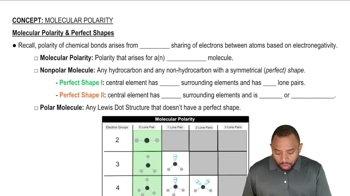
Molecular Polarity

States of Matter

The states of matter refer to the distinct forms that different phases of matter take on. In the context of the question, the liquid state is characterized by closely packed molecules that can move past one another, allowing for fluidity. Understanding the properties of liquids, such as molecular proximity and movement, is essential for accurately depicting the atomic view of the compound AB in this state.
추천 영상:
가이드 코스
03:25
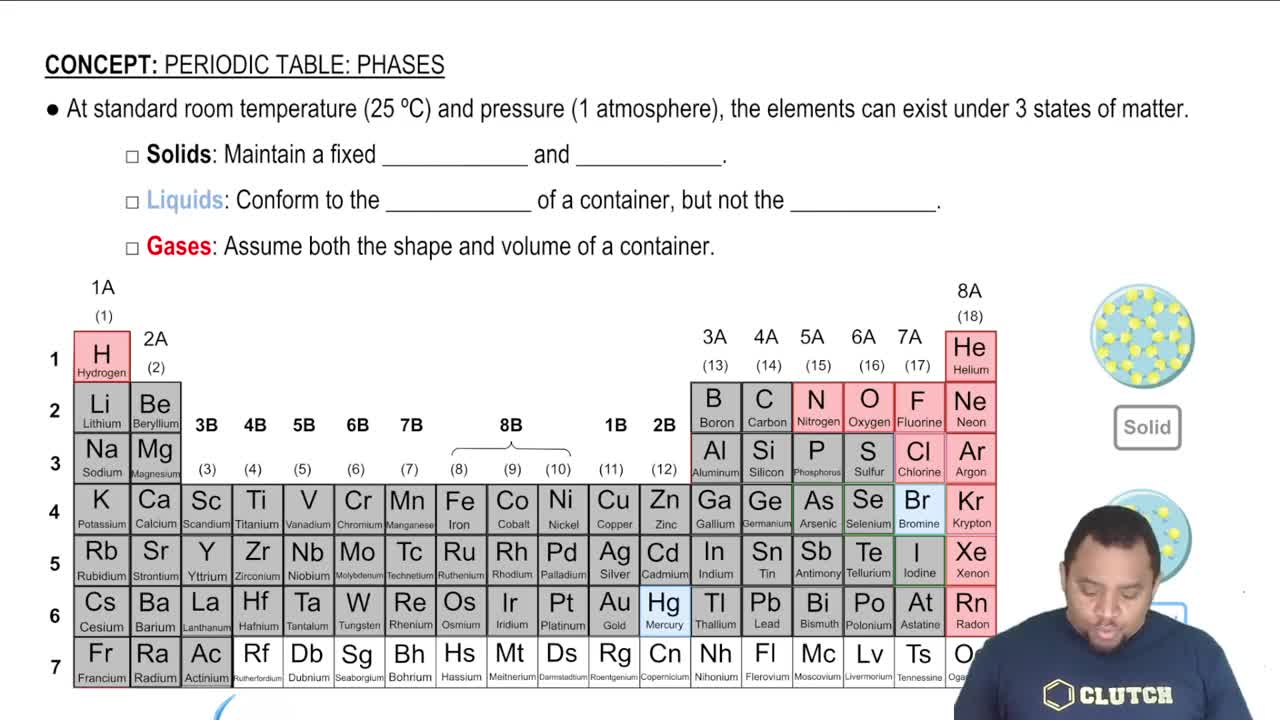
Element States of Matter

Intermolecular Forces

Intermolecular forces are the forces of attraction or repulsion between neighboring molecules. In a liquid state, these forces play a crucial role in determining the arrangement and behavior of molecules. Recognizing how these forces affect the proximity and interaction of atoms in the compound AB is vital for accurately illustrating its atomic view in a liquid form.
추천 영상:
가이드 코스
01:59
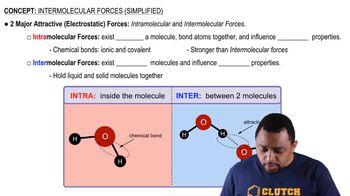
Intermolecular vs Intramolecular Forces