Ch.2 - Atoms & Elements
Tro - Chemistry: A Molecular Approach 4th Edition
Tro4th EditionChemistry: A Molecular ApproachISBN: 9780134112831당신이 사용하는 게 아니라요?교과서 변경
2장, 문제 101

Use the mass spectrum of lead to estimate the atomic mass of lead. Estimate the mass and percent intensity values from the graph to three significant figures.
Bar graph showing the mass spectrum of lead with intensity percentages for masses 70 to 77.

검증된 단계별 안내
1
Identify the mass and percent intensity values from the graph: 70 (56.19%), 72 (75.16%), 74 (100.00%), 76 (21.22%).
Convert the percent intensity values to decimal form by dividing each by 100: 0.5619, 0.7516, 1.0000, 0.2122.
Multiply each mass by its corresponding decimal intensity: 70 * 0.5619, 72 * 0.7516, 74 * 1.0000, 76 * 0.2122.
Sum the products obtained from the previous step to get the weighted average mass.
The result from the summation is the estimated atomic mass of lead.

비슷한 문제에 대한 검증된 영상 답변:

이 영상 해법은 위 문제에 도움이 된다고 튜터들이 추천한 것입니다.
영상 길이:
5m

주요 개념

질문에 올바르게 답하기 위해 반드시 이해해야 하는 핵심 개념들은 다음과 같습니다.

Mass Spectrum

A mass spectrum is a graphical representation of the mass-to-charge ratio of ions. It displays the relative abundance of different isotopes of an element, allowing chemists to identify the isotopic composition and calculate the average atomic mass. Each peak corresponds to a specific mass, and the height of the peak indicates the intensity or relative abundance of that isotope.
추천 영상:
가이드 코스
02:53
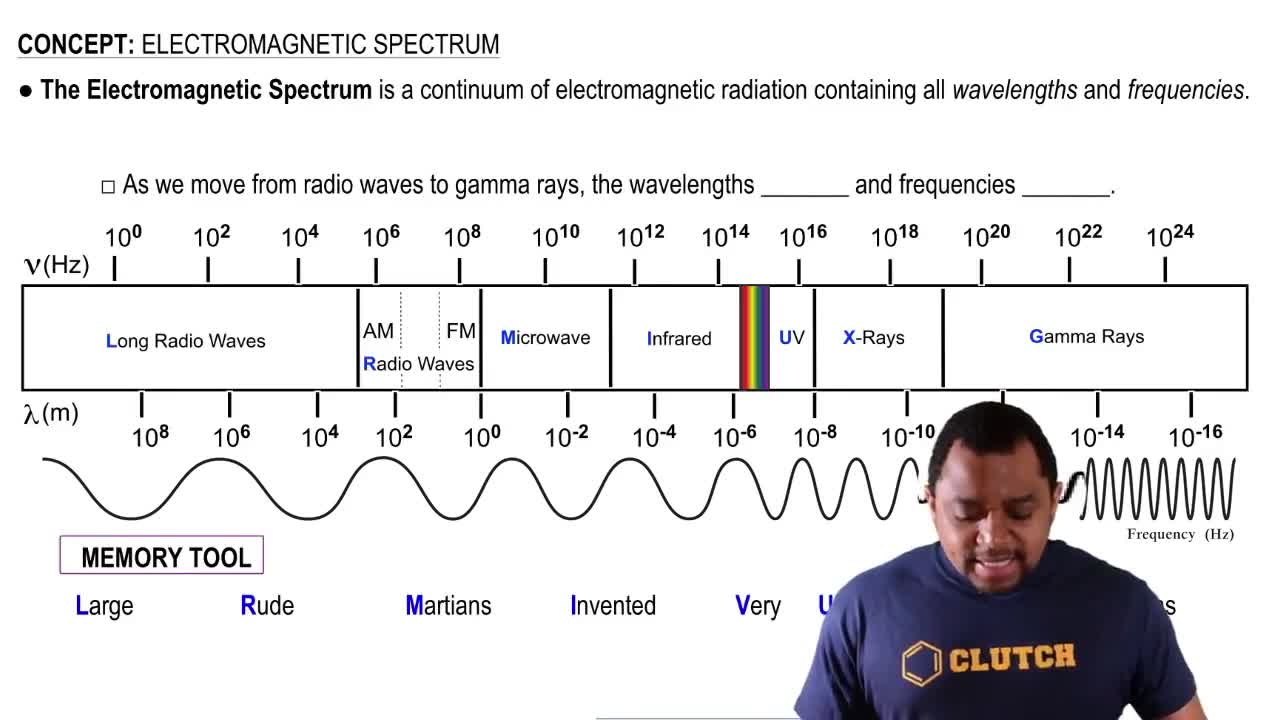
Electromagnetic Spectrum

Atomic Mass Calculation

The atomic mass of an element is calculated by taking the weighted average of the masses of its isotopes, based on their relative abundances. This involves multiplying the mass of each isotope by its percent abundance (expressed as a fraction), summing these products, and then dividing by the total abundance. This method provides a more accurate representation of the element's mass as it occurs naturally.
추천 영상:
가이드 코스
02:00
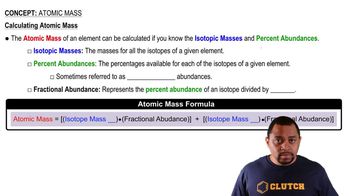
Calculating Atomic Mass

Percent Intensity

Percent intensity in a mass spectrum indicates the relative abundance of each isotope compared to the most abundant isotope, which is set to 100%. This allows for easy comparison of the isotopes' abundances. To estimate the atomic mass, one must consider both the mass values and their corresponding percent intensities to weigh the contributions of each isotope appropriately.
추천 영상:
가이드 코스
02:45
Intensive Properties