Ch.4 - Chemical Quantities & Aqueous Reactions
Tro - Chemistry: A Molecular Approach 4th Edition
Tro4th EditionChemistry: A Molecular ApproachISBN: 9780134112831당신이 사용하는 게 아니라요?교과서 변경
4장, 문제 94

Assign oxidation states to each atom in each element, ion, or compound. Cl2, Fe3+, CuCl2, CH4, Cr2O72–, HSO4

검증된 단계별 안내
1
For Cl2, since it is a diatomic molecule of the same element, each Cl atom has an oxidation state of 0.
For Fe3+, the oxidation state of Fe is +3, as indicated by the charge of the ion.
In CuCl2, assign the oxidation state of Cl as -1 (common for halogens), and use the fact that the compound is neutral to find the oxidation state of Cu.
For CH4, assign the oxidation state of H as +1 (common for hydrogen in compounds), and use the fact that the compound is neutral to find the oxidation state of C.
In Cr2O7^2-, assign the oxidation state of O as -2 (common for oxygen), and use the overall charge of the ion to find the oxidation state of Cr.
For HSO4-, assign the oxidation state of H as +1 and O as -2, then use the overall charge of the ion to find the oxidation state of S.

비슷한 문제에 대한 검증된 영상 답변:

이 영상 해법은 위 문제에 도움이 된다고 튜터들이 추천한 것입니다.
영상 길이:
6m
도움이 되었나요?

주요 개념

질문에 올바르게 답하기 위해 반드시 이해해야 하는 핵심 개념들은 다음과 같습니다.

Oxidation States

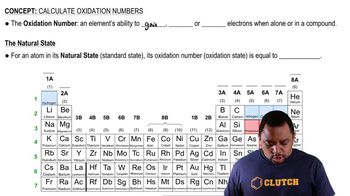
Oxidation states, or oxidation numbers, are a way to keep track of electrons in chemical compounds. They indicate the degree of oxidation of an atom in a substance, helping to determine how electrons are transferred in redox reactions. The oxidation state of an atom can be positive, negative, or zero, depending on its electron gain or loss relative to its elemental form.
추천 영상:
가이드 코스
02:42
Oxidation Numbers

Rules for Assigning Oxidation States

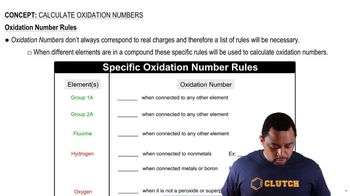
There are specific rules for assigning oxidation states, such as: the oxidation state of an element in its standard state is zero, the oxidation state of a monoatomic ion equals its charge, and in compounds, hydrogen is usually +1 while oxygen is typically -2. These rules provide a systematic approach to determine the oxidation states of atoms in various compounds and ions.
추천 영상:
가이드 코스
03:13
Oxidation Number Rules

Common Oxidation States of Elements

Different elements have common oxidation states that they typically exhibit in compounds. For example, alkali metals usually have an oxidation state of +1, alkaline earth metals +2, and transition metals can have multiple oxidation states. Understanding these common states aids in predicting the behavior of elements in chemical reactions and helps in assigning oxidation states accurately.
추천 영상:
가이드 코스
03:25
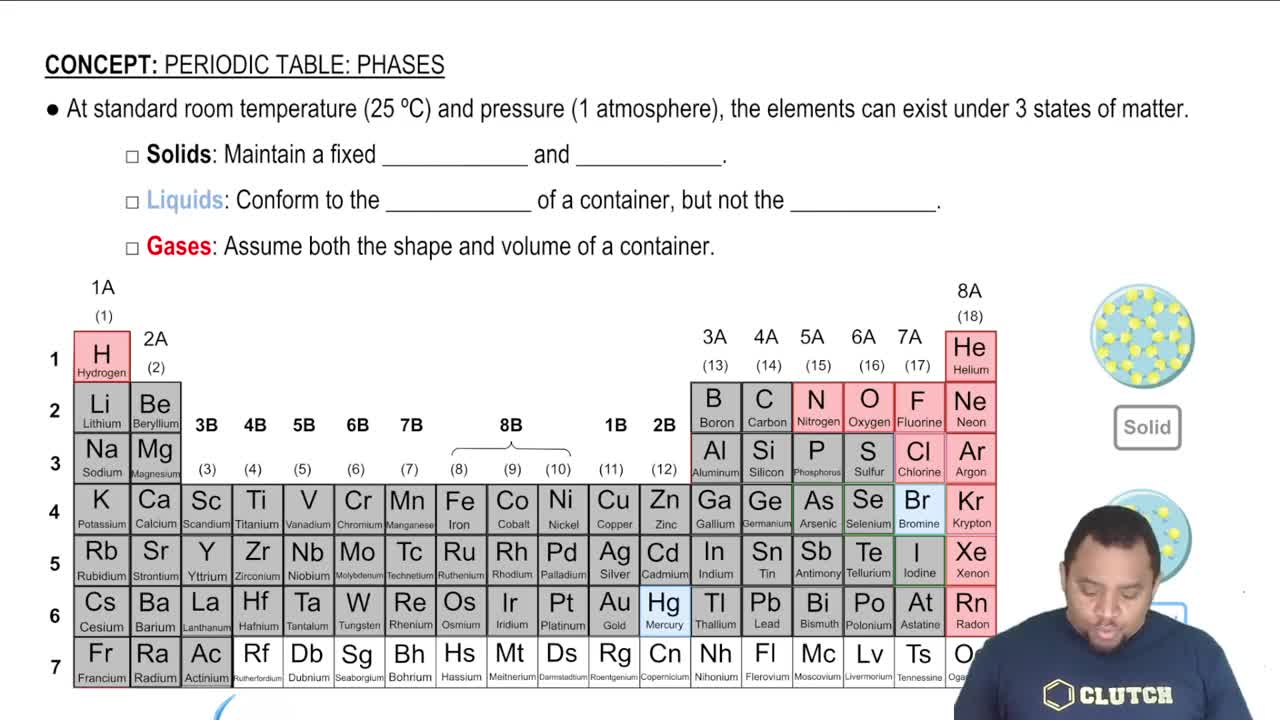
Element States of Matter