Ch.4 - Chemical Quantities & Aqueous Reactions
Tro - Chemistry: A Molecular Approach 4th Edition
Tro4th EditionChemistry: A Molecular ApproachISBN: 9780134112831당신이 사용하는 게 아니라요?교과서 변경
4장, 문제 99

Is the following formulation of a task correct? If not, please correct it: Complete and balance each combustion reaction equation. a. S(s) + O2(g) → b. C3H6(g) + O2(g) → c. Ca(s) + O2(g) → d. C5H12S(l) + O2(g) →

검증된 단계별 안내
1
Identify the reactants and products in each combustion reaction. Combustion typically involves a substance reacting with oxygen to form oxides.
For each reaction, write the unbalanced chemical equation. For example, for reaction (a), write S(s) + O_2(g) → SO_2(g).
Balance each equation by adjusting the coefficients to ensure the same number of each type of atom on both sides of the equation. Start with the most complex molecule.
Check that the number of atoms for each element is equal on both sides of the equation. Adjust coefficients as necessary to achieve balance.
Verify that the balanced equation follows the law of conservation of mass, meaning the total mass of reactants equals the total mass of products.

주요 개념

질문에 올바르게 답하기 위해 반드시 이해해야 하는 핵심 개념들은 다음과 같습니다.

Combustion Reactions

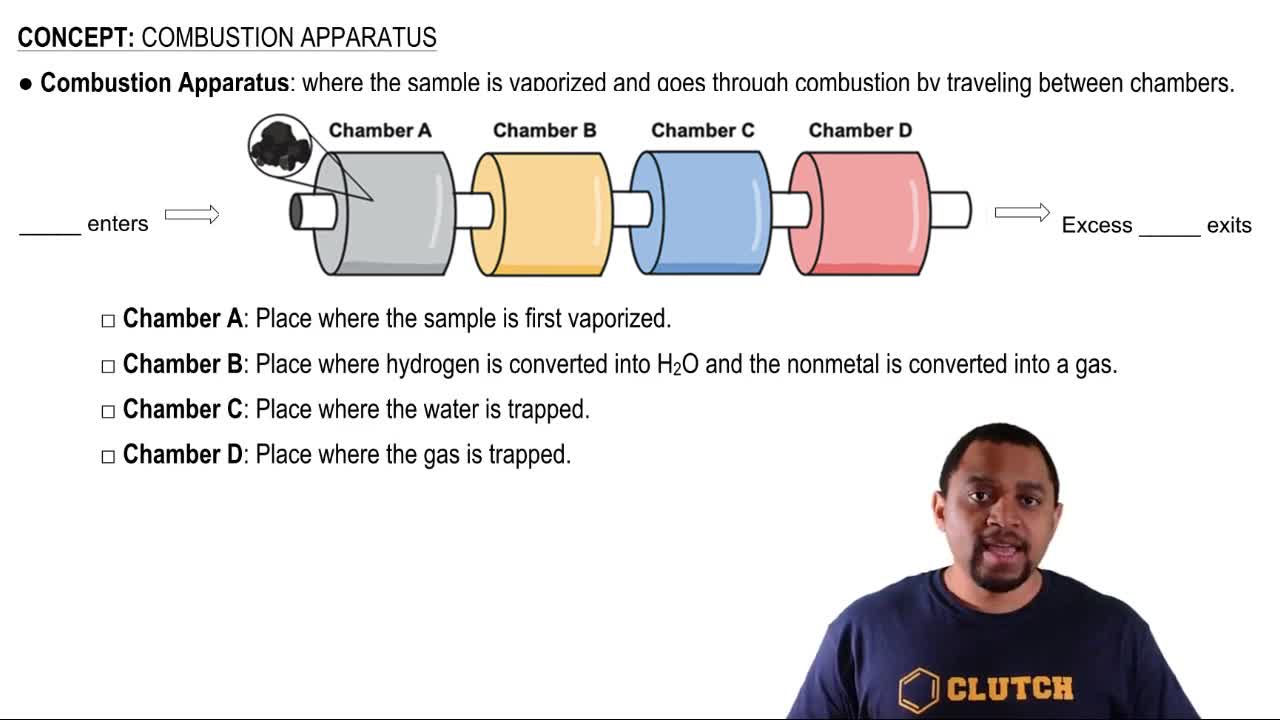
Combustion reactions are chemical processes in which a substance reacts rapidly with oxygen, producing heat and light. Typically, these reactions involve hydrocarbons or other organic compounds, resulting in products like carbon dioxide and water. Understanding the general form of combustion reactions is essential for balancing them correctly.
추천 영상:
가이드 코스
02:24
Combustion Apparatus

Balancing Chemical Equations

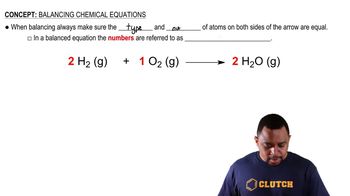
Balancing chemical equations involves ensuring that the number of atoms for each element is the same on both sides of the equation. This is achieved by adjusting coefficients in front of the reactants and products. A balanced equation reflects the law of conservation of mass, which states that matter cannot be created or destroyed in a chemical reaction.
추천 영상:
가이드 코스
01:32
Balancing Chemical Equations

State Symbols in Chemical Reactions

State symbols indicate the physical state of the reactants and products in a chemical reaction. Common symbols include (s) for solid, (l) for liquid, (g) for gas, and (aq) for aqueous solutions. These symbols provide important information about the conditions under which the reaction occurs and can influence the balancing of the equation.
추천 영상:
가이드 코스
03:17
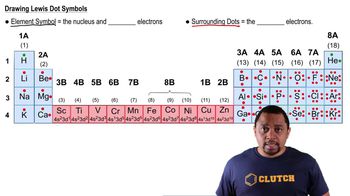
Lewis Dot Symbols