
교과서 질문
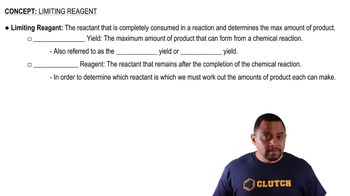
For the reaction shown, calculate the theoretical yield of product (in grams) for each initial amount of reactants. 2 Al(s) + 3 Cl2(g) → 2 AlCl3(s) c. 0.235 g Al, 1.15 g Cl2
643
views

 검증된 단계별 안내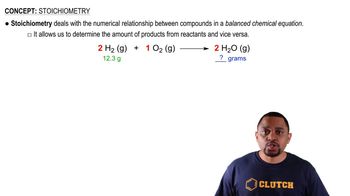
 01:16
01:16
 01:30
01:30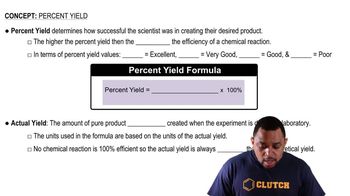 03:09
03:09For the reaction shown, calculate the theoretical yield of product (in grams) for each initial amount of reactants. 2 Al(s) + 3 Cl2(g) → 2 AlCl3(s) c. 0.235 g Al, 1.15 g Cl2
Zinc sulfide reacts with oxygen according to the reaction: 2 ZnS(s) + 3 O2(g) → 2 ZnO(s) + 2 SO2( g) A reaction mixture initially contains 4.2 mol ZnS and 6.8 mol O2. Once the reaction has occurred as completely as possible, what amount (in moles) of the excess reactant remains?
Iron(II) sulfide reacts with hydrochloric acid according to the reaction: FeS(s) + 2 HCl(aq) → FeCl2(s) + H2S(g) A reaction mixture initially contains 0.223 mol FeS and 0.652 mol HCl. Once the reaction has occurred as completely as possible, what amount (in moles) of the excess reactant remains?
Iron(II) sulfide reacts with hydrochloric acid according to the reaction: FeS(s) + 2 HCl(aq) → FeCl2(s) + H2S(g) A reaction mixture initially contains 0.223 mol FeS and 0.652 mol HCl. Once the reaction has occurred as completely as possible, what amount (in moles) of the excess reactant remains?
For the reaction shown, calculate the theoretical yield of the product (in grams) for each initial amount of reactants. Ti(s) + 2 F2( g) → TiF4(s) c. 0.233 g Ti, 0.288 g F2