Ch.6 - Thermochemistry
Tro - Chemistry: A Molecular Approach 4th Edition
Tro4th EditionChemistry: A Molecular ApproachISBN: 9780134112831당신이 사용하는 게 아니라요?교과서 변경
6장, 문제 90

Ethanol (C2H5OH) can be made from the fermentation of crops and has been used as a fuel additive to gasoline. Write a balanced equation for the combustion of ethanol and calculate ΔH°rxn.

검증된 단계별 안내
1
Write the balanced chemical equation for the combustion of ethanol (C2H5OH). In a combustion reaction, the ethanol will react with oxygen (O2) to produce carbon dioxide (CO2) and water (H2O).
Balance the number of carbon atoms, hydrogen atoms, and oxygen atoms on both sides of the equation to ensure the law of conservation of mass is satisfied.
Look up the standard enthalpies of formation (ΔH°f) for each of the reactants and products involved in the reaction. These values are typically found in a chemistry reference book or database.
Use the formula for calculating the standard enthalpy change of the reaction (ΔH°rxn): ΔH°rxn = ΣΔH°f (products) - ΣΔH°f (reactants). Sum up the standard enthalpies of formation for the products and subtract the sum of the standard enthalpies of formation for the reactants.
Ensure all units are consistent (usually in kJ/mol) and perform the calculation to find the ΔH°rxn, which represents the heat released or absorbed during the combustion of ethanol.

비슷한 문제에 대한 검증된 영상 답변:

이 영상 해법은 위 문제에 도움이 된다고 튜터들이 추천한 것입니다.
영상 길이:
4m
도움이 되었나요?

주요 개념

질문에 올바르게 답하기 위해 반드시 이해해야 하는 핵심 개념들은 다음과 같습니다.

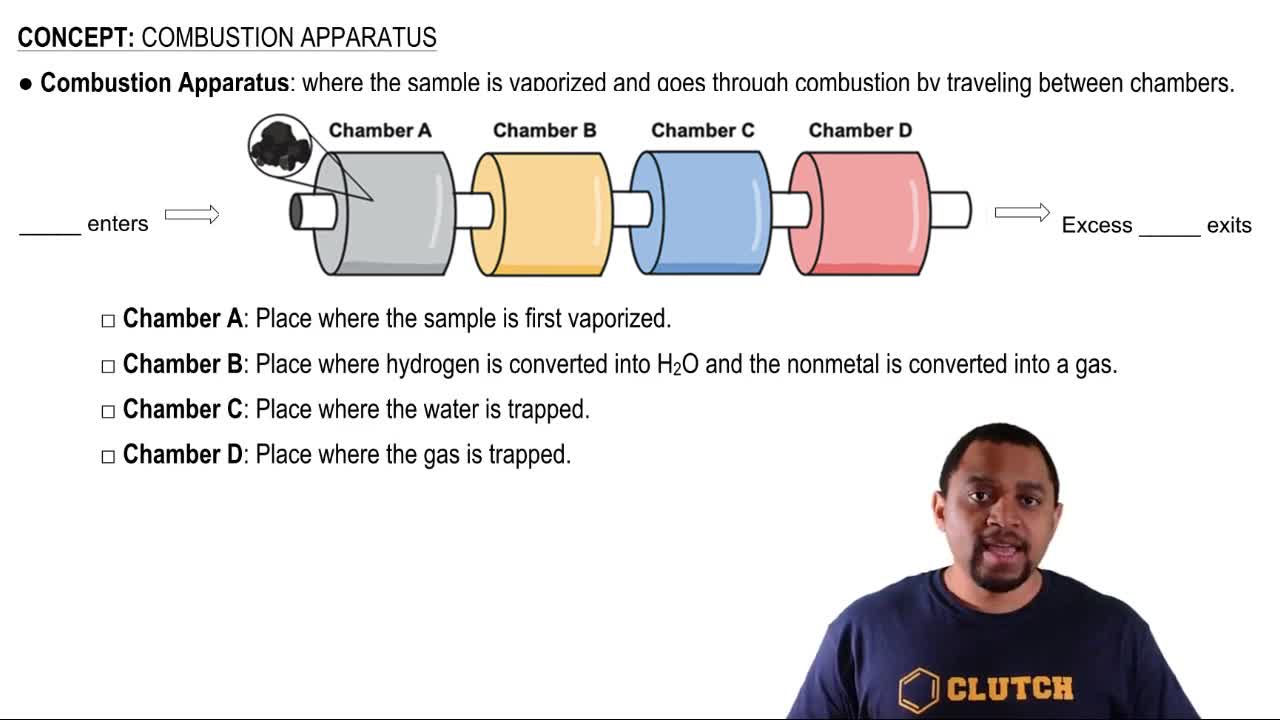
Combustion Reaction

A combustion reaction is a chemical process in which a substance reacts rapidly with oxygen, producing heat and light. In the case of ethanol, the combustion reaction involves its reaction with oxygen to produce carbon dioxide and water. This type of reaction is exothermic, meaning it releases energy, which is important for calculating the enthalpy change (ΔH) of the reaction.
추천 영상:
가이드 코스
02:24
Combustion Apparatus

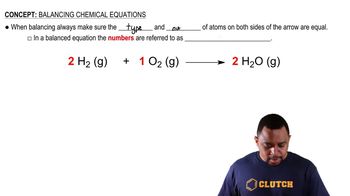
Balanced Chemical Equation

A balanced chemical equation represents a chemical reaction with equal numbers of each type of atom on both sides of the equation. Balancing is essential to obey the law of conservation of mass. For the combustion of ethanol, the equation must reflect the correct stoichiometry of reactants and products, ensuring that the number of carbon, hydrogen, and oxygen atoms is the same before and after the reaction.
추천 영상:
가이드 코스
01:32
Balancing Chemical Equations

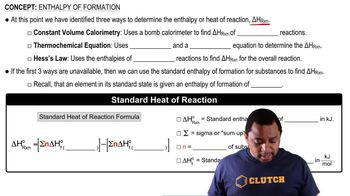
Enthalpy Change (ΔH)

Enthalpy change (ΔH) is a measure of the heat energy absorbed or released during a chemical reaction at constant pressure. For combustion reactions, ΔH is typically negative, indicating that energy is released. To calculate ΔH for the combustion of ethanol, one can use standard enthalpy values of formation for the reactants and products, applying Hess's law to find the overall energy change.
추천 영상:
가이드 코스
02:34
Enthalpy of Formation