Ch.8 - Periodic Properties of the Elements
Tro - Chemistry: A Molecular Approach 4th Edition
Tro4th EditionChemistry: A Molecular ApproachISBN: 9780134112831당신이 사용하는 게 아니라요?교과서 변경
8장, 문제 52

Determine the number of valence electrons in each element. Which elements do you expect to lose electrons in chemical reactions? Which do you expect to gain electrons? a. Al b. Sn c. Br d. Se

검증된 단계별 안내
1
Identify the number of valence electrons for each element by looking at their group number in the periodic table. Elements in the same group have the same number of valence electrons. For example, Group 1 elements have 1 valence electron, Group 2 elements have 2, and so on. Transition metals and inner transition metals may have varying numbers of valence electrons.
For Aluminum (Al), which is in Group 13, it typically has 3 valence electrons. Tin (Sn) is in Group 14, generally having 4 valence electrons. Bromine (Br) is in Group 17, with 7 valence electrons. Selenium (Se) is in Group 16, having 6 valence electrons.
Determine the tendency of each element to lose or gain electrons based on their position in the periodic table. Elements in Groups 1-3 tend to lose electrons to achieve a noble gas configuration, while elements in Groups 15-17 tend to gain electrons.
Predict that Aluminum (Al) and Tin (Sn), being in Groups 13 and 14 respectively, are more likely to lose electrons during chemical reactions to achieve a stable electron configuration.
Predict that Bromine (Br) and Selenium (Se), being in Groups 17 and 16 respectively, are more likely to gain electrons during chemical reactions to fill their outer electron shells and reach stability.

비슷한 문제에 대한 검증된 영상 답변:

이 영상 해법은 위 문제에 도움이 된다고 튜터들이 추천한 것입니다.
영상 길이:
3m
도움이 되었나요?

주요 개념

질문에 올바르게 답하기 위해 반드시 이해해야 하는 핵심 개념들은 다음과 같습니다.

Valence Electrons

Valence electrons are the outermost electrons of an atom and are crucial in determining how an element interacts chemically. The number of valence electrons influences an element's reactivity, as these electrons are involved in forming bonds with other atoms. For main group elements, the number of valence electrons corresponds to their group number in the periodic table.
추천 영상:
가이드 코스
02:12
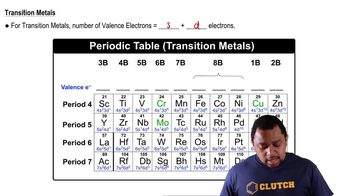
Transition Metals Valence Electrons

Electron Loss and Gain

Elements tend to lose or gain electrons to achieve a stable electron configuration, often resembling that of the nearest noble gas. Metals, such as aluminum (Al) and tin (Sn), typically lose electrons to form positive ions, while nonmetals, like bromine (Br) and selenium (Se), usually gain electrons to form negative ions. This behavior is driven by the desire to minimize energy and achieve stability.
추천 영상:
가이드 코스
04:44
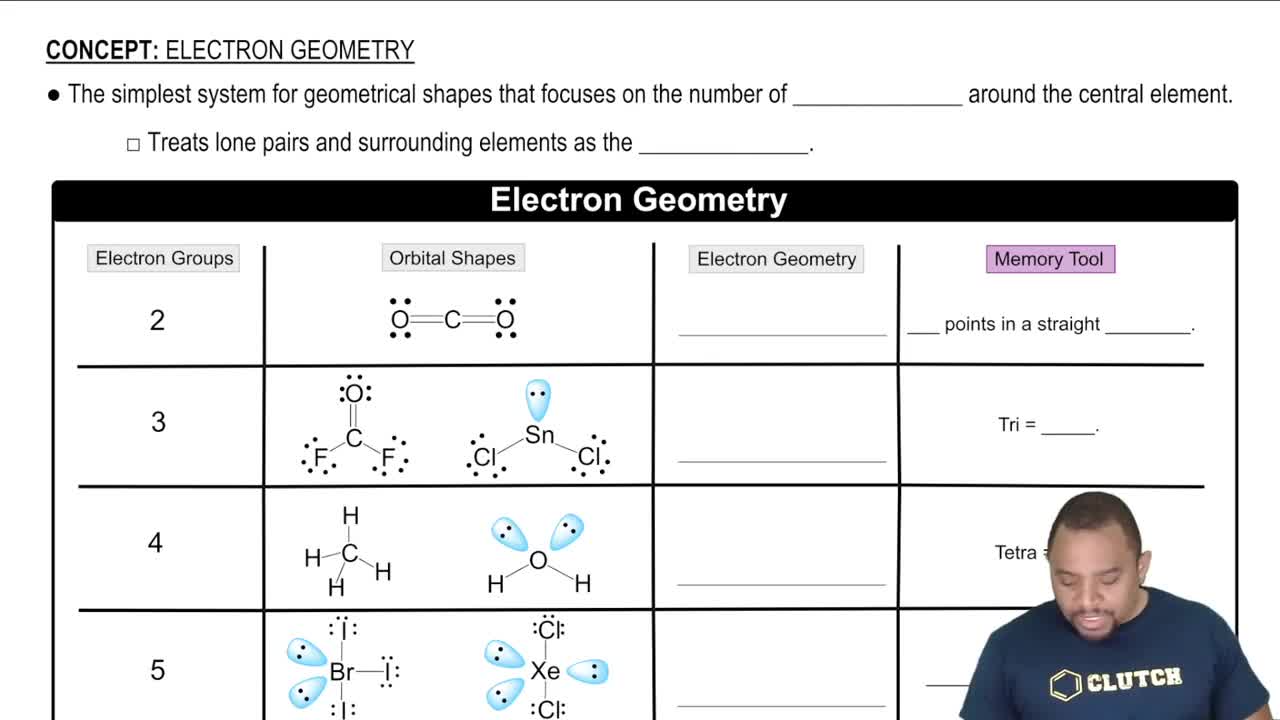
Electron Geometry

Periodic Trends

Periodic trends refer to the predictable patterns observed in the properties of elements as you move across or down the periodic table. For instance, electronegativity and ionization energy generally increase across a period and decrease down a group. Understanding these trends helps predict how elements will behave in chemical reactions, including their tendency to lose or gain electrons.
추천 영상:
가이드 코스
00:38
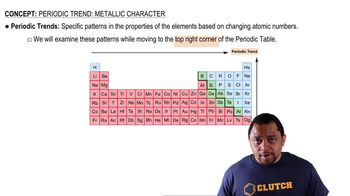
Periodic Trends