Ch.8 - Periodic Properties of the Elements
Tro - Chemistry: A Molecular Approach 4th Edition
Tro4th EditionChemistry: A Molecular ApproachISBN: 9780134112831당신이 사용하는 게 아니라요?교과서 변경
8장, 문제 87

Write the balanced chemical equation for the reaction of solid lithium with liquid water.

검증된 단계별 안내
1
Identify the reactants and products in the reaction: solid lithium (Li) and liquid water (H2O) react to form lithium hydroxide (LiOH) and hydrogen gas (H2).
Write the unbalanced chemical equation: Li(s) + H2O(l) -> LiOH(aq) + H2(g).
Balance the lithium atoms: Since there is one lithium atom on both sides, lithium is already balanced.
Balance the hydrogen atoms: There are two hydrogen atoms in water and two in hydrogen gas, so the hydrogen atoms are balanced. However, the hydroxide ion (OH-) in LiOH also contains a hydrogen atom, so adjust the coefficients to balance all hydrogen atoms.
Balance the oxygen atoms: Ensure that the number of oxygen atoms is the same on both sides of the equation by adjusting the coefficients as necessary.

비슷한 문제에 대한 검증된 영상 답변:

이 영상 해법은 위 문제에 도움이 된다고 튜터들이 추천한 것입니다.
영상 길이:
2m

주요 개념

질문에 올바르게 답하기 위해 반드시 이해해야 하는 핵심 개념들은 다음과 같습니다.

Balancing Chemical Equations

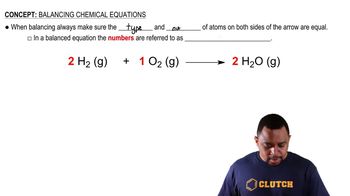
Balancing chemical equations involves ensuring that the number of atoms of each element is the same on both sides of the equation. This is based on the law of conservation of mass, which states that matter cannot be created or destroyed in a chemical reaction. To balance an equation, coefficients are adjusted in front of the chemical formulas.
추천 영상:
가이드 코스
01:32
Balancing Chemical Equations

Reactivity of Alkali Metals

Alkali metals, such as lithium, are highly reactive, especially with water. When they react with water, they typically produce a hydroxide and hydrogen gas. This reaction is exothermic, meaning it releases heat, and can be vigorous, leading to the potential for flames or explosions if not handled properly.
추천 영상:
가이드 코스
03:12
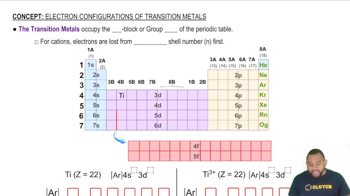
Transition Metals

Products of Metal-Water Reactions

The reaction between a metal and water generally produces a metal hydroxide and hydrogen gas. In the case of lithium, the reaction yields lithium hydroxide (LiOH) and hydrogen (H2). Understanding the products formed in such reactions is crucial for predicting the outcomes of chemical processes involving metals and water.
추천 영상:
가이드 코스
01:23
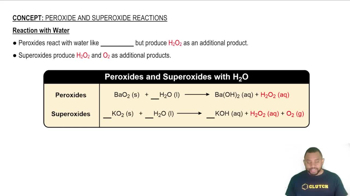
Reaction with Water