
Ch.1 - Matter, Measurement & Problem Solving
Tro - Chemistry: A Molecular Approach 5th Edition
Tro5th EditionChemistry: A Molecular ApproachISBN: 9780134874371당신이 사용하는 게 아니라요?교과서 변경
1장, 문제 144

The diagram shown first represents solid carbon dioxide, also known as dry ice. Which of the other diagrams best represents the carbon dioxide after it has sublimed into a gas?

검증된 단계별 안내
1
Understand that sublimation is the process where a solid turns directly into a gas without passing through the liquid phase.
Recognize that solid carbon dioxide (dry ice) consists of CO₂ molecules closely packed in a regular pattern.
When CO₂ sublimates, the molecules gain energy and move apart, transitioning from a solid to a gaseous state.
In the gaseous state, CO₂ molecules are far apart and move freely, unlike in the solid state where they are tightly packed.
Identify the diagram that shows CO₂ molecules spread out and moving freely, representing the gaseous state after sublimation.

주요 개념

질문에 올바르게 답하기 위해 반드시 이해해야 하는 핵심 개념들은 다음과 같습니다.

Sublimation

Sublimation is the process in which a solid transitions directly into a gas without passing through the liquid phase. This occurs when the molecules in the solid gain enough energy to overcome intermolecular forces, allowing them to escape into the gas phase. Dry ice, or solid carbon dioxide, sublimates at temperatures above -78.5°C, making it a common example of this phenomenon.
추천 영상:
가이드 코스
01:52
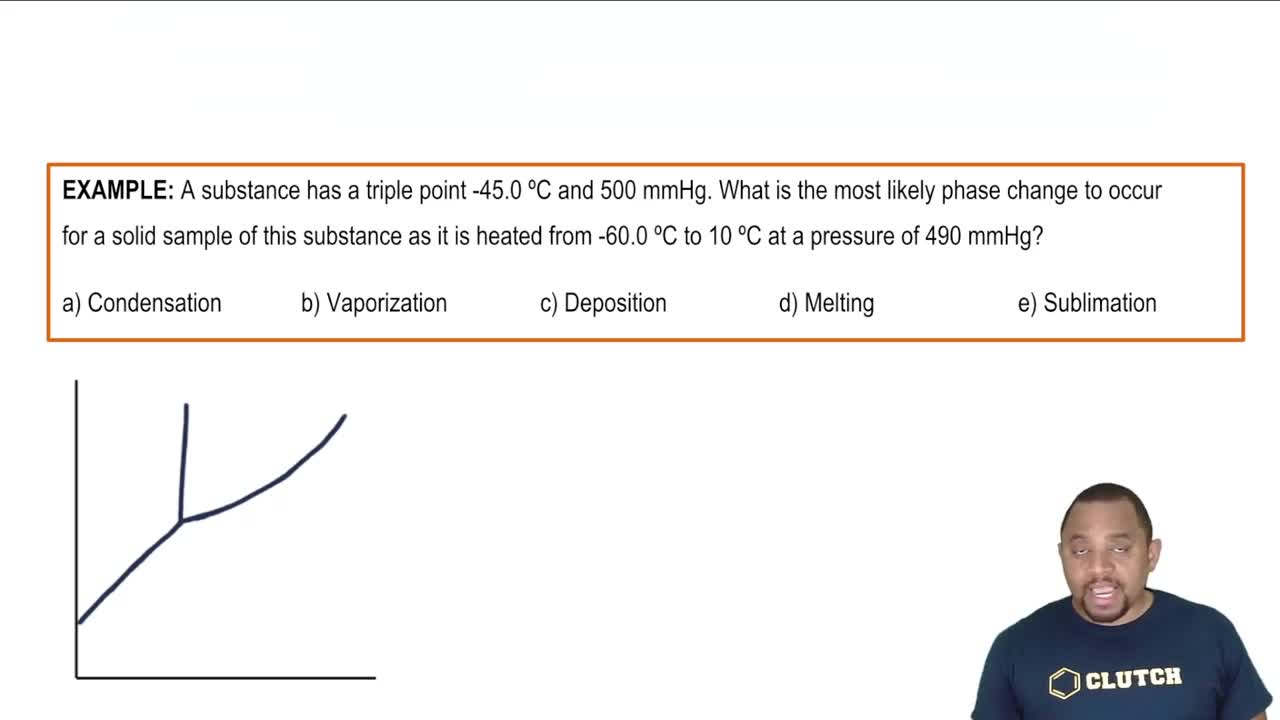
Sublimation Phase Change Example

States of Matter

Matter exists in different states, primarily solid, liquid, and gas, each characterized by distinct properties. In solids, particles are closely packed and vibrate in place; in liquids, they are less tightly packed and can flow; in gases, particles are far apart and move freely. Understanding these states is crucial for visualizing how substances like carbon dioxide change form during processes like sublimation.
추천 영상:
가이드 코스
03:25
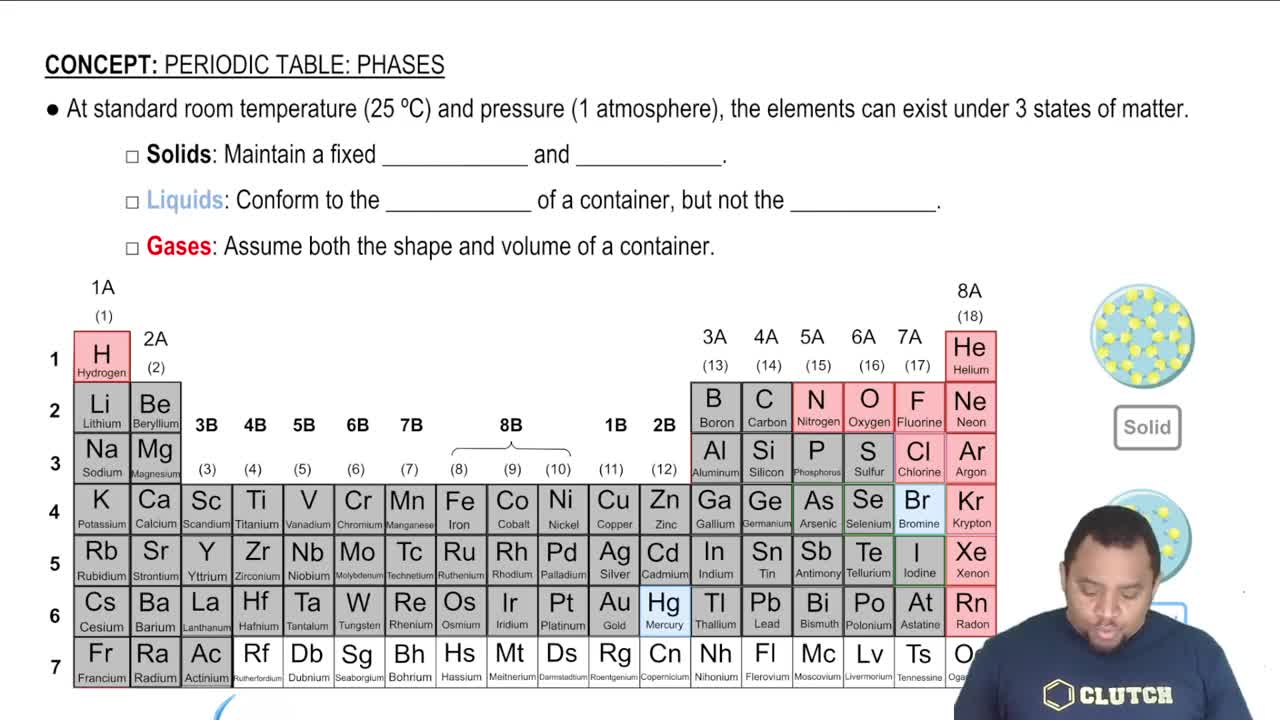
Element States of Matter

Phase Diagrams

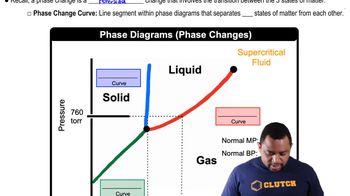
Phase diagrams are graphical representations that show the states of a substance at various temperatures and pressures. They illustrate the conditions under which a substance exists as a solid, liquid, or gas, and the transitions between these states. For carbon dioxide, the phase diagram helps predict the behavior of the substance under different environmental conditions, including the sublimation process.
추천 영상:
가이드 코스
03:22
Phase Changes in Diagrams