Ch.22 - Organic Chemistry
Tro - Chemistry: A Molecular Approach 5th Edition
Tro5th EditionChemistry: A Molecular ApproachISBN: 9780134874371당신이 사용하는 게 아니라요?교과서 변경
22장, 문제 43d

Draw a structure for each alkane.
d. 4,7-diethyl-2,2-dimethylnonane

검증된 단계별 안내
1
Identify the parent chain: The name '4,7-diethyl-2,2-dimethylnonane' indicates that the parent chain is 'nonane', which consists of 9 carbon atoms in a straight chain.
Number the carbon atoms in the parent chain: Start numbering from the end of the chain that gives the substituents the lowest possible numbers. In this case, number from left to right.
Add the substituents: According to the name, there are two ethyl groups at positions 4 and 7, and two methyl groups at position 2.
Draw the structure: Begin with the 9-carbon chain for nonane, then add the ethyl groups (C2H5) to the 4th and 7th carbons, and the methyl groups (CH3) to the 2nd carbon.
Verify the structure: Ensure that all carbon atoms have four bonds and that the substituents are correctly placed according to the IUPAC name.

비슷한 문제에 대한 검증된 영상 답변:

이 영상 해법은 위 문제에 도움이 된다고 튜터들이 추천한 것입니다.
영상 길이:
2m
도움이 되었나요?

주요 개념

질문에 올바르게 답하기 위해 반드시 이해해야 하는 핵심 개념들은 다음과 같습니다.

Alkanes

Alkanes are saturated hydrocarbons consisting only of carbon (C) and hydrogen (H) atoms, connected by single bonds. They follow the general formula CnH2n+2, where n is the number of carbon atoms. Alkanes are characterized by their relatively low reactivity and are commonly found in natural gas and petroleum.
추천 영상:
가이드 코스
01:20
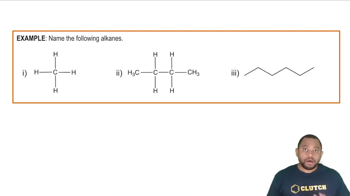
Naming Alkanes Example

IUPAC Nomenclature

The International Union of Pure and Applied Chemistry (IUPAC) nomenclature provides a systematic way to name chemical compounds. For alkanes, names are derived from the longest continuous carbon chain, with prefixes indicating the presence of substituents. In the case of '4,7-diethyl-2,2-dimethylnonane', the numbers indicate the positions of the substituents on the main chain.
추천 영상:
가이드 코스
02:39
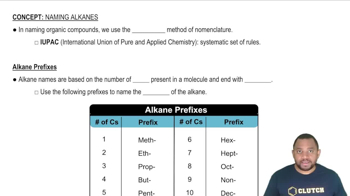
Rules for Naming Alkanes

Structural Representation

Structural representation of organic compounds illustrates the arrangement of atoms within a molecule. For alkanes, this can be depicted using line-angle formulas, where lines represent bonds between carbon atoms. Understanding how to draw these structures is essential for visualizing molecular geometry and predicting chemical behavior.
추천 영상:
가이드 코스
01:42
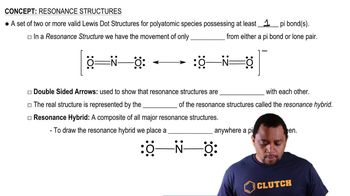
Resonance Structures