Ch.1 - Matter, Measurement & Problem Solving
Tro - Chemistry: A Molecular Approach 6th Edition
Tro6th EditionChemistry: A Molecular ApproachISBN: 9780137832217당신이 사용하는 게 아니라요?교과서 변경
1장, 문제 60b

Use scientific notation to express each quantity with only base units (no prefix multipliers). a. 35 mL b. 225 Mm c. 133 Tg d. 1.5 cg

검증된 단계별 안내
1
Identify the prefix 'M' in 'Mm', which stands for mega, equivalent to \$10^6$.
Convert 225 megameters (Mm) to meters (m) by multiplying 225 by \$10^6$.
Express the result in scientific notation by writing it as a product of a number between 1 and 10 and a power of 10.
Ensure that the final expression is in base units, which in this case is meters (m).
Verify that the scientific notation correctly represents the original quantity in base units.

비슷한 문제에 대한 검증된 영상 답변:

이 영상 해법은 위 문제에 도움이 된다고 튜터들이 추천한 것입니다.
영상 길이:
57s
도움이 되었나요?

주요 개념

질문에 올바르게 답하기 위해 반드시 이해해야 하는 핵심 개념들은 다음과 같습니다.

Scientific Notation

Scientific notation is a method of expressing numbers as a product of a coefficient and a power of ten. It simplifies the representation of very large or very small numbers, making calculations easier. For example, the number 225 can be expressed as 2.25 x 10^2 in scientific notation.
추천 영상:
가이드 코스
02:50
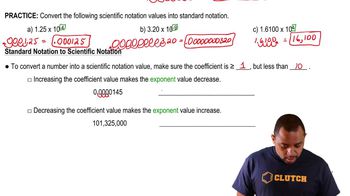
Standard Notation to Scientific Notation

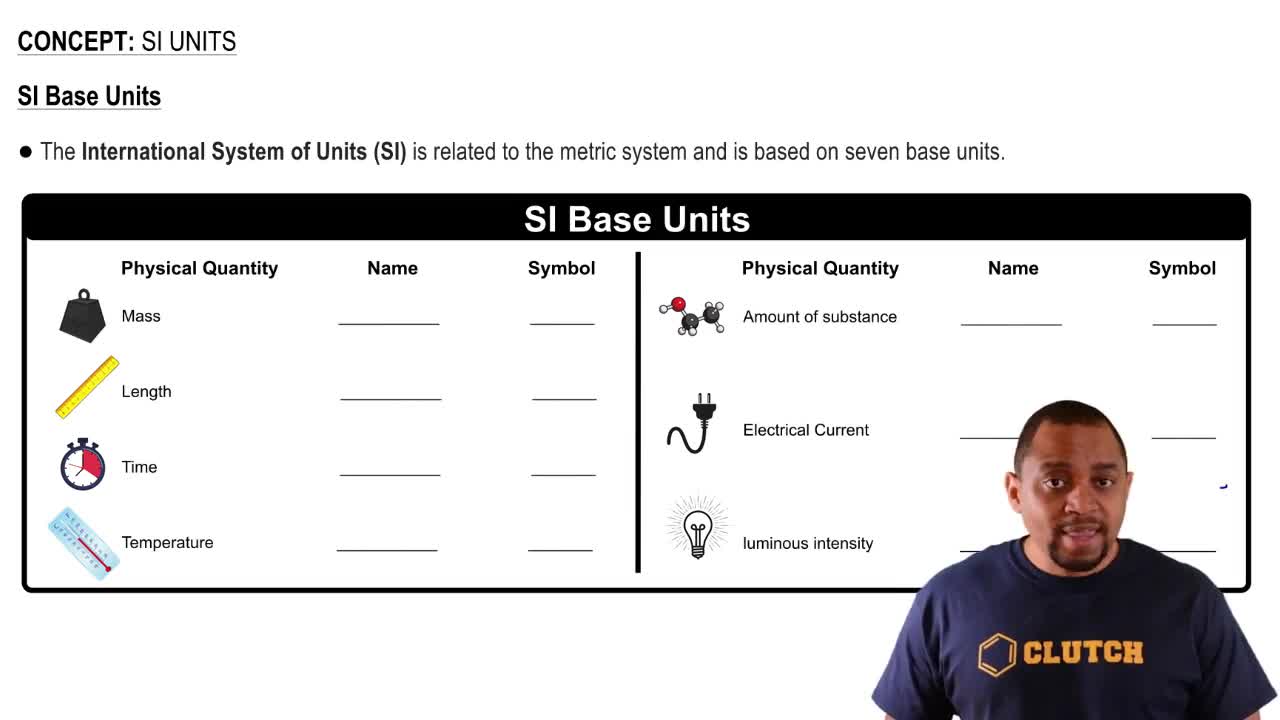
Base Units

Base units are the fundamental units of measurement in the International System of Units (SI). They include units such as meters (m) for length, kilograms (kg) for mass, and seconds (s) for time. Understanding base units is essential for converting quantities and ensuring consistency in scientific calculations.
추천 영상:

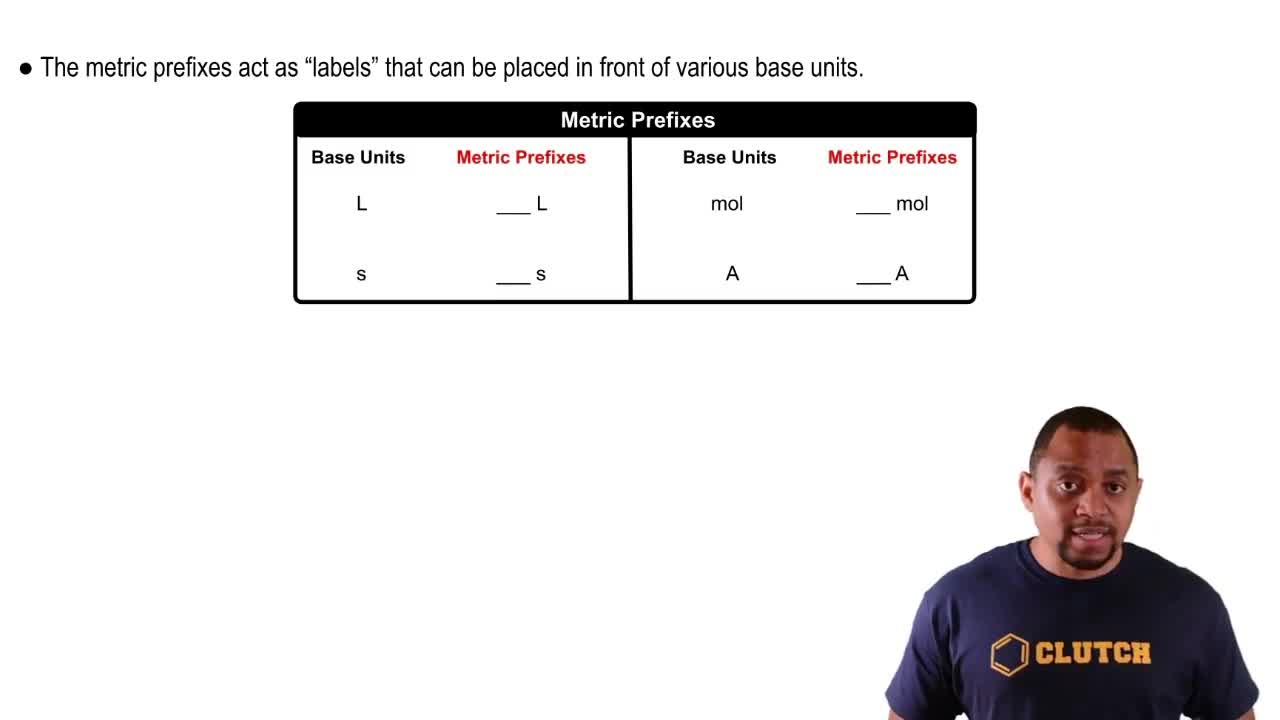
Metric Prefixes

Metric prefixes are symbols that denote specific powers of ten, allowing for the expression of quantities in a more manageable form. For instance, 'M' stands for mega, which is 10^6. When converting quantities to base units, it is important to recognize and appropriately convert these prefixes to their corresponding base unit values.
추천 영상:
가이드 코스
01:16
Metric Prefixes Usage