Ch.12 - Liquids, Solids & Intermolecular Forces
Tro - Chemistry: A Molecular Approach 6th Edition
Tro6th EditionChemistry: A Molecular ApproachISBN: 9780137832217당신이 사용하는 게 아니라요?교과서 변경
12장, 문제 59

Why does spilling room-temperature water over your skin on a hot day cool you down while spilling room-temperature vegetable oil does not?

검증된 단계별 안내
1
Understand that the cooling effect of water is primarily due to the process of evaporation. When water evaporates, it absorbs heat from the surroundings (in this case, your skin) to change from a liquid to a gas, which cools the surface.
Recognize that water has a high heat of vaporization, meaning it requires a significant amount of energy to evaporate. This energy is taken from your skin, thus cooling it down.
Consider the properties of vegetable oil. Unlike water, vegetable oil has a much lower tendency to evaporate at room temperature because it has a higher boiling point and lower vapor pressure.
Since vegetable oil does not evaporate easily, it does not absorb heat from your skin in the same way water does. Therefore, it does not provide the same cooling effect.
Conclude that the key difference lies in the evaporation process: water evaporates readily at room temperature, absorbing heat and cooling the skin, while vegetable oil does not.

주요 개념

질문에 올바르게 답하기 위해 반드시 이해해야 하는 핵심 개념들은 다음과 같습니다.

Heat Transfer

Heat transfer is the process by which thermal energy moves from one object to another. It occurs through conduction, convection, or radiation. In the context of cooling, heat transfer from the skin to a liquid can lead to a decrease in skin temperature, making the body feel cooler.
추천 영상:

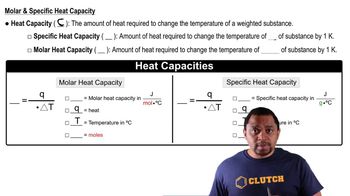
Specific Heat Capacity

Specific heat capacity is the amount of heat required to raise the temperature of a unit mass of a substance by one degree Celsius. Water has a high specific heat capacity, meaning it can absorb a significant amount of heat from the skin without a large increase in its own temperature, effectively cooling the skin.
추천 영상:

Evaporative Cooling

Evaporative cooling occurs when a liquid evaporates, taking heat energy from its surroundings. Water, when spilled on the skin, can evaporate, leading to a cooling effect as it absorbs heat from the skin. In contrast, vegetable oil has a lower evaporation rate, resulting in less cooling when spilled.
추천 영상:
가이드 코스
04:50
Filtration and Evaporation