Ch.11 - Chemical Bonding II: Molecular Shapes, VSEPR & MO Theory
Tro - Chemistry: A Molecular Approach 6th Edition
Tro6th EditionChemistry: A Molecular ApproachISBN: 9780137832217당신이 사용하는 게 아니라요?교과서 변경
11장, 문제 54a

The valence electron configurations of several atoms are shown here. How many bonds can each atom make without hybridization? a. F 2s22p5

검증된 단계별 안내
1
Identify the number of valence electrons for the atom. For fluorine (F), the valence electron configuration is 2s^2 2p^5, which means it has 7 valence electrons.
Determine the number of electrons needed to complete the octet. Fluorine needs 1 more electron to complete its octet, as it has 7 valence electrons and needs 8 to be stable.
Understand that the number of bonds an atom can form is typically equal to the number of electrons it needs to complete its octet. Therefore, fluorine can form 1 bond.
Consider the type of bond fluorine will form. Since it needs 1 electron, it will typically form a single covalent bond by sharing one electron with another atom.
Conclude that without hybridization, fluorine can form 1 single covalent bond to achieve a stable electron configuration.

비슷한 문제에 대한 검증된 영상 답변:

이 영상 해법은 위 문제에 도움이 된다고 튜터들이 추천한 것입니다.
영상 길이:
1m

주요 개념

질문에 올바르게 답하기 위해 반드시 이해해야 하는 핵심 개념들은 다음과 같습니다.

Valence Electrons

Valence electrons are the outermost electrons of an atom and are crucial in determining how an atom can bond with others. The number of valence electrons influences an atom's reactivity and the types of bonds it can form. For example, fluorine (F) has seven valence electrons, which allows it to form one bond to achieve a stable octet.
추천 영상:
가이드 코스
02:12
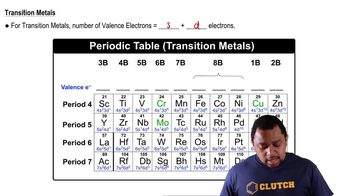
Transition Metals Valence Electrons

Bonding Capacity

Bonding capacity refers to the maximum number of bonds an atom can form based on its valence electron configuration. Atoms tend to form bonds to achieve a full outer shell, typically following the octet rule. In the case of fluorine, with its configuration of 2s²2p⁵, it can form one bond to complete its octet.
추천 영상:

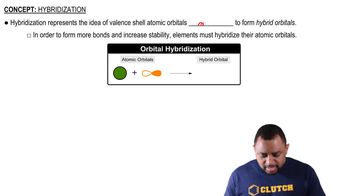
Hybridization

Hybridization is the concept of mixing atomic orbitals to create new hybrid orbitals for bonding. However, the question specifies 'without hybridization,' meaning we consider the bonding capacity based solely on the existing atomic orbitals. For fluorine, this means evaluating its ability to form bonds using its unhybridized p orbitals.
추천 영상: