Ch.14 - Solutions
Tro - Chemistry: A Molecular Approach 6th Edition
Tro6th EditionChemistry: A Molecular ApproachISBN: 9780137832217당신이 사용하는 게 아니라요?교과서 변경
14장, 문제 52

Scuba divers breathing air at increased pressure can suffer from oxygen toxicity—too much oxygen in their bloodstream— when the partial pressure of oxygen exceeds about 1.4 atm. What happens to the amount of oxygen in a diver's bloodstream when he or she breathes oxygen at elevated pressures? How can this be reversed?

검증된 단계별 안내
1
Understand that the amount of a gas dissolved in a liquid is described by Henry's Law, which states that the solubility of a gas in a liquid is directly proportional to the partial pressure of the gas above the liquid.
Recognize that when a diver breathes air at increased pressure, the partial pressure of oxygen increases, leading to more oxygen dissolving in the bloodstream.
Identify that oxygen toxicity occurs when the partial pressure of oxygen in the bloodstream exceeds safe levels, causing harmful effects.
To reverse oxygen toxicity, the diver should reduce the partial pressure of oxygen by ascending to a lower depth, thereby decreasing the pressure and the amount of oxygen dissolved in the blood.
Consider using a gas mixture with a lower oxygen concentration, such as nitrox or trimix, to prevent oxygen toxicity during deep dives.

비슷한 문제에 대한 검증된 영상 답변:

이 영상 해법은 위 문제에 도움이 된다고 튜터들이 추천한 것입니다.
영상 길이:
1m
도움이 되었나요?

주요 개념

질문에 올바르게 답하기 위해 반드시 이해해야 하는 핵심 개념들은 다음과 같습니다.

Partial Pressure

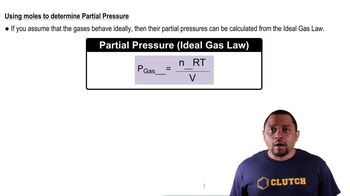
Partial pressure refers to the pressure exerted by a single component of a gas mixture. In the context of scuba diving, as a diver descends, the total pressure increases, which also raises the partial pressure of the gases they breathe, including oxygen. This relationship is described by Dalton's Law, which states that the total pressure of a gas mixture is the sum of the partial pressures of its individual gases.
추천 영상:
가이드 코스
00:48
Partial Pressure Calculation

Oxygen Toxicity

Oxygen toxicity occurs when the partial pressure of oxygen in the bloodstream becomes excessively high, leading to harmful physiological effects. Symptoms can include visual disturbances, seizures, and lung damage. This condition is particularly relevant for divers, as breathing oxygen at pressures above 1.4 atm can overwhelm the body's ability to process oxygen safely, resulting in toxicity.
추천 영상:
가이드 코스
01:42
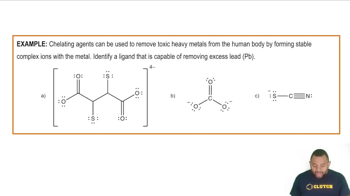
Classification of Ligands Example

Reversal of Oxygen Toxicity

Reversing oxygen toxicity primarily involves reducing the partial pressure of oxygen in the diver's environment. This can be achieved by ascending to shallower depths where the pressure is lower, thereby decreasing the partial pressure of oxygen in the lungs and bloodstream. Additionally, administering pure oxygen in a controlled environment can help manage symptoms and facilitate recovery.
추천 영상:
가이드 코스
03:42
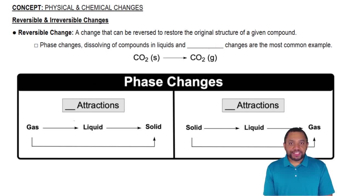
Reversible Changes in Matter