Ch.2 - Atoms & Elements
Tro - Chemistry: A Molecular Approach 6th Edition
Tro6th EditionChemistry: A Molecular ApproachISBN: 9780137832217당신이 사용하는 게 아니라요?교과서 변경
2장, 문제 32

An automobile gasoline tank holds 42 kg of gasoline. When the gasoline burns, 168 kg of oxygen is consumed, and carbon dioxide and water are produced. What is the total combined mass of carbon dioxide and water that is produced?

검증된 단계별 안내
1
Identify the law of conservation of mass, which states that mass is neither created nor destroyed in a chemical reaction.
Recognize that the total mass of the reactants (gasoline and oxygen) will equal the total mass of the products (carbon dioxide and water).
Calculate the total mass of the reactants by adding the mass of gasoline (42 kg) and the mass of oxygen (168 kg).
Set the total mass of the reactants equal to the total mass of the products, which includes carbon dioxide and water.
Conclude that the total combined mass of carbon dioxide and water produced is equal to the total mass of the reactants.

비슷한 문제에 대한 검증된 영상 답변:

이 영상 해법은 위 문제에 도움이 된다고 튜터들이 추천한 것입니다.
영상 길이:
1m

주요 개념

질문에 올바르게 답하기 위해 반드시 이해해야 하는 핵심 개념들은 다음과 같습니다.

Law of Conservation of Mass

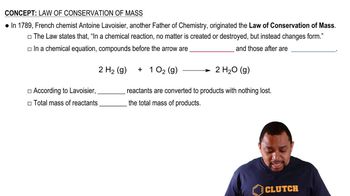
The Law of Conservation of Mass states that mass is neither created nor destroyed in a chemical reaction. This principle implies that the total mass of reactants must equal the total mass of products. In the context of the combustion of gasoline, the mass of gasoline and oxygen consumed will equal the mass of carbon dioxide and water produced.
추천 영상:
가이드 코스
01:48
Law of Conservation of Mass

Stoichiometry

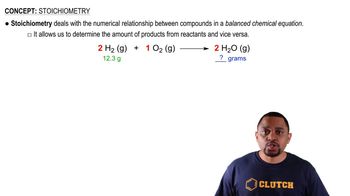
Stoichiometry is the calculation of reactants and products in chemical reactions based on balanced chemical equations. It allows us to determine the relationships between the quantities of substances involved in a reaction. In this case, knowing the masses of gasoline and oxygen helps us calculate the expected mass of carbon dioxide and water produced from their combustion.
추천 영상:
가이드 코스
01:16
Stoichiometry Concept

Combustion Reaction

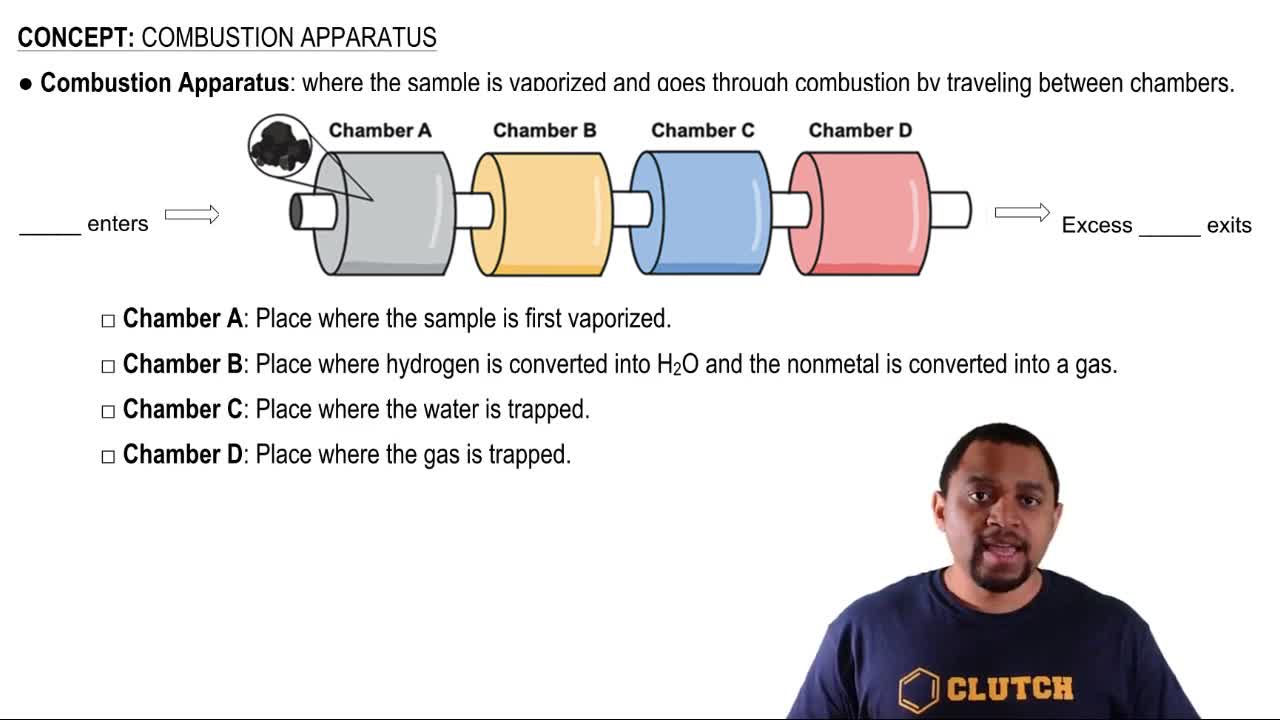
A combustion reaction is a chemical process in which a substance (typically a hydrocarbon like gasoline) reacts with oxygen to produce carbon dioxide and water, releasing energy. The general form of a combustion reaction involves the hydrocarbon reacting with oxygen, resulting in the formation of CO2 and H2O. Understanding this reaction is crucial for determining the products and their masses in the given scenario.
추천 영상:
가이드 코스
02:24
Combustion Apparatus