Ch.22 - Organic Chemistry
Tro - Chemistry: A Molecular Approach 6th Edition
Tro6th EditionChemistry: A Molecular ApproachISBN: 9780137832217당신이 사용하는 게 아니라요?교과서 변경
22장, 문제 61a

Complete each hydrogenation reaction. a.

검증된 단계별 안내
1
Identify the type of hydrocarbon involved in the hydrogenation reaction. Typically, hydrogenation reactions involve alkenes or alkynes.
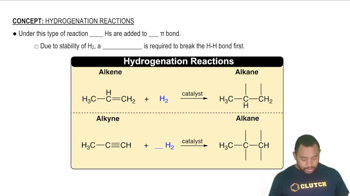
Write the general equation for the hydrogenation reaction. For example, an alkene (C=C) reacts with hydrogen (H₂) to form an alkane (C-C).
Determine the structure of the starting material. If it's an alkene, identify the carbon-carbon double bond that will react with hydrogen.
Add hydrogen atoms across the double bond. Each carbon atom involved in the double bond will gain one hydrogen atom, converting the double bond into a single bond.
Draw the structure of the resulting alkane, ensuring that all carbon atoms have four bonds and that the molecule is fully saturated with hydrogen.

비슷한 문제에 대한 검증된 영상 답변:

이 영상 해법은 위 문제에 도움이 된다고 튜터들이 추천한 것입니다.
영상 길이:
45s
도움이 되었나요?

주요 개념

질문에 올바르게 답하기 위해 반드시 이해해야 하는 핵심 개념들은 다음과 같습니다.

Hydrogenation

Hydrogenation is a chemical reaction that involves the addition of hydrogen (H2) to an unsaturated compound, typically an alkene or alkyne, resulting in the formation of a saturated compound. This process is commonly used in organic chemistry to convert liquid vegetable oils into solid fats, such as margarine, by breaking double or triple bonds.
추천 영상:
가이드 코스
01:22
Hydrogenation Reactions

Catalysts in Hydrogenation

Catalysts are substances that increase the rate of a chemical reaction without being consumed in the process. In hydrogenation reactions, catalysts such as palladium, platinum, or nickel are often used to facilitate the addition of hydrogen to the unsaturated bonds, making the reaction more efficient and allowing it to occur under milder conditions.
추천 영상:
가이드 코스
01:22
Hydrogenation Reactions

Reaction Mechanism

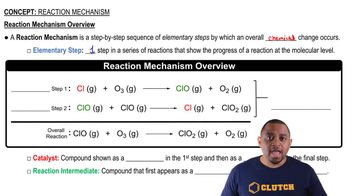
The reaction mechanism describes the step-by-step sequence of elementary reactions by which overall chemical change occurs. In hydrogenation, the mechanism typically involves the adsorption of hydrogen and the unsaturated compound onto the catalyst's surface, followed by the formation of new bonds and desorption of the saturated product, which is crucial for understanding how the reaction proceeds.
추천 영상:
가이드 코스
03:06
Reaction Mechanism Overview