Ch.22 - Organic Chemistry
Tro - Chemistry: A Molecular Approach 6th Edition
Tro6th EditionChemistry: A Molecular ApproachISBN: 9780137832217당신이 사용하는 게 아니라요?교과서 변경
22장, 문제 63b

Name each monosubstituted benzene. b.
Monosubstituted benzene with a fluorine atom attached, illustrating naming in organic chemistry.

검증된 단계별 안내
1
Identify the benzene ring structure in the image.
Notice the substituent attached to the benzene ring, which is a fluorine atom (F).
Recall that when naming monosubstituted benzene compounds, the substituent name is prefixed to 'benzene'.
Combine the name of the substituent (fluoro) with 'benzene' to form the name of the compound.
The name of the compound is 'fluorobenzene'.

비슷한 문제에 대한 검증된 영상 답변:

이 영상 해법은 위 문제에 도움이 된다고 튜터들이 추천한 것입니다.
영상 길이:
1m
도움이 되었나요?

주요 개념

질문에 올바르게 답하기 위해 반드시 이해해야 하는 핵심 개념들은 다음과 같습니다.

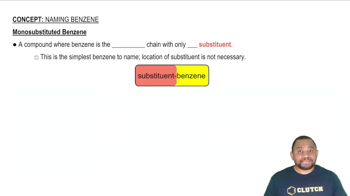
Monosubstituted Benzene

Monosubstituted benzene refers to a benzene ring that has one substituent group attached to it. The presence of this substituent alters the chemical properties and reactivity of the benzene, allowing for various chemical reactions. Naming these compounds follows specific IUPAC rules, where the substituent is identified and the benzene ring is treated as the parent structure.
추천 영상:
가이드 코스
00:30
Monosubstituted Benzene

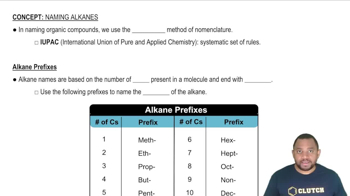
IUPAC Nomenclature

The International Union of Pure and Applied Chemistry (IUPAC) nomenclature provides a systematic method for naming chemical compounds. For monosubstituted benzenes, the substituent is named first, followed by 'benzene' as the base name. The position of the substituent is indicated by numbering the carbon atoms in the benzene ring, starting from the carbon attached to the substituent.
추천 영상:
가이드 코스
02:39
Rules for Naming Alkanes

Substituent Effects

Substituents on a benzene ring can influence the ring's reactivity and the orientation of further substitutions. They can be classified as electron-donating or electron-withdrawing groups, affecting the electron density of the ring. Understanding these effects is crucial for predicting the outcomes of electrophilic aromatic substitution reactions and for determining the stability of the resulting compounds.
추천 영상:
가이드 코스
02:29
Naming Other Substituents Example