Ch.3 - Molecules and Compounds
Tro - Chemistry: A Molecular Approach 6th Edition
Tro6th EditionChemistry: A Molecular ApproachISBN: 9780137832217당신이 사용하는 게 아니라요?교과서 변경
3장, 문제 10

How many atoms are specified by each of these prefixes: mono-, di-, tri-, tetra-, penta-, hexa-?

검증된 단계별 안내
1
Understand that these prefixes are used in chemistry to indicate the number of atoms in a molecule.
The prefix 'mono-' indicates one atom.
The prefix 'di-' indicates two atoms.
The prefix 'tri-' indicates three atoms.
The prefix 'tetra-' indicates four atoms.

비슷한 문제에 대한 검증된 영상 답변:

이 영상 해법은 위 문제에 도움이 된다고 튜터들이 추천한 것입니다.
영상 길이:
1m

주요 개념

질문에 올바르게 답하기 위해 반드시 이해해야 하는 핵심 개념들은 다음과 같습니다.

Chemical Prefixes

Chemical prefixes are used in nomenclature to indicate the number of atoms of an element in a compound. These prefixes help in naming molecular compounds and provide clarity on the composition of the substance. For example, 'mono-' indicates one atom, 'di-' indicates two atoms, and so forth.
추천 영상:
가이드 코스
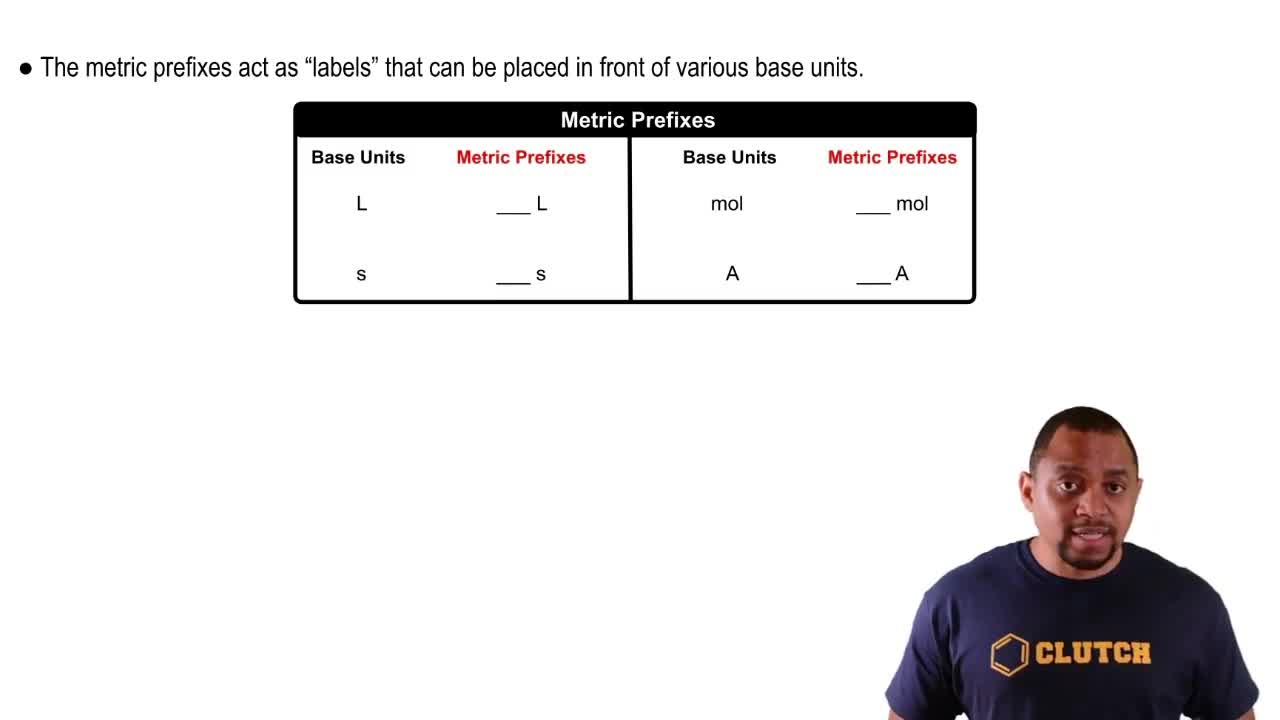
01:16
Metric Prefixes Usage

Molecular Compounds

Molecular compounds are formed when two or more nonmetals bond together by sharing electrons. The prefixes are essential in naming these compounds, as they specify the exact number of each type of atom present. Understanding these compounds is crucial for interpreting chemical formulas and reactions.
추천 영상:
가이드 코스
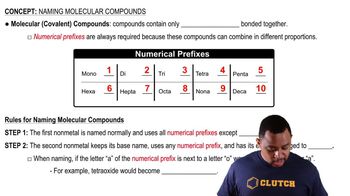
02:06
Naming Molecular Compounds

Stoichiometry

Stoichiometry is the area of chemistry that deals with the quantitative relationships between the substances involved in chemical reactions. It allows chemists to calculate the amounts of reactants and products based on the chemical formulas, which often include prefixes to denote the number of atoms, thus linking the concept of prefixes to practical applications in chemical calculations.
추천 영상:
가이드 코스
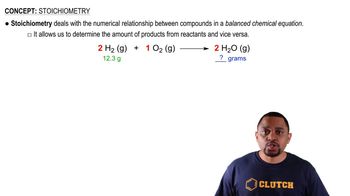
01:16
Stoichiometry Concept