
교과서 질문
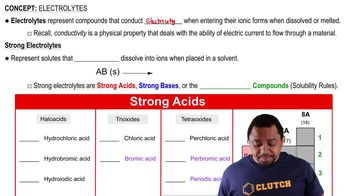
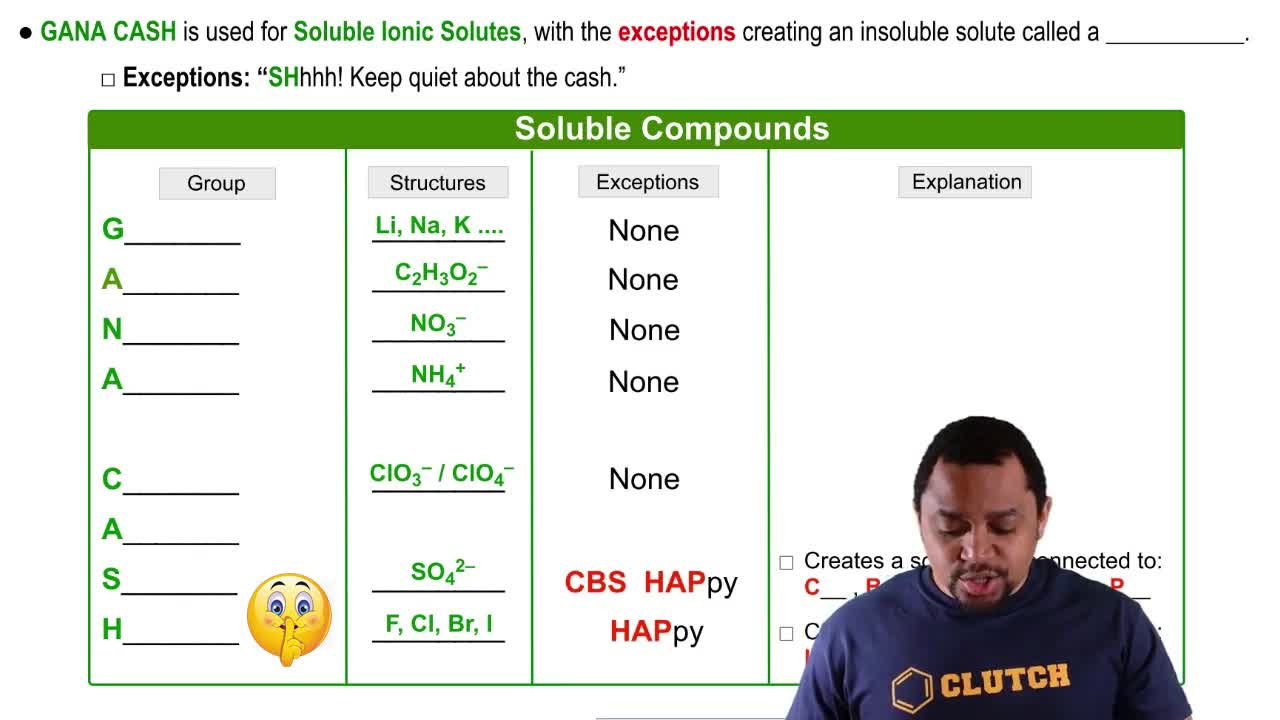
Determine whether each compound is soluble or insoluble. If the compound is soluble, list the ions present in solution. a. AgI b. Cu3(PO4)2 c. CoCO3 d. K3PO4
1637
views

 검증된 단계별 안내
 02:50
02:50
 02:30
02:30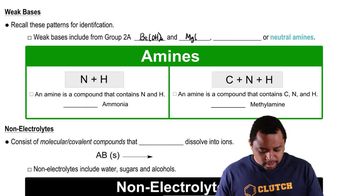 02:29
02:29Determine whether each compound is soluble or insoluble. If the compound is soluble, list the ions present in solution. a. AgI b. Cu3(PO4)2 c. CoCO3 d. K3PO4
A 55.0-mL sample of a 0.102 M potassium sulfate solution is mixed with 35.0 mL of a 0.114 M lead(II) acetate solution and this precipitation reaction occurs: K2SO4(aq) + Pb(C2H3O2)2(aq) → 2 KC2H3O2(aq) + PbSO4(s) The solid PbSO4 is collected, dried, and found to have a mass of 1.01 g. Determine the limiting reactant, theoretical yield, percent yield.
Determine whether each compound is soluble or insoluble. If the compound is soluble, list the ions present in solution. a. AgNO3 b. Pb(C2H3O2)2 c. KNO3 d. (NH4)2S
Classify each compound as a strong electrolyte or nonelectrolyte. a. K2SO4 b. C6H12O6 c. K2CO3 d. CH3OH
A 25.0-mL sample of a 1.20 M potassium chloride solution is mixed with 15.0 mL of a 0.900 M lead(II) nitrate solution and this precipitation reaction occurs: 2 KCl(aq) + Pb(NO3)2(aq) → PbCl2(s) + 2 KNO3(aq) The solid PbCl2 is collected, dried, and found to have a mass of 2.45 g. Determine the the percent yield.