Skip to main content
Genetics
나의 코스
배우기
시험 준비
AI 튜터
학습 가이드
교과서적 해결책
플래시카드
탐험해 보세요
앱을 사용해 보세요
나의 코스
배우기
시험 준비
AI 튜터
학습 가이드
교과서적 해결책
플래시카드
탐험해 보세요
앱을 사용해 보세요
뒤로
Genomics and Human Medicine definitions
카드를 뒤집기 위해 탭할 수 있습니다.
Human Genome Project
카드를 뒤집기 위해 탭할 수 있습니다.
👆
Human Genome Project
A global scientific effort that provided the first complete sequence of human DNA, revealing unexpected proportions of coding and non-coding regions.
진행 상황 추적
컨트롤 버튼이 '내비게이션' 모드로 변경되었습니다.
1/15
관련 플래시카드
관련 실천
추천 영상
Genomics and Human Medicine quiz #1
Genomics and Human Medicine
10 용어
Genomics and Human Medicine
15. Genomes and Genomics
7 문제점
주제
Kylia
Functional Genomics
15. Genomes and Genomics
8 문제점
주제
Kylia
15. Genomes and Genomics - Part 1 of 2
5 주제
10 문제점
장
Kylia
15. Genomes and Genomics - Part 2 of 2
4 주제
10 문제점
장
Kylia
VideoThumbView.guidedCourse
09:12
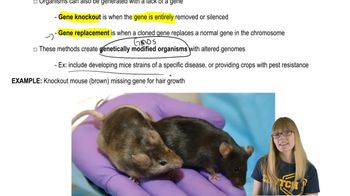
Transgenic Organisms and Gene Therapy
889
views
4
rank
1
comments
VideoThumbView.guidedCourse
06:51
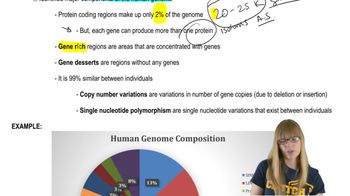
Human Genome Composition
990
views
4
rank
이 집합의 용어 (15)
하이드의 정의
Human Genome Project
A global scientific effort that provided the first complete sequence of human DNA, revealing unexpected proportions of coding and non-coding regions.
Protein-coding gene
A DNA segment responsible for producing proteins, representing only a small fraction of the entire human genome.
Alternative splicing
A process allowing a single gene to generate multiple protein variants by rearranging its exons during RNA processing.
Copy number variation
A genetic difference where sections of DNA are duplicated or deleted, contributing to diversity even among identical twins.
Single nucleotide polymorphism
A variation at a single DNA base position among individuals, serving as a major source of genetic diversity.
Transposon
A mobile DNA sequence capable of moving within the genome, sometimes called a 'jumping gene,' influencing genome structure.
Intron
A non-coding DNA segment within a gene, situated between exons, often removed during RNA processing.
Pseudogene
A DNA sequence resembling a gene but rendered nonfunctional due to mutations or insertions.
Gene desert
A large genomic region lacking protein-coding genes, often associated with inactive chromatin.
Transgenic organism
An organism engineered to contain DNA from another species, commonly used to study gene function or model diseases.
Gene addition
A genetic engineering method where a new gene is inserted into an organism's genome, not necessarily at a specific site.
Gene knock-in
A precise genetic modification where a gene is inserted at a targeted location, often with a specific promoter for expression.
Gene knockout
A genetic technique where a gene is completely inactivated or removed to study its function.
Gene therapy
A medical approach aiming to treat diseases by delivering functional genes to replace or supplement defective ones.
Liposome
A lipid-based vesicle used to deliver therapeutic DNA into cells without using viruses, especially in gene therapy.
 뒤로뒤로
뒤로뒤로
 09:12
09:12