
교과서 질문
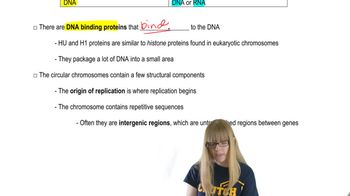
Write a short essay that contrasts the major differences between the organization of DNA in viruses and bacteria versus eukaryotes.
452
views
 검증된 단계별 안내
 02:39
02:39
 02:48
02:48 08:26
08:26Write a short essay that contrasts the major differences between the organization of DNA in viruses and bacteria versus eukaryotes.
During what genetic process are lampbrush chromosomes present in vertebrates?
Describe the structure of giant polytene chromosomes and how they arise.
In the discussion, we focused on how DNA is organized at the chromosomal level. Along the way, we found many opportunities to consider the methods and reasoning by which much of this information was acquired. From the explanations given in the chapter, what answers would you propose to the following fundamental questions:
How do we know that satellite DNA consists of repetitive sequences and has been derived from regions of the centromere?
In the discussion, we focused on how DNA is organized at the chromosomal level. Along the way, we found many opportunities to consider the methods and reasoning by which much of this information was acquired. From the explanations given in the chapter, what answers would you propose to the following fundamental questions:
How did we learn that eukaryotic chromatin exists in the form of repeating nucleosomes, each consisting of about 200 base pairs and an octamer of histones?
What genetic process is occurring in a puff of a polytene chromosome? How do we know this experimentally?