Ch. 13 - Translation and Proteins
Klug - Essentials of Genetics 10th Edition
Klug10th EditionEssentials of GeneticsISBN: 9780135588789당신이 사용하는 게 아니라요?교과서 변경
13장, 문제 15

Review the concept of colinearity and consider the following question: Certain mutations called amber in bacteria and viruses result in premature termination of polypeptide chains during translation. Many amber mutations have been detected at different points along the gene that codes for a head protein in phage T4. How might this system be further investigated to demonstrate and support the concept of colinearity?

검증된 단계별 안내
1
Step 1: Understand the concept of colinearity, which states that the sequence of nucleotides in a gene corresponds directly and linearly to the sequence of amino acids in the protein it encodes. This means that mutations at different points in the gene should affect the protein at corresponding positions.
Step 2: Recognize that amber mutations cause premature stop codons, leading to truncated proteins. By identifying the exact location of these mutations within the gene, you can predict where the protein synthesis stops.
Step 3: Map the positions of the amber mutations along the DNA sequence of the gene and correlate these positions with the lengths of the truncated polypeptides produced. This can be done by analyzing the size of the protein fragments using techniques such as SDS-PAGE.
Step 4: Demonstrate that mutations occurring earlier in the gene produce shorter polypeptides, while mutations occurring later produce longer polypeptides. This linear relationship supports the idea of colinearity between the gene and its protein product.
Step 5: To further support colinearity, complement genetic data with molecular techniques such as sequencing the mutated gene regions and comparing the mutation sites with the corresponding truncated protein products, confirming the direct correspondence between gene sequence and protein structure.

주요 개념

질문에 올바르게 답하기 위해 반드시 이해해야 하는 핵심 개념들은 다음과 같습니다.

Colinearity of Genes and Proteins

Colinearity refers to the direct correspondence between the linear sequence of nucleotides in a gene and the sequence of amino acids in the encoded protein. This means that the order of codons in DNA matches the order of amino acids in the polypeptide chain, allowing mutations at specific gene locations to affect particular protein regions.
추천 영상:

Amber Mutations and Nonsense Codons

Amber mutations are a type of nonsense mutation that introduce premature stop codons (UAG) in the mRNA, causing early termination of translation. Studying these mutations at various gene positions helps map the gene’s coding sequence by correlating mutation sites with truncated protein products.
추천 영상:
가이드 코스
09:49
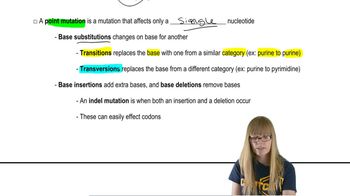
Point Mutations

Use of Phage T4 as a Model System

Phage T4 is a well-studied virus infecting bacteria, making it an ideal model for genetic analysis. By analyzing amber mutations in the T4 head protein gene, researchers can experimentally link specific gene regions to protein segments, providing evidence for colinearity through observable effects on phage structure and function.
추천 영상:
가이드 코스
09:52
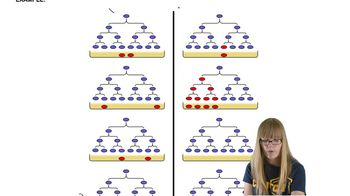
Spontaneous Mutations