
Ch. 14 - Gene Mutation, DNA Repair, and Transposition
Klug - Essentials of Genetics 10th Edition
Klug10th EditionEssentials of GeneticsISBN: 9780135588789당신이 사용하는 게 아니라요?교과서 변경
14장, 문제 16

Describe how the Ames test screens for potential environmental mutagens. Why is it thought that a compound that tests positively in the Ames test may also be carcinogenic?

검증된 단계별 안내
1
Explain that the Ames test is a biological assay used to assess the mutagenic potential of chemical compounds by observing their ability to cause mutations in the DNA of certain strains of bacteria, typically Salmonella typhimurium, which carry mutations making them unable to synthesize the amino acid histidine.
Describe how the test involves exposing these bacteria to the chemical compound in question and then plating them on a medium lacking histidine; only bacteria that undergo a reverse mutation restoring the ability to produce histidine will grow into colonies.
Clarify that an increased number of colonies compared to a control indicates that the compound induces mutations, suggesting it is a mutagen.
Discuss the connection between mutagenicity and carcinogenicity by explaining that mutations in DNA can lead to uncontrolled cell growth and cancer, so compounds that cause mutations in the Ames test are suspected to have carcinogenic potential.
Mention that while the Ames test is a useful initial screen, further testing in mammalian systems is necessary to confirm carcinogenicity because not all mutagens are carcinogens and vice versa.

비슷한 문제에 대한 검증된 영상 답변:

이 영상 해법은 위 문제에 도움이 된다고 튜터들이 추천한 것입니다.
영상 길이:
1m
도움이 되었나요?

주요 개념

질문에 올바르게 답하기 위해 반드시 이해해야 하는 핵심 개념들은 다음과 같습니다.

Ames Test Methodology

The Ames test is a biological assay that uses specially engineered strains of bacteria to detect chemical substances that cause mutations. These bacteria are unable to grow on a medium lacking a specific nutrient unless a mutation reverses this defect. By exposing the bacteria to a test compound, the test identifies mutagens based on the number of colonies that regain growth ability, indicating induced mutations.
추천 영상:
가이드 코스
04:29
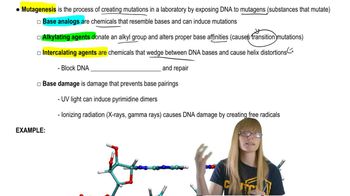
Induced Mutations

Mutagens and Carcinogens Relationship

Mutagens are agents that cause changes in DNA sequences, which can disrupt normal cellular functions. Many carcinogens are mutagens because DNA mutations can lead to uncontrolled cell growth and cancer. Therefore, a positive Ames test suggests that a compound can cause genetic mutations, implying a potential to initiate carcinogenesis.
추천 영상:
가이드 코스
08:16
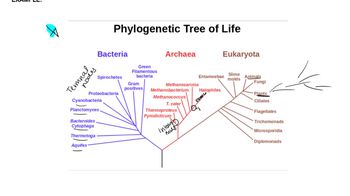
Phylogenetic Trees

Metabolic Activation in Ames Test

Some compounds are not directly mutagenic but become mutagenic after metabolic conversion in the body. The Ames test often includes a liver extract (S9 mix) to simulate this metabolic activation, allowing detection of pro-mutagens. This feature enhances the test’s relevance to real-world exposure and carcinogenic risk assessment.
추천 영상:
가이드 코스
04:29
Induced Mutations
관련 실천
교과서 질문

In maize, a Ds or Ac transposon can alter the function of genes at or near the site of transposon insertion. It is possible for these elements to transpose away from their original insertion site, causing a reversion of the mutant phenotype. In some cases, however, even more severe phenotypes appear, due to events at or near the mutant allele. What might be happening to the transposon or the nearby gene to create more severe mutations?

429
views
교과서 질문

Compare DNA transposons and retrotransposons. What properties do they share?

1263
views
교과서 질문

Contrast the various types of DNA repair mechanisms known to counteract the effects of UV radiation. What is the role of visible light in repairing UV-induced mutations?

767
views
교과서 질문

Mammography is an accurate screening technique for the early detection of breast cancer in humans. Because this technique uses X rays diagnostically, it has been highly controversial. Can you explain why? What reasons justify the use of X rays for such a medical screening technique?

605
views
교과서 질문

A significant number of mutations in the HBB gene that cause human β-thalassemia occur within introns or in upstream noncoding sequences. Explain why mutations in these regions often lead to severe disease, although they may not directly alter the coding regions of the gene.

712
views
교과서 질문

What genetic defects result in the disorder xeroderma pigmentosum (XP) in humans? How do these defects create the phenotypes associated with the disorder?

597
views