Ch. 16 - Regulation of Gene Expression in Eukaryotes
Klug - Essentials of Genetics 10th Edition
Klug10th EditionEssentials of GeneticsISBN: 9780135588789당신이 사용하는 게 아니라요?교과서 변경
16장, 문제 1f

In this chapter, we focused on the regulation of gene expression in eukaryotes. At the same time, we found many opportunities to consider the methods and reasoning by which much of this information was acquired. From the explanations given in the chapter:


How do we know that small noncoding RNA molecules can regulate gene expression?

검증된 단계별 안내
1
Understand that small noncoding RNA molecules, such as microRNAs (miRNAs) and small interfering RNAs (siRNAs), regulate gene expression by interacting with messenger RNA (mRNA) to affect its stability or translation.
Review experimental evidence where researchers introduced or inhibited specific small noncoding RNAs in cells and observed changes in the levels of target mRNAs or proteins, indicating regulatory effects.
Examine techniques like RNA interference (RNAi) experiments, where synthetic siRNAs are used to silence specific genes, demonstrating that small RNAs can downregulate gene expression.
Consider studies using reporter genes fused to target sequences of small RNAs, showing that the presence of these small RNAs reduces reporter gene expression, confirming their regulatory role.
Look at biochemical methods such as co-immunoprecipitation and crosslinking to identify physical interactions between small noncoding RNAs and their target mRNAs or protein complexes involved in gene silencing.

주요 개념

질문에 올바르게 답하기 위해 반드시 이해해야 하는 핵심 개념들은 다음과 같습니다.

Small Noncoding RNA Molecules

Small noncoding RNAs, such as microRNAs (miRNAs) and small interfering RNAs (siRNAs), are short RNA sequences that do not code for proteins but regulate gene expression by binding to target mRNAs. They can inhibit translation or promote mRNA degradation, thus controlling protein production post-transcriptionally.
추천 영상:

Gene Expression Regulation Mechanisms

Gene expression regulation involves multiple levels, including transcriptional, post-transcriptional, and translational control. Small noncoding RNAs primarily act post-transcriptionally by interacting with mRNA molecules to modulate their stability or translation efficiency, influencing how genes are expressed in eukaryotic cells.
추천 영상:
가이드 코스
02:09
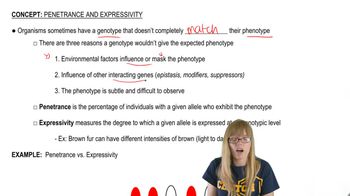
Penetrance and Expressivity

Experimental Evidence for RNA-Mediated Regulation

Researchers use techniques like RNA interference (RNAi), reporter gene assays, and gene knockdown experiments to demonstrate that small noncoding RNAs regulate gene expression. Observing changes in protein levels or phenotypes after manipulating these RNAs provides direct evidence of their regulatory roles.
추천 영상: