Ch. 4 - Modification of Mendelian Ratios
Klug10th EditionEssentials of GeneticsISBN: 9780135588789
당신이 사용하는 게 아니라요?교과서 변경다른 교과서를 선택하세요
TOC.tableOfContents
- Ch. 1 - Introduction to Genetics16
- Ch. 2 - Mitosis and Meiosis28
- Ch. 3 - Mendelian Genetics37
- Ch. 4 - Modification of Mendelian Ratios53
- Ch. 5 - Sex Determination and Sex Chromosomes32
- Ch. 6 - Chromosome Mutations: Variation in Number and Arrangement37
- Ch. 7 - Linkage and Chromosome Mapping in Eukaryotes36
- Ch. 8 - Genetic Analysis and Mapping in Bacteria and Bacteriophages24
- Ch. 9 - DNA Structure and Analysis38
- Ch. 10 - DNA Replication29
- Ch. 11 - Chromosome Structure and DNA Sequence Organization22
- Ch. 12 - The Genetic Code and Transcription36
- Ch. 13 - Translation and Proteins27
- Ch. 14 - Gene Mutation, DNA Repair, and Transposition34
- Ch. 15 - Regulation of Gene Expression in Bacteria22
- Ch. 16 - Regulation of Gene Expression in Eukaryotes37
- Ch. 17 - Recombinant DNA Technology27
- Ch. 18 - Genomics, Bioinformatics, and Proteomics30
- Ch. 19 - The Genetics of Cancer21
- Ch. 20 - Quantitative Genetics and Multifactorial Traits37
- Ch. 21 - Population and Evolutionary Genetics45

4장, 문제 32a
Students taking a genetics exam were expected to answer the following question by converting data to a “meaningful ratio” and then solving the problem. The instructor assumed that the final ratio would reflect two gene pairs, and most correct answers did. Here is the exam question:
<IMAGE>
Convert the data to a meaningful ratio that allows you to explain the inheritance of color. Determine the number of genes involved and the genotypes that yield each phenotype.”
a.Solve the problem for two gene pairs. What is the final ratio?
 검증된 단계별 안내
1
Step 1: Identify the phenotypic classes and their observed numbers from the data provided. List each phenotype and the corresponding count of individuals exhibiting that phenotype.
Step 2: Convert the observed numbers into a ratio by dividing each phenotype count by the greatest common divisor or by the smallest number in the dataset to simplify the ratio into whole numbers. This ratio should reflect the relative frequencies of each phenotype.
Step 3: Recall that two gene pairs typically produce a phenotypic ratio based on independent assortment and dominance relationships. For two gene pairs, the expected phenotypic ratio often follows a 9:3:3:1 pattern if both genes assort independently and show simple dominance.
Step 4: Compare the simplified observed ratio to the expected 9:3:3:1 ratio. Determine if the observed data fits this pattern or if it suggests a different interaction (such as epistasis or linkage). This comparison helps confirm the number of genes involved.
Step 5: Assign genotypes to each phenotype class based on the two gene pairs. For example, the phenotype with the highest frequency (9 parts) corresponds to the double dominant or dominant/recessive combinations, while the other phenotypes correspond to heterozygous or homozygous recessive combinations. Write out the genotypes that produce each phenotype accordingly.
주요 개념
질문에 올바르게 답하기 위해 반드시 이해해야 하는 핵심 개념들은 다음과 같습니다.
Mendelian Inheritance and Dihybrid Crosses
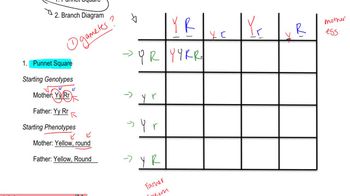
Mendelian inheritance describes how traits are passed from parents to offspring through genes. A dihybrid cross involves two gene pairs, each with two alleles, and typically produces a phenotypic ratio of 9:3:3:1 in the F2 generation. Understanding this ratio helps interpret how two genes independently assort and influence phenotypes.
추천 영상:
가이드 코스
 15:24
15:24
Punnet Square
Phenotypic Ratios and Their Interpretation
Phenotypic ratios represent the relative frequencies of observable traits in offspring. Converting raw data into a meaningful ratio allows geneticists to infer the number of genes involved and their interaction patterns. Recognizing standard ratios, like 9:3:3:1, aids in identifying gene pairs and dominance relationships.
추천 영상:
가이드 코스
 10:48
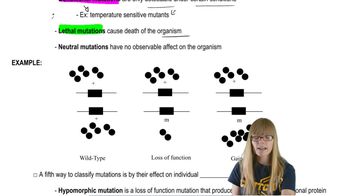
10:48Mutations and Phenotypes
Genotype-Phenotype Relationships
Genotypes are the genetic makeup of an organism, while phenotypes are the observable traits. Different genotype combinations from two gene pairs can produce distinct phenotypes. Determining which genotypes correspond to each phenotype is essential for explaining inheritance patterns and predicting offspring traits.
추천 영상:
가이드 코스
 07:52
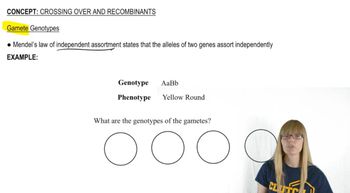
07:52Gamete Genotypes
관련 실천