Ch. 12 - DNA Organization in Chromosomes
Klug - Concepts of Genetics 12th Edition
Klug12th EditionConcepts of GeneticsISBN: 9780135564776당신이 사용하는 게 아니라요?교과서 변경
12장, 문제 26

At the end of the short arm of human chromosome 16 (16p), several genes associated with disease are present, including thalassemia and polycystic kidney disease. When that region of chromosome 16 was sequenced, gene-coding regions were found to be very close to the telomere-associated sequences. Could there be a possible link between the location of these genes and the presence of the telomere-associated sequences? What further information concerning the disease genes would be useful in your analysis?

검증된 단계별 안내
1
Understand the problem: The question is asking about a potential link between the location of disease-associated genes on the short arm of chromosome 16 (16p) and the presence of telomere-associated sequences. It also asks what additional information about these genes would be useful for analysis.
Step 1: Review the role of telomeres. Telomeres are repetitive DNA sequences at the ends of chromosomes that protect the chromosome from degradation and maintain genomic stability. Telomere-associated sequences may influence nearby gene expression or chromosomal behavior.
Step 2: Investigate the proximity of the disease-associated genes to the telomere-associated sequences. Consider whether the closeness of these genes to telomeres could affect their regulation, expression, or susceptibility to mutations. For example, telomere shortening or instability might impact nearby genes.
Step 3: Identify the functions of the disease-associated genes. Research the specific roles of the genes linked to thalassemia and polycystic kidney disease. Determine whether their functions or mutations are known to be influenced by chromosomal location or telomere dynamics.
Step 4: Gather additional information. Useful data might include the expression patterns of these genes, their regulatory elements, mutation rates in the region, and whether telomere-associated sequences interact with these genes directly or indirectly. Experimental studies, such as chromatin immunoprecipitation (ChIP) or RNA sequencing, could provide insights.

비슷한 문제에 대한 검증된 영상 답변:

이 영상 해법은 위 문제에 도움이 된다고 튜터들이 추천한 것입니다.
영상 길이:
2m

주요 개념

질문에 올바르게 답하기 위해 반드시 이해해야 하는 핵심 개념들은 다음과 같습니다.

Telomeres

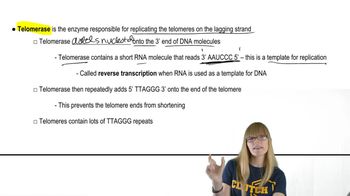
Telomeres are repetitive nucleotide sequences located at the ends of chromosomes, protecting them from degradation and preventing the loss of important genetic information during cell division. They play a crucial role in maintaining chromosome stability and integrity. The proximity of gene-coding regions to telomeres may influence gene expression and stability, potentially linking telomere dynamics to disease susceptibility.
추천 영상:
가이드 코스
08:38
Telomeres and Telomerase

Gene Location and Expression

The physical location of genes on chromosomes can significantly affect their expression and regulation. Genes situated near telomeres may experience different regulatory mechanisms compared to those located in the central regions of chromosomes. Understanding the spatial organization of genes can provide insights into how their expression is influenced by chromosomal architecture, which is relevant for diseases like thalassemia and polycystic kidney disease.
추천 영상:
가이드 코스
02:09
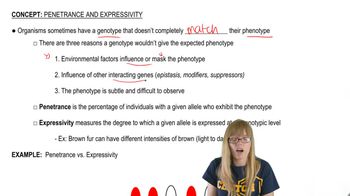
Penetrance and Expressivity

Genetic Association Studies

Genetic association studies investigate the relationship between specific genetic variants and diseases. These studies can help identify whether certain genes are linked to disease phenotypes, providing insights into the genetic basis of conditions like thalassemia and polycystic kidney disease. Further information, such as variant frequency, gene function, and population genetics, would enhance the analysis of the disease genes in relation to their chromosomal location.
추천 영상:
가이드 코스
08:30
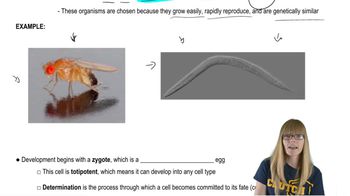
Genetics of Development
관련 실천
교과서 질문

The following is a diagram of the general structure of the bacteriophage chromosome. Speculate on the mechanism by which it forms a closed ring upon infection of the host cell.

654
views
교과서 질문

The human genome contains approximately 106 copies of an Alu sequence, one of the best-studied classes of short interspersed elements (SINEs), per haploid genome. Individual Alu units share a 282-nucleotide consensus sequence followed by a 3'-adenine-rich tail region [Schmid (1998)]. Given that there are approximately 3 x 10⁹ base pairs per human haploid genome, about how many base pairs are spaced between each Alu sequence?

725
views
교과서 질문

Spermatogenesis in mammals results in sperm that have a nucleus that is 40 times smaller than an average somatic cell. Thus, the sperm haploid genome must be packaged very tightly, yet in a way that is reversible after fertilization. This sperm-specific DNA compaction is due to a nucleosome-to-nucleoprotamine transition, where the histone-based nucleosomes are removed and replaced with arginine-rich protamine proteins that facilitate a tighter packaging of DNA. In 2013 Montellier et al. showed that replacement of the H2B protein in the nucleosomes with a testis-specific variant of H2B called TSH2B is a critical step prior to the nucleosome-to-nucleoprotamine transition. Mice lacking TSH2B retain H2B and their sperm arrest late in spermatogenesis with reduced DNA compaction. Based on these findings, would you expect that TSH2B-containing nucleosomes are more or less stable than H2B-containing nucleosomes? Explain your reasoning.

435
views
교과서 질문

Microsatellites are currently exploited as markers for paternity testing. A sample paternity test is shown in the following table in which ten microsatellite markers were used to test samples from a mother, her child, and an alleged father. The name of the microsatellite locus is given in the left-hand column, and the genotype of each individual is recorded as the number of repeats he or she carries at that locus. For example, at locus D9S302, the mother carries 30 repeats on one of her chromosomes and 31 on the other. In cases where an individual carries the same number of repeats on both chromosomes, only a single number is recorded. (Some of the numbers are followed by a decimal point, for example, 20.2, to indicate a partial repeat in addition to the complete repeats.) Assuming that these markers are inherited in a simple Mendelian fashion, can the alleged father be excluded as the source of the sperm that produced the child? Why or why not? Explain.

998
views