How does a positive ASO test for sickle-cell anemia determine that an individual is homozygous recessive for the mutation that causes sickle-cell anemia?
Ch. 22 - Applications of Genetic Engineering and Biotechnology

22장, 문제 1d
How can we correlate the genome with RNA expression data in a tissue or a single cell?
검증된 단계별 안내1
Step 1: Understand the relationship between the genome and RNA expression. The genome contains the complete set of DNA instructions for an organism, while RNA expression reflects the active transcription of specific genes in a tissue or cell. RNA expression data can provide insights into which genes are being actively transcribed under specific conditions.
Step 2: Use sequencing technologies to gather data. To correlate the genome with RNA expression, perform whole-genome sequencing to identify the complete DNA sequence of the organism. Then, use RNA sequencing (RNA-Seq) to measure the levels of RNA transcripts in the tissue or single cell of interest.
Step 3: Map RNA-Seq data to the genome. Align the RNA-Seq reads to the reference genome using bioinformatics tools. This step helps identify which regions of the genome are actively transcribed and provides quantitative data on gene expression levels.
Step 4: Analyze differential expression. Compare RNA expression data across different tissues, cells, or conditions to identify patterns of gene activity. Statistical methods can be used to determine which genes are upregulated or downregulated in specific contexts.
Step 5: Integrate functional genomics data. Combine RNA expression data with other genomic information, such as epigenetic modifications, transcription factor binding sites, or chromatin accessibility, to gain a deeper understanding of gene regulation and cellular function.

비슷한 문제에 대한 검증된 영상 답변:
이 영상 해법은 위 문제에 도움이 된다고 튜터들이 추천한 것입니다.
영상 길이:
1m주요 개념
질문에 올바르게 답하기 위해 반드시 이해해야 하는 핵심 개념들은 다음과 같습니다.
Genomics
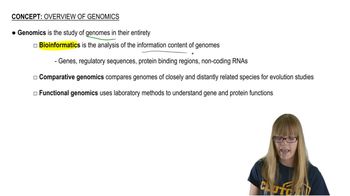
Genomics is the study of the complete set of DNA, including all of its genes, within an organism. It involves analyzing the structure, function, evolution, and mapping of genomes. Understanding genomics is crucial for correlating genomic data with RNA expression, as it provides the foundational information about genetic sequences that can influence gene expression patterns.
추천 영상:
가이드 코스
Genomics Overview
Transcriptomics
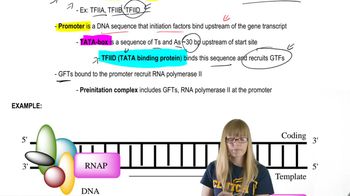
Transcriptomics is the study of the transcriptome, which encompasses all RNA molecules, including mRNA, rRNA, and non-coding RNAs, produced in a cell or tissue at a specific time. By analyzing RNA expression data, researchers can determine which genes are actively being expressed and how their expression levels vary under different conditions, allowing for a correlation with genomic data.
추천 영상:
가이드 코스
Eukaryotic Transcription
Single-Cell Analysis
Single-cell analysis refers to techniques that allow for the examination of individual cells rather than bulk populations. This approach is essential for understanding heterogeneity in gene expression within tissues, as it reveals how different cells may express genes differently. Correlating genomic data with RNA expression at the single-cell level provides insights into cellular functions and disease mechanisms.
추천 영상:
가이드 코스
Chi Square Analysis
관련 실천
교과서 질문
503
views
교과서 질문
Write a short essay that summarizes the impacts that genomic applications are having on society and discuss which of the ethical issues presented by these applications is the most daunting to society.
468
views
교과서 질문
Why are most recombinant human proteins produced in animal or plant hosts instead of bacterial host cells?
585
views
교과서 질문
What experimental evidence confirms that we have introduced a useful gene into a transgenic organism and that it performs as we anticipate?
471
views
교과서 질문
From GWAS, how do we know which genes are associated with a particular genetic disorder?
430
views
1
rank
교과서 질문
From microarray analysis, how do we know what genes are being expressed in a specific tissue?
413
views