Ch. 11 - Gene Mutation, DNA Repair, and Homologous Recombination
Sanders - Genetic Analysis: An Integrated Approach 3rd Edition
Sanders3rd EditionGenetic Analysis: An Integrated ApproachISBN: 9780135564172당신이 사용하는 게 아니라요?교과서 변경
11장, 문제 41e

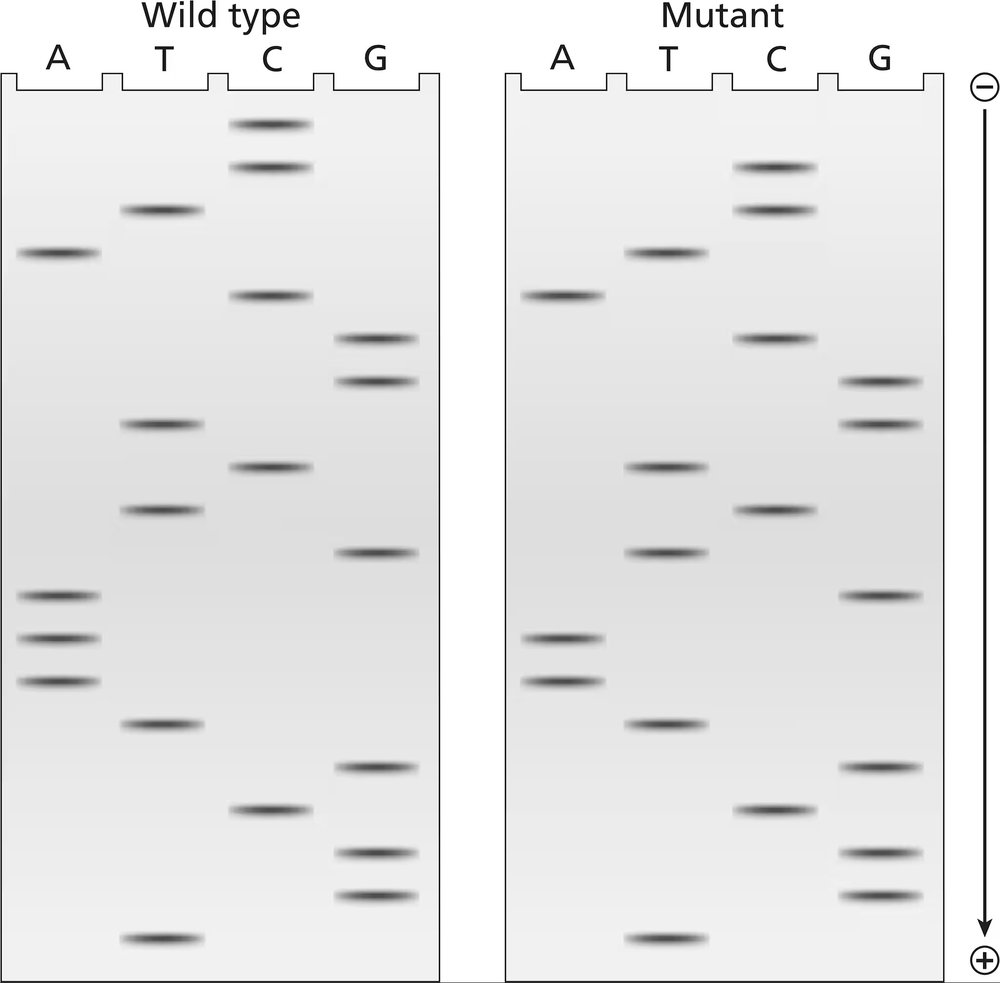
The two gels illustrated contain dideoxynucleotide DNA-sequencing information for a wild-type segment and mutant segment of DNA corresponding to the N-terminal end of a protein. The start codon and the next five codons are sequenced.
Comparison of dideoxynucleotide sequencing gels for wild-type and mutant DNA segments, highlighting differences in codons.
What is the cause of the mutation?

검증된 단계별 안내
1
Examine the DNA sequencing gels for both the wild-type and mutant segments. Identify the nucleotide sequence for each segment by reading the bands from bottom to top (5' to 3' direction).
Compare the nucleotide sequences of the wild-type and mutant DNA segments. Look for differences in the sequence, such as substitutions, deletions, or insertions.
Translate the nucleotide sequences into their corresponding amino acid sequences using the genetic code table. Start at the start codon (AUG) and proceed codon by codon.
Determine how the mutation affects the amino acid sequence. Check if the mutation causes a missense mutation (change in one amino acid), nonsense mutation (premature stop codon), or frameshift mutation (alteration of the reading frame).
Conclude the cause of the mutation based on the observed changes in the DNA and protein sequences. For example, if a nucleotide substitution leads to a different amino acid, the mutation is likely a point mutation causing a missense effect.

비슷한 문제에 대한 검증된 영상 답변:

이 영상 해법은 위 문제에 도움이 된다고 튜터들이 추천한 것입니다.
영상 길이:
3m

주요 개념

질문에 올바르게 답하기 위해 반드시 이해해야 하는 핵심 개념들은 다음과 같습니다.

Dideoxynucleotide Sequencing

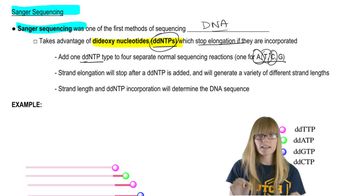
Dideoxynucleotide sequencing, also known as Sanger sequencing, is a method used to determine the nucleotide sequence of DNA. It involves incorporating dideoxynucleotides, which terminate DNA strand elongation, allowing for the identification of the sequence based on the lengths of the resulting fragments. This technique is crucial for analyzing mutations by comparing the sequences of wild-type and mutant DNA.
추천 영상:
가이드 코스
04:12
Sanger Sequencing

Codons and Start Codon

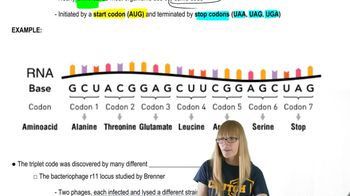
Codons are sequences of three nucleotides in mRNA that correspond to specific amino acids during protein synthesis. The start codon, typically AUG, signals the beginning of translation and is essential for proper protein formation. Mutations affecting the start codon or subsequent codons can lead to changes in the amino acid sequence, potentially altering protein function.
추천 영상:
가이드 코스
11:43
The Genetic Code

Types of Mutations

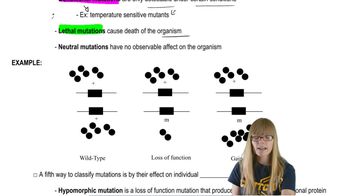
Mutations can be classified into several types, including point mutations, insertions, deletions, and frameshift mutations. Point mutations involve a change in a single nucleotide, which can lead to a different amino acid being incorporated into a protein. Understanding the type of mutation present in the DNA sequence is critical for determining its potential impact on protein function and the underlying cause of the mutation.
추천 영상:
가이드 코스
10:48
Mutations and Phenotypes